
Introduction
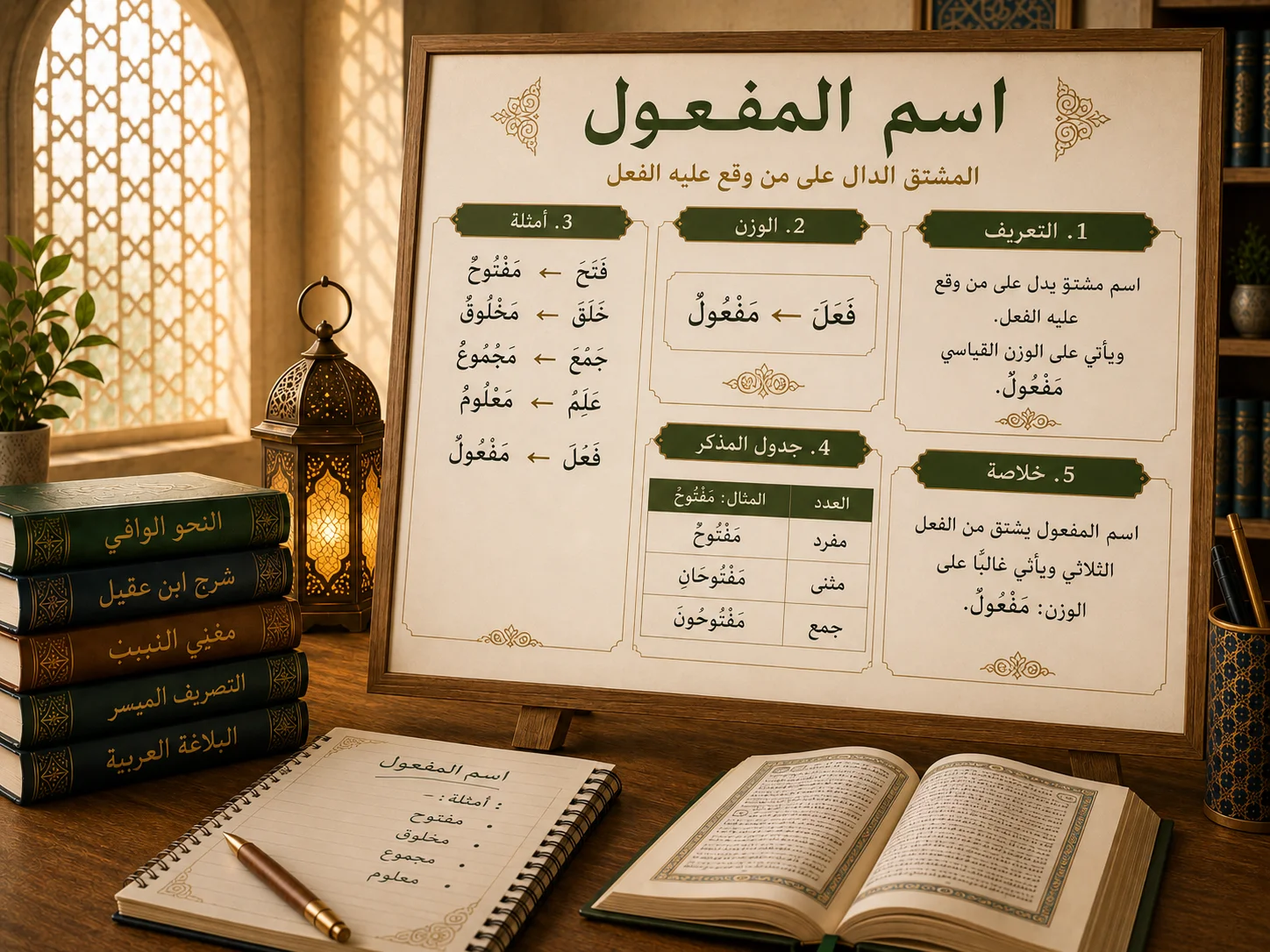
We have observed that الْمَفْعُولُ بِهِ, or the direct object, receives the action of the verb. However, the passive participle, اِسْمُ الْمَفْعُولِ, follows the pattern مَفْعُولٌ.
Examples:
فَعَلَ – مَفْعُولٌ
Done
فَتَحَ – مَفْتُوحٌ
Opened
خَلَقَ – مَخْلُوقٌ
Created
جَمَعَ – مَجْمُوعٌ
Gathered
عَلِمَ – مَعْلُومٌ
Known
1. مَفْعُولٌ — Passive Participle
A. Masculine Gender Passive Participle Chart
Nominative Case — حَالَةُ الرَّفْعِ
Singular: مَفْعُولٌ — Done
Dual: مَفْعُولَانِ — (two) done
Plural: مَفْعُولُونَ — (all) done
Accusative — حَالَةُ النَّصْبِ
Singular: مَفْعُولًا — Done
Dual: مَفْعُولَيْنِ — (two) done
Plural: مَفْعُولِينَ — (all) done
Genitive — حَالَةُ الْجَرِّ
Singular: مَفْعُولٍ — Done
Dual: مَفْعُولَيْنِ — (two) done
Plural: مَفْعُولِينَ — (all) done
B. Feminine Gender Passive Participle Chart
Nominative Case — حَالَةُ الرَّفْعِ
Singular: مَفْعُولَةٌ — Done
Dual: مَفْعُولَتَانِ — (two) done
Plural: مَفْعُولَاتٌ — (all) done
Accusative — حَالَةُ النَّصْبِ
Singular: مَفْعُولَةً — Done
Dual: مَفْعُولَتَيْنِ — (two) done
Plural: مَفْعُولَاتٍ — (all) done
Genitive — حَالَةُ الْجَرِّ
Singular: مَفْعُولَةٍ — Done
Dual: مَفْعُولَتَيْنِ — (two) done
Plural: مَفْعُولَاتٍ — (all) done
C. Examples of the Passive Participle in the Holy Quran
وَقَالَتِ الْيَهُودُ يَدُ اللّٰهِ مَغْلُولَةٌ غُلَّتْ أَيْدِيهِمْ وَلُعِنُوا بِمَا قَالُوا بَلْ يَدَاهُ مَبْسُوطَتَانِ
And the Jews said, “The hand of Allah is chained.” Chained are their hands, and cursed are they for what they said. Rather, both His hands are extended; He spends however He wills. (5:64)
وَالْيَوْمِ الْمَوْعُودِ
And [by] the promised Day. (85:2)
وَشَاهِدٍ وَمَشْهُودٍ
And [by] the witness and what is witnessed. (85:3)
The passive participle of hamzated verbs such as أَكَلَ, سَأَلَ, قَرَأَ, and assimilated verbs like وَعَدَ and يَسِرَ, also follow the pattern مَفْعُولٌ.
Examples:
أَكَلَ – مَأْكُولٌ
Eaten
سَأَلَ – مَسْؤُولٌ
Asked
قَرَأَ – مَقْرُوءٌ
Read
وَعَدَ – مَوْعُودٌ
Promised
يَسِرَ – مَيْسُورٌ
Feasible
2. Hollow Verbs — الأَجْوَفُ
When the verb’s second radical is the weak letter و, as in قَالَ, its passive participle takes the form مَقُولٌ.
A. Masculine Passive Participle Reference Chart
Nominative Case — حَالَةُ الرَّفْعِ
Singular: مَقُولٌ — Said
Dual: مَقُولَانِ — (two) said
Plural: مَقُولُونَ — (all) said
Accusative — حَالَةُ النَّصْبِ
Singular: مَقُولًا — Said
Dual: مَقُولَيْنِ — (two) said
Plural: مَقُولِينَ — (all) said
Genitive — حَالَةُ الْجَرِّ
Singular: مَقُولٍ — Said
Dual: مَقُولَيْنِ — (two) said
Plural: مَقُولِينَ — (all) said
B. Feminine Passive Participle Reference Chart
Nominative Case — حَالَةُ الرَّفْعِ
Singular: مَقُولَةٌ — Said
Dual: مَقُولَتَانِ — (two) said
Plural: مَقُولَاتٌ — (all) said
Accusative — حَالَةُ النَّصْبِ
Singular: مَقُولَةً — Said
Dual: مَقُولَتَيْنِ — (two) said
Plural: مَقُولَاتٍ — (all) said
Genitive — حَالَةُ الْجَرِّ
Singular: مَقُولَةٍ — Said
Dual: مَقُولَتَيْنِ — (two) said
Plural: مَقُولَاتٍ — (all) said
When the verb’s second radical is the weak letter ى, as in بَاعَ, the passive participle becomes مَبِيعٌ.
C. Masculine Passive Participle Reference Chart
Nominative Case — حَالَةُ الرَّفْعِ
Singular: مَبِيعٌ — Sold
Dual: مَبِيعَانِ — (two) sold
Plural: مَبِيعُونَ — (all) sold
Accusative — حَالَةُ النَّصْبِ
Singular: مَبِيعًا — Sold
Dual: مَبِيعَيْنِ — (two) sold
Plural: مَبِيعِينَ — (all) sold
Genitive — حَالَةُ الْجَرِّ
Singular: مَبِيعٍ — Sold
Dual: مَبِيعَيْنِ — (two) sold
Plural: مَبِيعِينَ — (all) sold
D. Feminine Passive Participle Reference Chart
Nominative Case — حَالَةُ الرَّفْعِ
Singular: مَبِيعَةٌ — Sold
Dual: مَبِيعَتَانِ — (two) sold
Plural: مَبِيعَاتٌ — (all) sold
Accusative — حَالَةُ النَّصْبِ
Singular: مَبِيعَةً — Sold
Dual: مَبِيعَتَيْنِ — (two) sold
Plural: مَبِيعَاتٍ — (all) sold
Genitive — حَالَةُ الْجَرِّ
Singular: مَبِيعَةٍ — Sold
Dual: مَبِيعَتَيْنِ — (two) sold
Plural: مَبِيعَاتٍ — (all) sold
Réservez votre essai gratuit de 30 minutes
Formulaire d'inscription
3. Geminate Verbs — الْمُضَاعَفُ
When the verb’s second and third radicals are the same, such as رَدَّ (to return), the passive participle follows the pattern مَرْدُودٌ (returned).
A. Masculine Passive Participle Reference Chart
Nominative Case — حَالَةُ الرَّفْعِ
Singular: مَرْدُودٌ — Returned
Dual: مَرْدُودَانِ — (two) returned
Plural: مَرْدُودُونَ — (all) returned
Accusative — حَالَةُ النَّصْبِ
Singular: مَرْدُودًا — Returned
Dual: مَرْدُودَيْنِ — (two) returned
Plural: مَرْدُودِينَ — (all) returned
Genitive — حَالَةُ الْجَرِّ
Singular: مَرْدُودٍ — Returned
Dual: مَرْدُودَيْنِ — (two) returned
Plural: مَرْدُودِينَ — (all) returned
B. Feminine Passive Participle Reference Chart
Nominative Case — حَالَةُ الرَّفْعِ
Singular: مَرْدُودَةٌ — Returned
Dual: مَرْدُودَتَانِ — (two) returned
Plural: مَرْدُودَاتٌ — (all) returned
Accusative — حَالَةُ النَّصْبِ
Singular: مَرْدُودَةً — Returned
Dual: مَرْدُودَتَيْنِ — (two) returned
Plural: مَرْدُودَاتٍ — (all) returned
Genitive — حَالَةُ الْجَرِّ
Singular: مَرْدُودَةٍ — Returned
Dual: مَرْدُودَتَيْنِ — (two) returned
Plural: مَرْدُودَاتٍ — (all) returned
C. Examples of the Passive Participle in the Holy Quran
فَلَا صَدَّقَ وَلَا صَلَّىٰ
So he neither believed nor prayed. (75:31)
كَلَّا إِنَّهَا كَلِمَةٌ هُوَ قَائِلُهَا
No! It is merely a word he is saying. (23:100)
فَإِنَّهُ كَانَ لِلْأَوَّابِينَ غَفُورًا
Indeed, He is ever forgiving to those who return to Him. (17:25)
وَالَّذِينَ هُمْ عَنِ اللَّغْوِ مُعْرِضُونَ
And those who avoid idle talk. (23:3)
4. Defective Verbs — الْمُنْقَلِ
A defective verb is one whose third radical is a weak letter (و or ي), such as رَمَى (to throw) or دَعَا (to call). Its passive participle follows the pattern مَرْمِيٌّ or مَدْعُوٌّ.
A. Masculine Passive Participle Reference Chart
Nominative Case — حَالَةُ الرَّفْعِ
Singular: مَرْمِيٌّ — Thrown
Dual: مَرْمِيَّانِ — (two) thrown
Plural: مَرْمِيُّونَ — (all) thrown
Accusative — حَالَةُ النَّصْبِ
Singular: مَرْمِيًّا — Thrown
Dual: مَرْمِيَّيْنِ — (two) thrown
Plural: مَرْمِيِّينَ — (all) thrown
Genitive — حَالَةُ الْجَرِّ
Singular: مَرْمِيٍّ — Thrown
Dual: مَرْمِيَّيْنِ — (two) thrown
Plural: مَرْمِيِّينَ — (all) thrown
B. Feminine Passive Participle Reference Chart
Nominative Case — حَالَةُ الرَّفْعِ
Singular: مَرْمِيَّةٌ — Thrown
Dual: مَرْمِيَّتَانِ — (two) thrown
Plural: مَرْمِيَّاتٌ — (all) thrown
Accusative — حَالَةُ النَّصْبِ
Singular: مَرْمِيَّةً — Thrown
Dual: مَرْمِيَّتَيْنِ — (two) thrown
Plural: مَرْمِيَّاتٍ — (all) thrown
Genitive — حَالَةُ الْجَرِّ
Singular: مَرْمِيَّةٍ — Thrown
Dual: مَرْمِيَّتَيْنِ — (two) thrown
Plural: مَرْمِيَّاتٍ — (all) thrown
C. Examples of Defective Passive Participles in the Holy Quran
فَأَخَذَتْهُمُ الصَّيْحَةُ مُشْرِقِينَ
And the shriek seized them at sunrise. (15:73)
وَقِيلَ الْيَوْمَ نَنسَاكُمْ كَمَا نَسِيتُمْ لِقَاءَ يَوْمِكُمْ هَذَا
And it will be said, “Today We forget you as you forgot the meeting of this Day of yours.” (45:34)
وَهُوَ الْغَفُورُ الْوَدُودُ
And He is the Forgiving, the Affectionate. (85:14)
إِنَّ رَبَّكَ لَبِالْمِرْصَادِ
Indeed, your Lord is in observation. (89:14)
Conclusion
We have completed our study of the different passive participle forms in Arabic. In the next lesson, we will explore the derived noun patterns and their meanings within Qur’anic Arabic.
Réservez votre essai gratuit de 30 minutes
Formulaire d'inscription

Aucun commentaire
Aucun commentaire pour le moment.