

In Islamic tradition, dua holds a central place as an act of worship and a means of direct communication with Allah (SWT). Often translated as "invocation" or "supplication, " dua is not limited to words spoken in times of need. It is a powerful spiritual tool that nurtures faith, soothes the heart, and draws believers closer to their Creator. This article explores the countless blessings associated with dua and its role in strengthening faith.
What Is Dua? A Personal Connection with Allah
Dua is a sincere dialogue between a believer and their Lord. Unlike the ritual prayers (salat), it can be made at any time and under any circumstance, whether to express gratitude, seek help, or ask for guidance.
Allah says in the Quran:
"And when My servants ask you concerning Me, indeed I am near. I respond to the invocation of the supplicant when he calls upon Me." (Surah Al-Baqarah, 2:186)
This divine promise emphasizes that dua is not only an act of submission but also an affirmation of Allah's closeness to His servants.
The Benefits of Dua in a Muslim’s Life
- Strengthening Faith: A Direct Relationship with Allah When we make dua, we affirm our belief in Allah’s existence and omnipotence. This practice strengthens faith by reminding us that all power belongs to Allah alone.
- A Tool to Overcome Challenges During difficult times, dua acts as a light in the darkness. By expressing our fears and hopes to Allah, we find comfort and hope, knowing that nothing is impossible for Him.
- A Source of Inner Peace and Serenity
Raising one’s hands in dua brings unparalleled tranquility. The Prophet Muhammad (peace be upon him) said:
"Indeed, dua is worship." (Reported by Tirmidhi) This spiritual connection calms the heart, even during great turmoil.
- Attracting Blessings and Forgiveness from Allah Sincere duas are a means of attracting blessings (barakah) and receiving divine forgiveness. Allah loves His servants who turn to Him.
Book your free trial of 30 minutes
Registration form
How to Make a Sincere and Powerful Dua
- Begin by Praising Allah Before asking for anything, start by glorifying Allah. Mention His beautiful names and attributes.
- Invoke Blessings Upon the Prophet Muhammad (peace be upon him) This is a recommended etiquette that makes the dua more complete and blessed.
- Express Your Requests with Sincerity and Humility Speak to Allah from the heart. Complicated words are unnecessary; what matters is the intention.
- Have Firm Conviction That Your Dua Will Be Answered
The Prophet (peace be upon him) said:
"Call upon Allah while being certain of being answered." (Reported by Tirmidhi)
- Persevere, Even if the Response is Delayed Sometimes, Allah delays a response for our benefit. He may grant the request, delay it, or replace it with something better.
The Best Times to Make Dua
Certain times are especially favorable for making duas. Here are some recommended moments in Islamic tradition:
-
- After the obligatory prayers (salat)
- During the last part of the night
The Prophet (peace be upon him) said:
"Our Lord descends every night to the lowest heaven when one-third of the night remains and says: ‘Who is calling upon Me, that I may answer him?’" (Reported by Bukhari and Muslim)
- On the Day of Jumu’ah (Friday)
- Between the adhan and the iqamah
- During travel or times of difficulty These moments are considered blessed, and duas made then are more likely to be accepted.
Examples of Essential Duas
1. Dua for Guidance:
"O Lord, guide us to the straight path, the path of those who have received Your grace." (Surah Al-Fatiha, 1:6-7)
2. Dua for Forgiveness:
"Our Lord, forgive us and our brothers who preceded us in faith." (Surah Al-Hashr, 59:10)
3. Dua for Overcoming Difficulties:
"O Allah, there is no ease except in what You make easy. And You make difficult matters easy if You will." (Hadith reported by Ibn Hibban)
The Role of Dua in Strengthening Faith
By regularly practicing dua, a believer reinforces their reliance on Allah. This dependence is not a weakness but a strength. It transforms fear into hope, pain into patience, and doubt into unshakable faith.
Conclusion: Dua, an Act of Love and Faith
Dua is more than just a request; it symbolizes love, trust, and faith in Allah. By cultivating this habit, we turn our lives into a spiritual journey filled with blessings, serenity, and divine guidance.
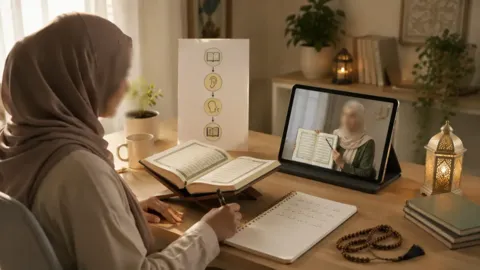
The Al-Dirassa Institute encourages Muslims to enrich their spirituality by understanding the significance of dua. Join our online courses to deepen your knowledge of Islam, the Arabic language, and the Quran, and learn how to incorporate supplications into your daily life for maximum benefit.
Ready to deepen your spiritual connection? Enroll in an online Islamic or Quran free trial course with the Al-Dirassa Institute today!



No Comments
No comments yet.