
Introduction
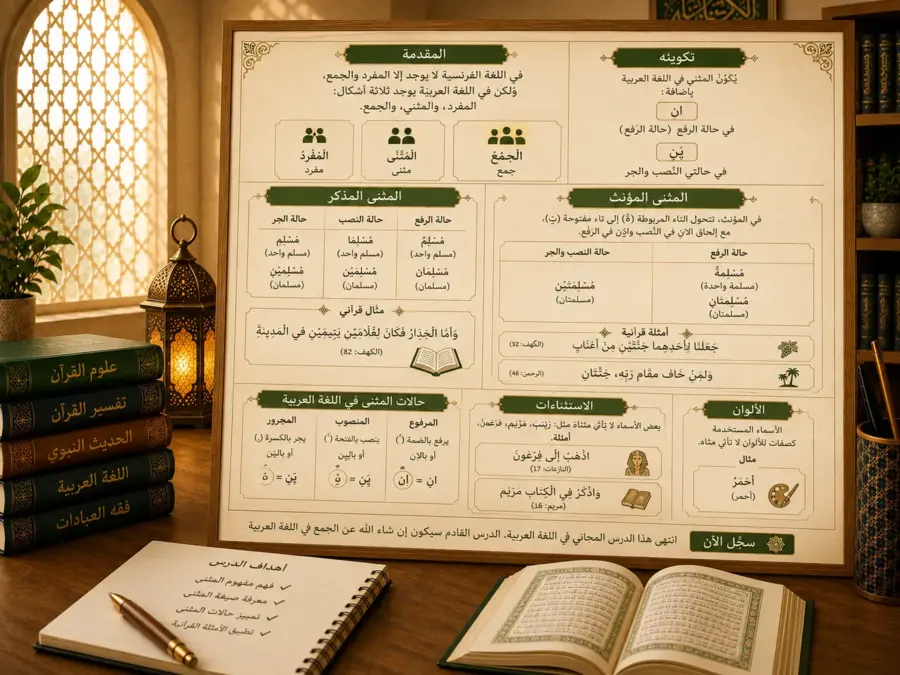
In English, there are only two grammatical numbers: singular and plural. However, in Arabic, there are three forms — singular, dual, and plural.
المُفْرَدُ – singular
الْمُثَنَّى – dual
الْجَمْعُ – plural
Formation
The dual in Arabic is formed by adding the suffix fatha, alif, and the letter nûn with a kasrah in the nominative case (حَالةُ الرَّفْعِ):
انِ
In the accusative and genitive cases, we add:
يْنِ
Masculine Dual
Examples:
Nominative Case
مُسْلِمٌ – one Muslim
مُسْلِمانِ – two Muslims
Accusative Case
مُسْلِمًا – one Muslim
مُسْلِمَيْنِ – two Muslims
Genitive Case
مُسْلِمٍ – one Muslim
مُسْلِمَيْنِ – two Muslims
Quranic Example
وَأَمَّا الْجِدَارُ فَكَانَ لِغُلَامَيْنِ يَتِيمَيْنِ فِي الْمَدِينَةِ
As for the wall, it belonged to two orphan boys in the city (18:82)
Feminine Dual
For the feminine, words ending with ta marbouta (ة) become ta maftouha (ت) in the dual form, with the suffixes انِ and يْنِ.
Examples:
Nominative Case
مُسْلِمَةٌ – one Muslim woman
مُسْلِمَتَانِ – two Muslim women
Accusative and Genitive Cases
مُسْلِمَتَيْنِ – two Muslim women
Quranic Examples
جَعَلْنَا لِأَحَدِهِمَا جَنَّتَيْنِ مِنْ أَعْنَابٍ
To one of them, We granted two gardens of grapevines (18:32)
وَلِمَنْ خَافَ مَقَامَ رَبِّهِ جَنَّتَانِ
And for those who fear standing before their Lord, there will be two gardens (55:46)
This free Arabic lesson is now complete. The next lesson, insha’Allah, will be about the plural in Arabic.
Book your free trial of 30 minutes
Registration form




No Comments
No comments yet.