
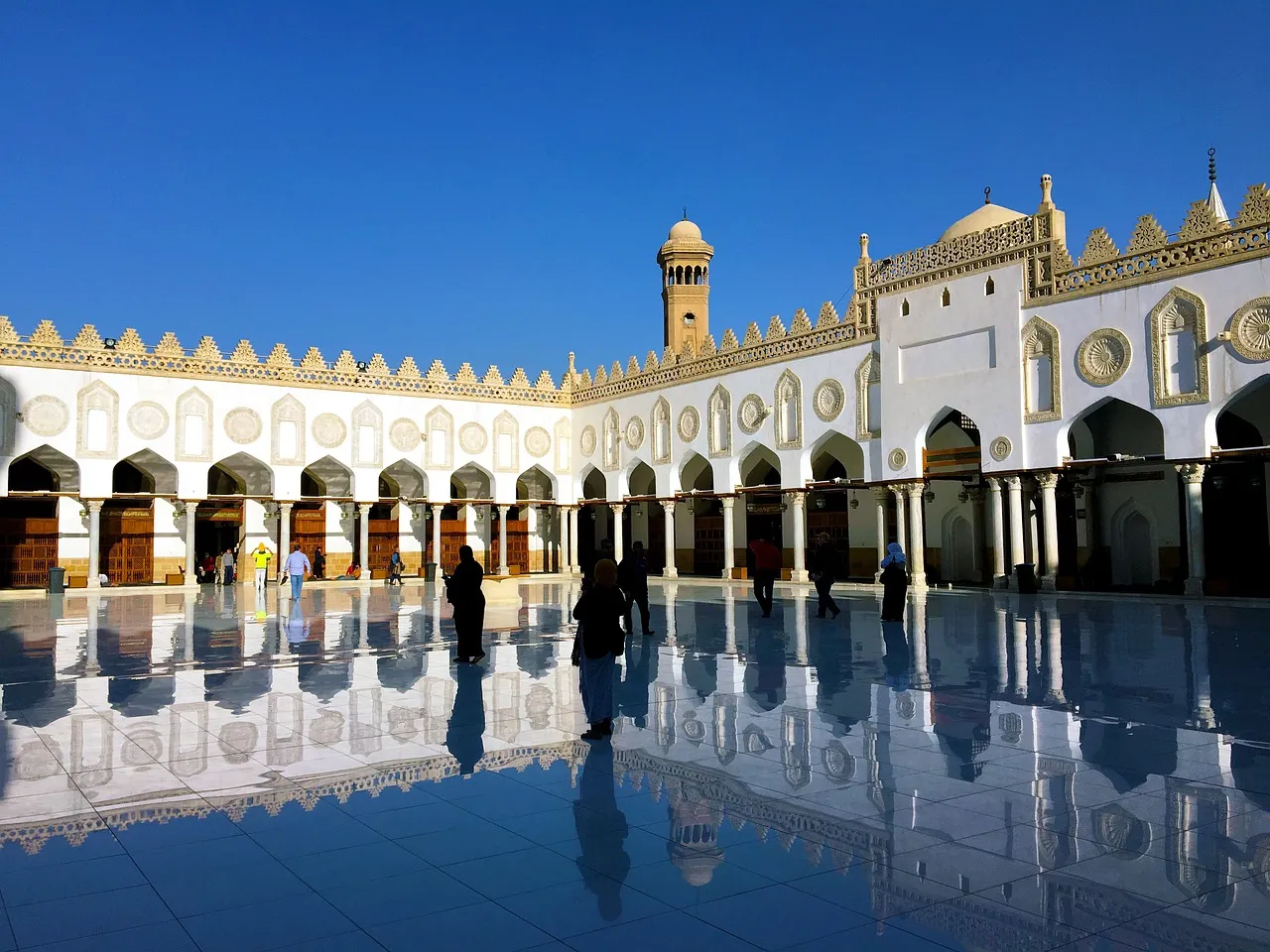
Al-Azhar Mosque: A Journey Through Time and Architecture
Al-Azhar Mosque, an enduring symbol of Islamic heritage, stands as a testament to centuries of history and architectural marvel. Its roots trace back to the Fatimid dynasty, and it continues to radiate its cultural and spiritual significance in the heart of Cairo, Egypt. This narrative takes you on a detailed journey through the construction, restoration, and extensions that have shaped Al-Azhar Mosque into the revered institution it is today.
Construction in the Fatimid Era:
- The Visionary Leader: Jawhar As-Siqilli, the commander-in-chief of Al-Mu'izz Li-Din Allâh, the first Caliph of the Fatimid dynasty, embarked on a historic endeavor. He conquered Egypt and established Cairo, setting the stage for the construction of Al Azhar Mosque.
- Inauguration: The work commenced in the month of Jumâdâ Al-Awwal in the year 359 A.H. (970 C.E.), reaching completion during Ramadan of the year 361 A.H. (972 C.E.).
- A Historic Landmark: Al Azhar, the first mosque built in Cairo, stands today as the oldest monument from the Fatimid era in Egypt.
- Origin of the Name: While the origin of its name is not universally agreed upon, it is believed that the Fatimids named it "Al-Azhar" in honor of Fatimah Az-Zahrâ', the beloved daughter of the Prophet Muhammad (peace and blessings be upon Him).
Architectural Layout:
- Original Design: The mosque likely featured an open courtyard, encompassed by three galleries, with the largest serving as the sanctuary, housing five corridors.
- The Transept and Dome: A slightly elevated transept traversed the sanctuary's center, culminating in a dome above the mihrab, the prayer niche. Two identical domes adorned the corners of the transept.
- Architectural Details: The arches enclosing the inner courtyard were supported by rectangular pillars, while marble columns of varying sizes adorned all other arches.
The Era of Restoration:
- Al-Hakim Bi-Amr Allah: In approximately 400 A.H. (1009 C.E.), Al-Hakim Bi-Amr Allah, the third Fatimid Caliph, initiated the mosque's restoration. Today, only a wooden door from this period remains, housed in the Museum of Arab Art in Cairo.
Post-Fatimid Era and Expansions:
- Al-Hakim Bi-Amr Allah: In approxi
- Evolving Over Time: As the Fatimid dynasty waned (6th century of the Hegira - XII century C.E.), architectural expansions unfolded.
- At-Taybarsiyyah University: Emir `Alâ 'Ad-Din Al-Khāzindārî, commander of the armies, founded this university in 709 A.H. (1309 C.E.), featuring a finely crafted marble mihrab adorned with harmonious polychrome ornaments and a golden mosaic.
- Aqbughawiyah Madrasah: In 740 A.H. (1339 C.E.), Emir Aqbughâ `Abd Al-Wâhid constructed this structure, known for its exquisite marble entrance.
- Madrasah Jawhariyyah: Around 844 A.H. (1441 C.E.), Jawhar Al-Qunuqbâ'î erected this structure on the north side, featuring artistic wonders and a dome over his tomb.
- Sultan Qayt-Bay's Contributions: In 873 A.H. (1468/69 C.E.), Sultan Qayt-Bay rebuilt the main entrance, added a minaret, and included galleries and cabinets.
- ately 400 A.H. (1009 C.E.), Al-Hakim Bi-Amr Allah, the third Fatimid Caliph, initiated the mosque's restoration. Today, only a wooden door from this period remains, housed in the Museum of Arab Art in Cairo.
Minaret Construction and Further Expansions:
- Al-Hakim Bi-Amr Allah: In appro
- Sultan Qansuh Al-Ghuri: In 920 A.H. (1514 C.E.), he constructed a distinctive minaret with dual stairwells to prevent simultaneous visibility.
- i
- Evolving Over Time: As the Fatimid dynasty waned (6th century of the Hegira - XII century C.E.), architectural expansions unfolded.
- At-Taybarsiyyah University: Emir `Alâ 'Ad-Din Al-Khāzindārî, commander of the armies, founded this university in 709 A.H. (1309 C.E.), featuring a finely crafted marble mihrab adorned with harmonious polychrome ornaments and a golden mosaic.
- Aqbughawiyah Madrasah: In 740 A.H. (1339 C.E.), Emir Aqbughâ `Abd Al-Wâhid constructed this structure, known for its exquisite marble entrance.
- Madrasah Jawhariyyah: Around 844 A.H. (1441 C.E.), Jawhar Al-Qunuqbâ'î erected this structure on the north side, featuring artistic wonders and a dome over his tomb.
- Sultan Qayt-Bay's Contributions: In 873 A.H. (1468/69 C.E.), Sultan Qayt-Bay rebuilt the main entrance, added a minaret, and included galleries and cabinets.
- ately 400 A.H. (1009 C.E.), Al-Hakim Bi-Amr Allah, the third Fatimid Caliph, initiated the mosque's restoration. Today, only a wooden door from this period remains, housed in the Museum of Arab Art in Cairo.
- 'Abd Ar-Rahman Katkhudâ: In 1167 A.H. (1753/4 C.E.), his significant contributions included a large gallery, a mihrab, a marble pulpit, entrances, a minaret, a dome over his tomb, and more.
Continual Restoration:
- Through the centuries, various rulers and dignitaries added galleries, entrances, and embellishments, maintaining the mosque's architectural splendor.
- The mosque received extensive restoration in 1310 A.H. (1892-93 C.E.), with the Diwan al-Awqaf (Islamic Donations Directorate) revitalizing the arches around the inner courtyard.
The Latest Renovation:
- In 1312 A.H. (1894 C.E.), Khedive 'Abbas II oversaw the renovation of the northern facade, restoration of the wooden courtyard fence, marble floor refurbishment, and the restoration of magnificent carpets, gifts from King Farûq I.
Al-Azhar Mosque, an embodiment of centuries of Islamic heritage and architectural splendor, continues to inspire awe and reverence. Its journey through time, from its inception in the Fatimid era to the modern-day, is a testament to the enduring importance of this sacred space in the hearts of Muslims and the history of Cairo, Egypt. As a living monument, it serves as both a place of worship and a symbol of cultural richness, inviting all to explore its rich history and marvel at its architectural grandeur.
The Al-Dirassa Institute provides a range of online courses in Arabic, Quran, and Islam tailored for non-Arabic speakers. To enroll in our courses or learn more, please don’t hesitate to get in touch with us today.




Aucun commentaire
Aucun commentaire pour le moment.