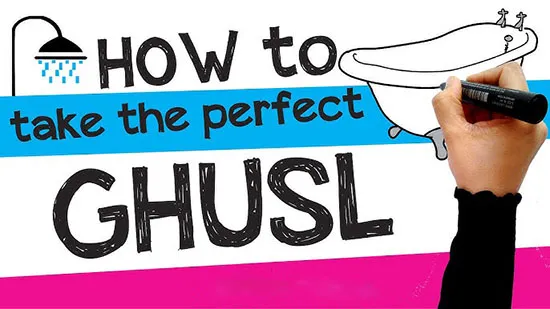
 Ghusl is obligatory in certain cases, including:
- After intercourse or ejaculation.
- Post-menstruation or childbirth bleeding.
- Upon a person’s death (except for martyrs). Additionally, it is recommended before Fridays, Eid prayers, or when a non-Muslim converts to Islam.
Ghusl is a complete body purification process in Islam. It is a means of physical cleanliness and holds deep spiritual significance. Prophet Muhammad (SAW) emphasized that "cleanliness is half of faith, " making ghusl an essential practice for Muslims. It is performed to cleanse oneself from major impurities like sexual intercourse, menstruation, and post-childbirth bleeding. Engaging in online courses to learn Fiqh and Islamic Sharia is essential, It assists students in accessing accurate and reliable information about Fiqh, as well as everything related to Hadiths and the Sunnah of the Prophet. This aligns with the Prophet’s saying that those who adhere to the Sunnah and the Quran will never go astray.
Al-Dirassa Institute offers specialized programs in Fiqh, Sharia sciences, and Quranic studies, providing students with an in-depth understanding of Islamic jurisprudence, religious principles, and the profound teachings of the Quran.
When is Ghusl Obligatory in Islam?
What Types of Ghusl?
- Ghusl comes in various forms, each for different situations:
- Ghusl Janabat: Performed after intercourse or ejaculation.
- Ghusl Hayd: After menstruation.
- Ghusl Nifaas: Post-partum.
- Ghusl Mayyit: For washing the deceased.
How to Perform Ghusl Correctly?
- Ghusl can be performed using two main methods:Fard (Obligatory) Ghusl: This is the minimal method of ghusl.
- Rinse your mouth and nose with water.
- Ensure water reaches your entire body.
Sunnah Ghusl: This method has additional steps and is recommended.
- Start with a sincere intention.
- Wash hands and any outward impurities.
- Perform wudu.
- Wash the body three times, ensuring every part, especially hidden areas, is fully wet.
Is It Permissible to Perform Ghusl in the Shower?
- Yes, ghusl can be performed in a shower. Follow the same steps as above but ensure that no part of your body is left dry. Be mindful of modesty, avoiding facing the Qibla, and thoroughly washing areas like under the nails, behind the ears, and under the hair.
What Invalidates Ghusl?
- Certain mistakes can render ghusl invalid:
- Water does not reach all parts of the body.
- Not having the right intention.
- Using impure water.
How to Perform Ghusl for Women?
- Women should follow the general steps of ghusl but with additional considerations:
- Remove makeup, jewelry, and other barriers like nail polish.
- Wet the scalp thoroughly to ensure water reaches all hair strands.
- Undoing the braid is unnecessary if the hair is tightly braided, but water must reach the roots.
Hadiths on Ghusl:
Prophet Muhammad (PBUH) emphasized conserving water during ghusl. He performed a ghusl using a small amount of water, about 3 liters (Sa'). Another hadith mentions that the Prophet (PBUH) and Aisha (RA) used to take ghusl from the same pot of water. Al-Dirassa Institute offers specialized courses in Fiqh and Quranic studies, along with a focus on mastering classical Arabic for the correct recitation of the Quran and a deep understanding of Hadiths and Islamic sciences. These programs are tailored to help students build a strong foundation in Islamic jurisprudence while enhancing their ability to comprehend religious texts accurately. To know more: What is Qiyam Al-Layl and How to Perform It?
Essai offert
Réservez votre essai gratuit de 30 minutes




Aucun commentaire
Aucun commentaire pour le moment.