Hajj is an integral part of Islam, encompassing one of the five pillars and holding great significance in Islam. It is obligatory for every financially and physically capable adult Muslim. Every year, millions of Muslims from all walks of life converge on the holy city of Mecca in Saudi Arabia to perform this sacred pilgrimage. The process can seem daunting for first-time pilgrims, but Hajj can be a life-changing and spiritually fulfilling experience with proper knowledge and guidance. This guide will walk you through the essentials of performing Hajj, including the key rituals, common mistakes to avoid, and frequently asked questions for First-Time Pilgrims.
Ready to expand your knowledge of Islam? Al-Dirassa offers a wide range of online courses, designed to suit your needs, whether for personal growth, deepening your faith, or academic purposes. Join us today and start learning with purpose.
What is Hajj? Understanding the Basics of the Islamic Pilgrimage
Hajj is a religious pilgrimage to Mecca that every Muslim is required to undertake at least once in their lifetime, provided they are physically and financially capable. It is one of the five pillars of Islam, marking a profound act of worship and submission to Allah. Hajj takes place annually during the Islamic month of Dhu al-Hijjah, the last month of the Islamic lunar calendar. The pilgrimage consists of a series of rituals, some of which are symbolic of the lives of key figures in Islamic history, such as the Prophet Ibrahim (Abraham), his wife Hajar (Hagar), and their son Isma'il (Ishmael). These rituals are designed to foster unity, humility, and spirituality among Muslims, as they gather from all over the globe to worship in the same place.
Essai offert
Réservez votre essai gratuit de 30 minutes
Step-by-Step Guide to the Key Rituals of Hajj for First-Time Pilgrims:
For those embarking on their first Hajj, it is essential to understand the sequence of rituals that make up the pilgrimage. These rituals are a combination of physical actions and prayers, each with deep spiritual significance.
- Ihram (Entering a State of Purity):Before arriving in Mecca, pilgrims must enter a state of spiritual purity known as Ihram. This involves donning special garments: men wear two white seamless clothes, and women wear a simple dress that covers their whole body.
- During Ihram, pilgrims must avoid specific actions such as cutting their hair, engaging in marital relations, or using perfume. The goal is to embody purity and devotion.
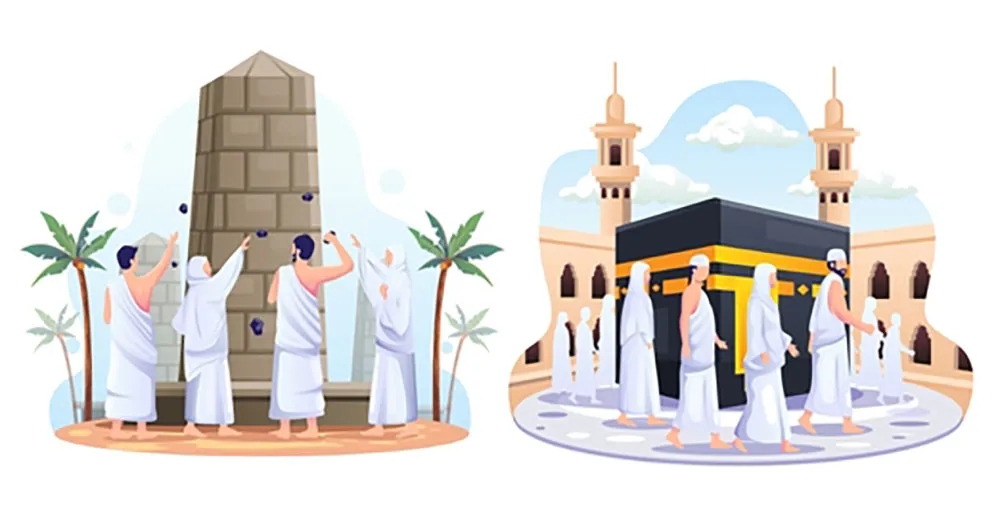
- Tawaf (Circumambulating the Kaaba):Upon arriving in Mecca, the first ritual is Tawaf, which involves walking around the Kaaba seven times in a counterclockwise direction. The Kaaba is the most sacred structure in Islam, located in the Grand Mosque (Masjid al-Haram). This act symbolizes the unity of believers in the worship of the One God.
- Sa'i (Walking between Safa and Marwah):After Tawaf, pilgrims perform Sa’i, walking seven times between the hills of Safa and Marwah. This act commemorates the search for water by Hajar (the wife of Prophet Ibrahim) for her son Isma'il. Pilgrims often pray for their needs during this ritual, asking Allah for forgiveness and mercy.
- Standing at Arafat (Wuquf):One of the most important rituals of Hajj is standing at Arafat, known as Wuquf. Pilgrims gather at the plain of Arafat on the 9th day of Dhu al-Hijjah to stand in prayer, ask for forgiveness, and reflect on their faith. This is the most spiritually significant day of Hajj.
- Muzdalifah (Night under the Open Sky):After Arafat, pilgrims move to Muzdalifah, where they spend the night under the open sky. Here, they gather pebbles for the next ritual, which is the Ramy al-Jamarat (stoning of the pillars).
- Ramy al-Jamarat (Stoning of the Pillars):Pilgrims throw pebbles at three stone pillars in Mina, symbolizing the rejection of Satan’s temptation. This act is a reminder of the test of faith that Prophet Ibrahim faced when he was commanded to sacrifice his son.
- Sacrifice (Qurbani):After stoning the pillars, pilgrims perform an animal sacrifice, usually a sheep, goat, or cow, to commemorate the willingness of Prophet Ibrahim to sacrifice his son in obedience to Allah. The meat is distributed to the needy.
- Tawaf al-Ifadah (Return to the Kaaba):After the stoning and sacrifice, pilgrims return to the Kaaba for another round of Tawaf, known as Tawaf al-Ifadah. This is a key act that symbolizes the pilgrim’s renewal of their faith.
- Shaving or Trimming Hair:Men are encouraged to shave their heads, while women trim a small portion of their hair. This marks the completion of the major rituals of Hajj.
- Tawaf al-Wada (Farewell Tawaf):The final ritual before leaving Mecca is the Tawaf al-Wada, a farewell circumambulation of the Kaaba. It is a time of reflection, gratitude, and prayer, marking the end of the pilgrimage.
Common Mistakes to Avoid While Performing Hajj :
- Neglecting the State of Ihram:One of the most common mistakes is failing to maintain the purity and rules of Ihram. It’s crucial to remember the prohibitions while in this state, including refraining from using perfume, cutting hair, or engaging in marital relations.
- Rushing through the Rituals:Hajj is not just about completing rituals quickly. The purpose of each ritual is to reflect and worship. Rushing through the process can cause you to miss out on the spiritual benefits of the pilgrimage.
- Overexerting Yourself:Hajj can be physically demanding, especially for first-time pilgrims. It’s important to pace yourself, drink plenty of water, and rest when necessary. Don’t overexert yourself during the rituals.
- Failing to Follow Proper Etiquette:Respecting the space, the people, and the traditions of Hajj is essential. Be patient, avoid causing disruptions, and follow the guidance of the authorities.
- Not Asking for Help When Needed: Hajj can be overwhelming, especially in crowded conditions. Don’t hesitate to ask for help if you feel confused or lost. There are many experienced guides and fellow pilgrims who can offer assistance.
FAQs about Hajj in Islam for First-Time Pilgrims:
-
- Who is required to perform Hajj?
Every Muslim who is physically and financially able to perform Hajj is required to do so at least once in their lifetime. This includes having the financial means to cover the expenses of travel, accommodation, and the pilgrimage itself.
- How long does the Hajj last?
Hajj lasts for five days, from the 8th to the 12th of Dhu al-Hijjah. However, pilgrims often arrive in Mecca a few days before the start of the rituals.
- Can women perform Hajj without a male guardian?
Women are required to perform Hajj with a male guardian (mahram) unless they are part of an organized group of women. This requirement ensures their safety and well-being during the pilgrimage.
- What is the significance of Arafat?
Arafat is the site where Prophet Muhammad delivered his final sermon. The day of Arafat is considered the most spiritually significant day of Hajj, as it is a day for prayer, reflection, and seeking forgiveness from Allah.
- What is the reward for performing Hajj?
Hajj is considered an opportunity to cleanse one’s sins and earn immense spiritual rewards. The Prophet Muhammad (PBUH) said that a properly performed Hajj is a means of attaining Paradise.
In conclusion, Hajj is not just about completing a set of physical actions; it’s about the spiritual significance behind each ritual, the reflection on one's faith, and the unity experienced with millions of fellow Muslims. As you prepare for this incredible journey, remember that it is a once-in-a-lifetime opportunity to grow closer to Allah and attain spiritual fulfillment. May your pilgrimage be accepted and bring you peace, forgiveness, and blessings. Learn from the best with Al-Dirassa’s expert-led Islamic courses. Whether you're looking to deepen your connection to your faith or gain a comprehensive understanding of Islamic teachings, we offer the courses you need. Start today To know more: What is Sadaqah in Islam? Meaning, Types, and Benefits




Aucun commentaire
Aucun commentaire pour le moment.