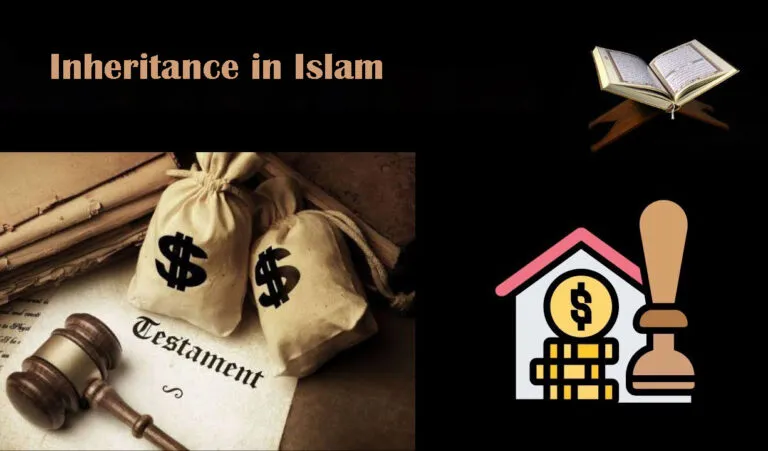
Inheritance (
ميراث) in Islam is a divine system of wealth distribution that ensures fairness, social justice, and economic stability within Muslim societies. Unlike many other inheritance systems, Islamic inheritance is meticulously structured in the Quran and Sunnah, leaving little room for dispute or modification. This article explores the fundamental rules, shares, and distribution principles of inheritance in Islam while shedding light on its wisdom and benefits.
Ready to master Islamic jurisprudence? Enroll in Al-Dirassa Institute's Fiqh courses today and gain the knowledge to navigate every aspect of Islamic law with confidence!
The Importance of Inheritance in Islam:
Inheritance in Islam is more than just a legal or economic matter—it is a religious duty ordained by Allah. The Quran explicitly outlines inheritance rules in Surah An-Nisa (4:11-12, 176), ensuring that wealth is distributed justly among family members. This divine legislation prevents wealth from accumulating in the hands of a few and promotes economic balance in society. The study of inheritance (علم الفرائض) is a crucial aspect of Islamic knowledge. If you wish to deepen your understanding of this essential subject, Al-Dirassa Institute offers specialized online courses in Islamic jurisprudence, including inheritance laws. Learn with expert teachers and enhance your Islamic knowledge from home comfort!
Essai offert
Réservez votre essai gratuit de 30 minutes
Key Principles of Islamic Inheritance:
- Fixed Shares (الفرائض المحددة):Islamic inheritance follows a fixed-share system where specific heirs receive predetermined portions of the estate. These shares are determined by the Quran and cannot be altered.
- No Will Beyond One-Third (لا وصية لوارث):A Muslim can only bequeath up to one-third of their wealth through a will (wasiyyah) to non-heirs. The remaining two-thirds must be distributed among rightful heirs as per Islamic law.
- Obligation to Distribute (وجوب التقسيم):Unlike some systems where inheritance may be delayed or contested, Islamic law mandates an immediate and fair distribution of the deceased’s wealth.
- Justice and Equality (العدل والمساواة):Islamic inheritance ensures economic balance within families and prevents favoritism or unjust accumulation of wealth.
Shares of Heirs in Islam: Islamic inheritance law divides heirs into three main categories: Primary Heirs (أصحاب الفروض - Fixed Share Heirs):These individuals have a guaranteed portion of the inheritance. Their shares are specified in the Quran. The primary heirs include:
- Spouse: A husband inherits half if his wife leaves no children and one-fourth if she has children. A wife inherits one-fourth if her husband has no children and one-eighth if he has children.
- Parents:Each parent inherits one-sixth if the deceased has children. If there are no children, the mother gets one-third and the father takes the remainder.
- Children: Sons inherit double the share of daughters, as per Surah An-Nisa (4:11). However, both are rightful heirs.
- Grandparents & Siblings: They inherit in certain circumstances when primary heirs are absent.
Residuary Heirs (العصبة - Agnatic Heirs) After the fixed shares are distributed, the remaining wealth is given to residuary heirs. This group primarily consists of male relatives such as sons, grandsons, brothers, and paternal uncles. Distant Relatives (ذوو الأرحام):In the absence of both fixed-share and residuary heirs, inheritance passes to more distant relatives, including maternal uncles, aunts, and cousins.
Wisdom Behind Islamic Inheritance Laws:
Islamic inheritance rules are designed to:
- Maintain family unity by ensuring fair distribution.
- Prevent wealth hoarding and promote financial circulation.
- Protect the rights of women and children by guaranteeing them fixed shares.
- Encourage responsibility among family members.
- Ensure social justice and economic equity in society.
Common Misconceptions About Islamic Inheritance:
"Women receive less inheritance than men" While sons receive twice the share of daughters, women also inherit from multiple relatives, including fathers, husbands, and children. Moreover, women in Islam are not required to spend on family expenses, unlike men. "Islamic inheritance can be modified" The shares and rules of inheritance are divine mandates from Allah and cannot be altered based on personal preferences or societal changes. "The eldest son inherits everything" Unlike some cultural traditions, Islamic law ensures all eligible heirs receive their rightful share, regardless of age or gender.
Learn Islamic Inheritance Online:
Understanding the laws of inheritance is essential for every Muslim. Whether you are a student of Islamic studies or simply wish to gain more knowledge, Al-Dirassa Institute offers comprehensive online courses on Islamic jurisprudence, Quranic sciences, and Arabic language. Why choose Al-Dirassa Institute?
- Expert Scholars: Learn from qualified Islamic teachers.
- Flexible Online Learning: Study at your own pace, anytime, anywhere.
- Structured Curriculum: Gain deep insights into Islamic laws, including inheritance, zakat, and family law.
- Interactive Sessions: Engage in live discussions and Q&A with instructors.
Join Al-Dirassa Institute today and enhance your understanding of Islamic law! Islamic inheritance laws are designed to prevent the concentration of wealth and ensure it is distributed fairly among family members. This system brings balance to the economy and social justice to the community, Al-Dirassa Institute offers a variety of courses on Islamic jurisprudence. Enhance your knowledge today by enrolling and learning from qualified instructors! Seeking a deep understanding of Islamic law? Join Al-Dirassa Institute’s Fiqh courses and start learning how to apply Islamic principles to your daily life. Enroll now and take the first step! To know more: Riba in Islam: Definition, Types, and Why It Is Forbidden




Aucun commentaire
Aucun commentaire pour le moment.