
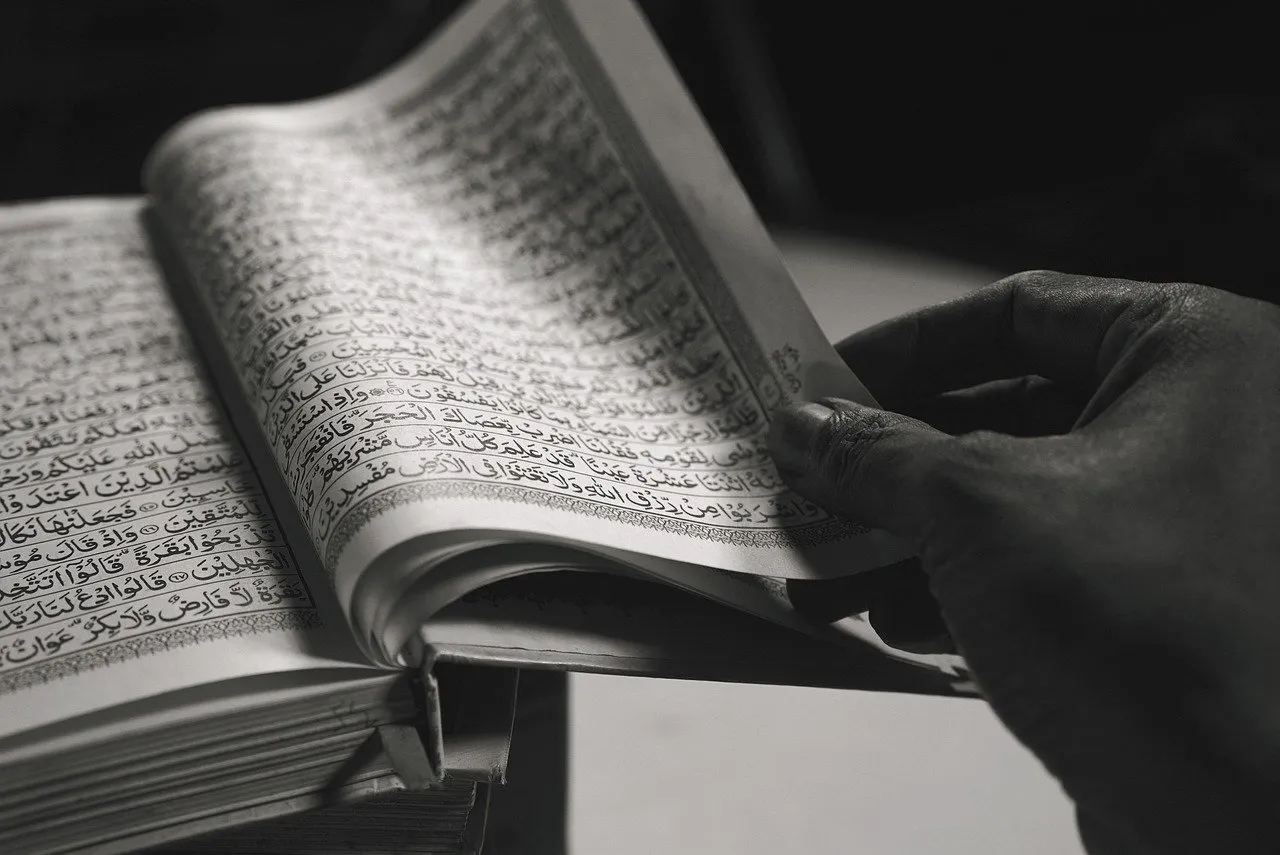
The Holy Quran, the sacred scripture of over a billion Muslims worldwide, is not merely a book—it's a source of guidance, a beacon of light, and a testament to the oneness of God. Often, individuals curious about Islam ask, "Who made the Quran?" To understand its origins from a Muslim perspective, one must delve into the essence of Islamic teachings and history.
1. Introduction: The Quran's Central Role in Islam
In the heart of every Muslim, the Quran holds an unparalleled position. It is considered the literal Word of َAllah, revealed to the Prophet Muhammad (peace be upon him) over a span of 23 years. Unlike any other book, the Quran remains unchanged since its revelation in the 7th century, preserved in its original language—Arabic.
2. The Revelation: A Connection between Heaven and Earth
The origins of the Quran trace back to the Prophet Muhammad (peace be upon him) and the revelations he received from Allah through the Angel Gabriel (Jibreel in Arabic). These revelations, received in stages, addressed various aspects of life, morality, law, and guidance for personal conduct.
Starting in the month of Ramadan, in the Cave Hira on the outskirts of Mecca, the first verses came down: "Read in the name of your Lord who created. Created man from a clot. Read, and your Lord is the Most Generous—Who taught by the pen—Taught man that which he knew not." (Quran, 96:1-5)
3. Compilation: Preservation of the Divine Word
Throughout his prophethood, Prophet Muhammad (peace be upon him) would memorize the revelations and instruct his companions to record them. These companions, known as the Sahabah, wrote the verses on various materials—bones, leaves, leather—and many memorized the entire Quran, a tradition that continues today with millions of Hafiz (memorizers of the Quran) worldwide.
After the Prophet's demise, to ensure the Quran's preservation, the third Caliph, Uthman ibn Affan (may Allah be pleased with him), compiled these writings into a single book form. This compilation, known as the Mushaf, is what Muslims use today.
4. Miraculous Nature: A Testament to its Divine Origin
Muslims believe the Quran is a miracle in various aspects:
- Linguistic Excellence: The Quran's unparalleled Arabic eloquence challenges humanity to produce a verse like it, yet none have succeeded.
- Scientific Insights: There are verses that highlight natural phenomena, which were unknown in the 7th century but are recognized by modern science today.
-
Consistency and Preservation: Despite being revealed over two decades in different circumstances, the Quran remains consistent in its message. Moreover, its preservation without alteration is seen as a miraculous sign by believers.
5. Historical Significance and Background of the Quranic Revelations
Each chapter (Surah) and verse (Ayah) of the Quran has its own historical and situational context, known as Asbab al-Nuzul or the reasons for revelations. These contexts provide insights into the socio-political, moral, and spiritual challenges faced by the early Muslim community. By studying them, we can better understand how the Quran provided guidance in real-world situations.
For example, Surah Al-Kahf, a chapter frequently recited on Fridays by Muslims, contains parables and stories that address issues of faith, patience, and the transient nature of this world.
6. Major Themes of the Quran
The Quran encompasses a myriad of themes, from monotheism to moral principles. Some pivotal themes include:
- Tawheed (Monotheism): Emphasizing the Oneness of God and refuting polytheism.
- Prophethood: Detailing the lives and challenges of prophets sent to various nations.
- Day of Judgment: Descriptions of the afterlife, heaven, and hell, to instill accountability and consciousness of the Divine.
-
Social Justice: Advocating for the rights of the weak, orphans, and promoting equitable economic systems.
7. The Science of Tajweed: Beautifying Quranic Recitation
Tajweed refers to the set of rules governing the correct pronunciation of Quranic verses. Muslims believe in reciting the Quran in the manner it was revealed, and thus, over centuries, scholars have established meticulous rules to ensure its proper articulation. This science not only enhances the beauty of the recitation but also avoids misinterpretations.
8. The Quran and Modern Science
One of the aspects that continue to fascinate scholars and scientists alike is the Quran’s allusion to various scientific phenomena. Verses touching upon embryology, oceanography, and astronomy have been studied in light of modern scientific knowledge, leading to increased interest and respect for the Quran's depth and foresight.
9. Interpretation of the Quran: Tafsir
Tafsir is the exegesis or commentary on the Quran, providing deeper insights into its meanings. Through Tafsir, scholars elaborate on the Quranic verses, considering the historical context, linguistic nuances, and related Hadiths (sayings of the Prophet). Works like "Tafsir ibn Kathir" and "Tafsir Al-Jalalayn" are monumental in this field, guiding readers to a more profound understanding.
10. Conclusion: The Living Miracle of Islam
For Muslims, the Quran isn’t just a book; it’s a living testament to God’s final message. From its miraculous linguistic nature to its profound wisdom, it stands as a beacon of light. As the world evolves, scholars and believers alike turn to the Quran, finding solutions, solace, and guidance. It serves as a reminder of God's eternal presence and His boundless mercy towards humanity.





Aucun commentaire
Aucun commentaire pour le moment.