
Introduction
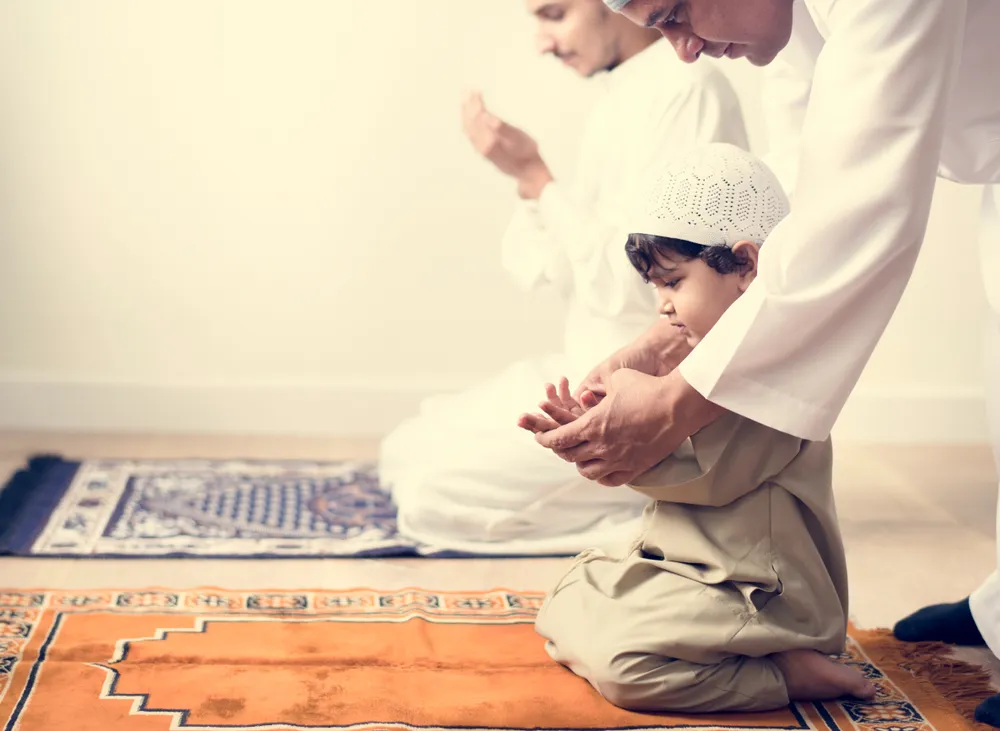
Prayer, or Salah, holds a central position in Islam, serving as a means of communication between the believer and their Creator. It is a ritual of spiritual significance, providing a pathway to connect with Allah and seek His guidance, mercy, and forgiveness. Learning how to perform Salah correctly, in Arabic, is essential for every Muslim. In this article, we will delve into the significance of Salah and provide a step-by-step guide on how to pray in Islam in Arabic.
The Significance of Salah
Salah is one of the Five Pillars of Islam and is obligatory for every adult Muslim. It serves as a reminder of one's submission to the will of Allah and the importance of maintaining a constant connection with Him throughout the day. The Prophet Muhammad (peace be upon him) emphasized the significance of Salah through his words and actions, stating that it is the first matter for which a person will be held accountable on the Day of Judgment.
Réservez votre essai gratuit de 30 minutes
Formulaire d'inscription
Performing Salah in Arabic
Praying in Arabic is an integral part of the Islamic tradition, as it preserves the language of the Quran, the holy book of Islam. Although Salah can be performed in any language, reciting specific prayers and supplications in Arabic adds a layer of spirituality and reverence to the act of worship. Here is a step-by-step guide on how to perform Salah in Arabic:
Purification (Wudu):
Before starting Salah, it is essential to perform Wudu, the ritual purification. This involves washing the hands, mouth, nose, face, arms, head, and feet according to the prescribed manner taught by the Prophet Muhammad (peace be upon him).
Intention (Niyyah):With sincerity and devotion, make the intention in your heart to perform the specific prayer. The intention should be directed solely for the sake of Allah.
Takbir al-Ihram:Raise your hands to shoulder level and say, "Allahu Akbar" (Allah is the Greatest), initiating the prayer.
Recitation of Al-Fatiha:Recite Surah Al-Fatiha, the opening chapter of the Quran, silently.
- Recitation of Additional Verses:
Recite another portion of the Quran, such as Surah Al-Ikhlas, Surah Al-Falaq, or Surah An-Nas, silently.
Ruku (Bowing):Bend at the waist, placing your hands on your knees, and say, "Subhana Rabbiyal Adheem" (Glory is to my Lord, the Most Great) three times.
Sujud (Prostration):Place your forehead, nose, palms, knees, and toes on the ground, saying, "Subhana Rabbiyal A'la" (Glory is to my Lord, the Most High) three times.
Tashahhud:Sit briefly and recite the Tashahhud, a declaration of faith, while sitting on your left foot with the right foot upright.
Salat al-Ibrahimiyah (Invocation of Abraham):Recite the Salat al-Ibrahimiyah, a prayer invoking blessings upon the Prophet Muhammad (peace be upon him) and his family.
Tasleem:Turn your head to the right and say, "Assalamu Alaikum wa Rahmatullah" (Peace and mercy of Allah be upon you) to conclude the prayer.
Conclusion
Prayer in Islam is a profound act of worship that strengthens the bond between the believer and their Creator. Performing Salah in Arabic enhances the spiritual experience, as it connects the individual to the language of the Quran, the divine revelation. By following the prescribed steps and supplications, Muslims can deepen their connection to Allah and experience the tranquility and peace that comes with fulfilling this sacred obligation. May Allah accept our prayers and guide us on the straight path. Ameen.
To Know More: Powerful Duas for Your Wishes to Come True



Aucun commentaire
Aucun commentaire pour le moment.