
Salat, or Islamic prayer, is one of the central acts of worship in Islam. After the declaration of faith, the Shahada, it is the second pillar of Islam and is performed by Muslims five times a day.
Prayer includes physical positions such as standing, bowing, prostrating and sitting. These movements are accompanied by Quranic recitation and supplications in Arabic, including Surah Al-Fatiha, the words of Ruku, Sujud, Tashahhud and Taslim.
In this guide, you will learn the main steps of Salat, the essential Arabic words to recite, the number of rakats for each prayer and common mistakes to avoid when learning how to pray.
In summary: to learn how to pray in Islam, you need to know the main steps of each rakah: intention in the heart, Takbir, recitation of Al-Fatiha, bowing, prostration, sitting, Tashahhud and Taslim. The five obligatory prayers include 2 rakats for Fajr, 4 for Dhuhr, 4 for Asr, 3 for Maghrib and 4 for Isha.
Are you learning how to pray for the first time?
Learning Salat means understanding the positions, the Arabic words, Al-Fatiha, Tashahhud and the number of rakats. A teacher can help you progress step by step, correct your pronunciation and understand what you recite.
Discover our online Islamic studies courses, our online Quranic Arabic courses and our online Tajweed courses.
Before starting: learn Salat step by step
If you are a beginner, do not try to master everything in one day. Prayer is learned gradually: first the movements, then the essential Arabic words, then correct recitation and understanding.
The goal is to progress with sincerity, consistency and humility. Even if your pronunciation is not perfect yet, continue learning and improving.
One unit of prayer is called a rakah. Each rakah includes several steps:
- standing;
- saying the Takbir;
- reciting Surah Al-Fatiha;
- bowing in Ruku;
- prostrating in Sujud;
- sitting between the two prostrations;
- reciting the Tashahhud in the final sitting;
- ending the prayer with the Taslim.
What should you learn first to pray?
When learning how to pray, it is better to start with the essential elements and build gradually.
- the number of rakats for each prayer;
- the opening Takbir: Allahu Akbar;
- Surah Al-Fatiha;
- the formulas of Ruku and Sujud;
- the Tashahhud;
- the Taslim to end the prayer;
- the prayer times and basic conditions of validity.
Step 1 — Standing and setting your intention
Before starting the prayer, set your intention in your heart. It is not necessary to pronounce it out loud. You simply need to know which prayer you are about to perform: Fajr, Dhuhr, Asr, Maghrib or Isha.
Stand facing the Qibla, focus on your prayer and try to leave worldly distractions behind.
Step 2 — The Takbir
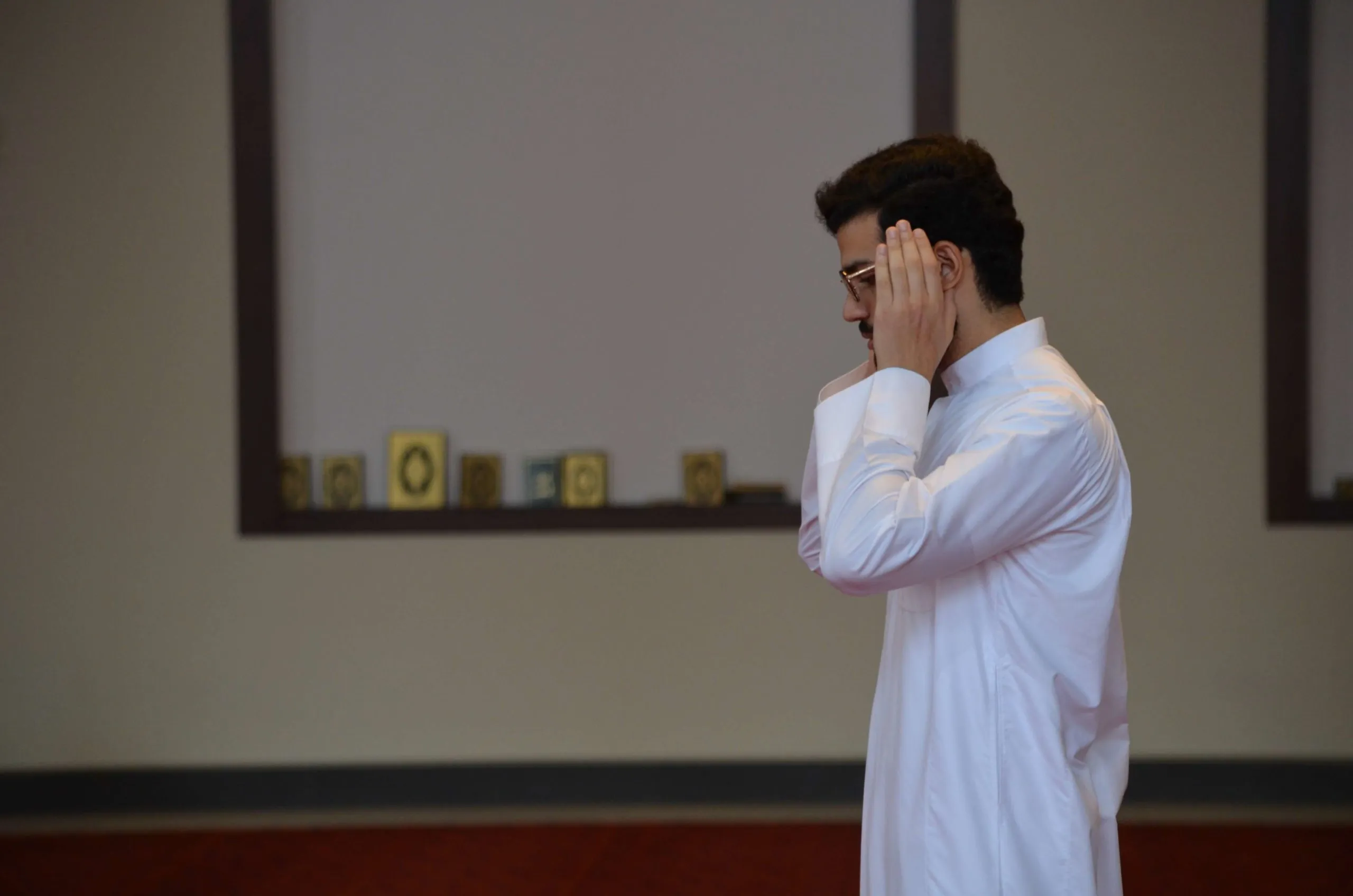
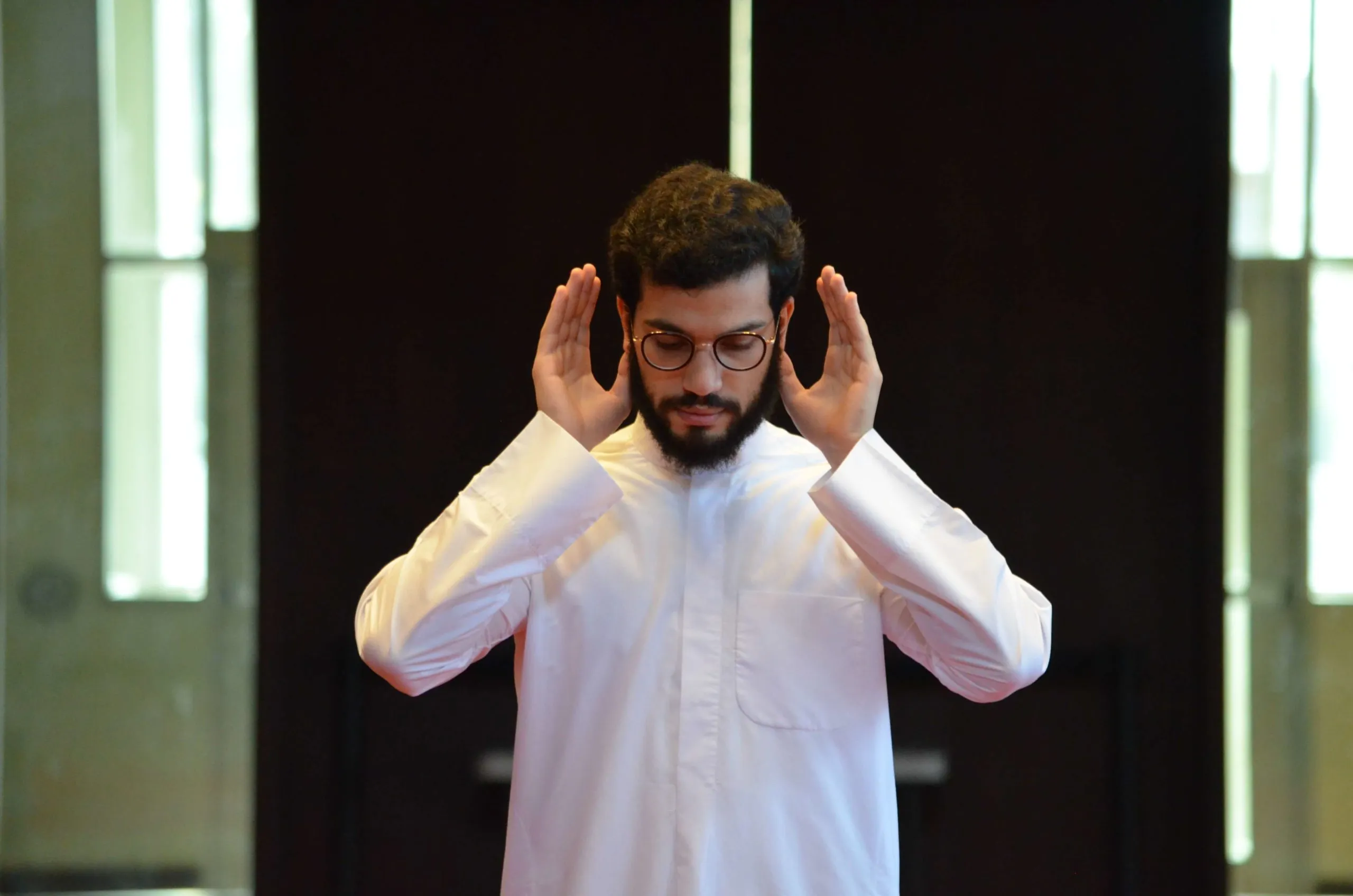
Raise your hands to the level of your ears or shoulders and say:
اللَّهُ أَكْبَرُ
Transliteration: Allahu Akbar.
Translation: Allah is the Greatest.
This formula marks the beginning of the prayer. From this moment, you have entered the Salat.
Step 3 — Seeking refuge and reciting Surah Al-Fatiha
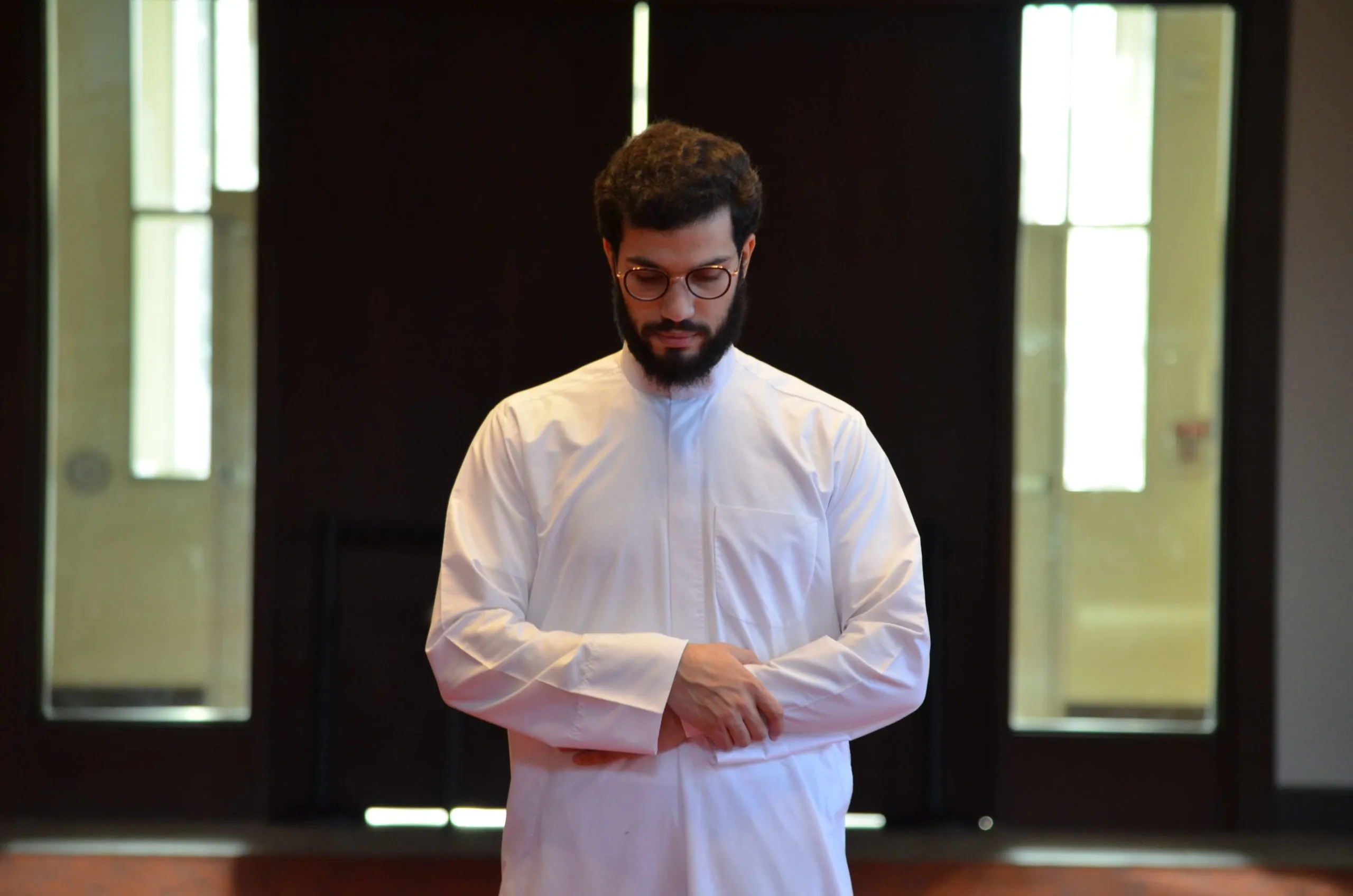
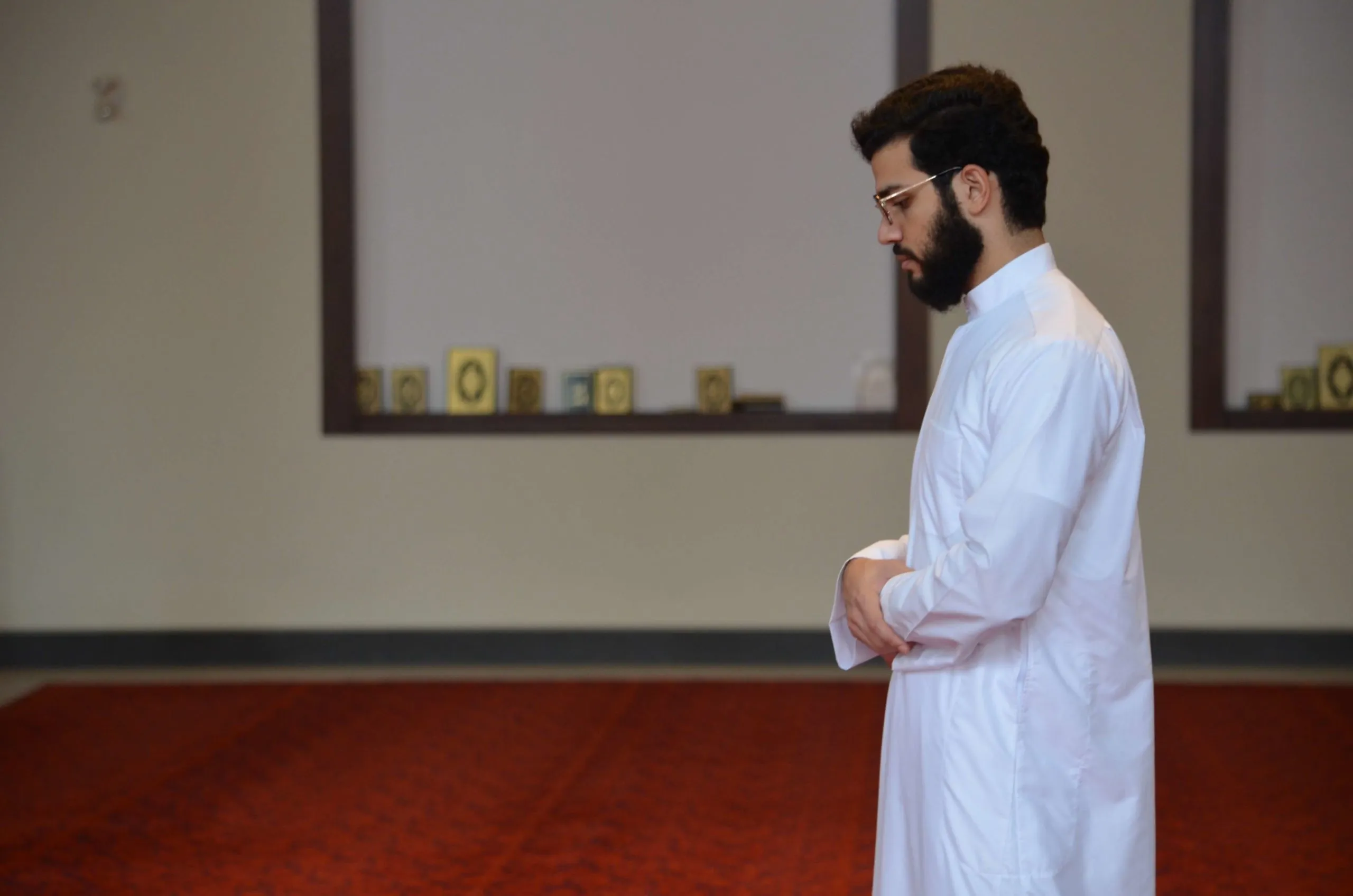
Place your hands on your chest, with the right hand above the left, then begin by seeking refuge in Allah:
أَعُوذُ بِاللّٰهِ مِنَ الشَّيْطَانِ الرَّجِيمِ
Transliteration: A‘udhu billahi mina shaytanir-rajim.
Translation: I seek refuge in Allah from the accursed Shaytan.
Then recite Surah Al-Fatiha:
بِسْمِ اللَّـهِ الرَّحْمَـٰنِ الرَّحِيمِ
الْحَمْدُ لِلَّـهِ رَبِّ الْعَالَمِينَ
الرَّحْمَـٰنِ الرَّحِيمِ
مَالِكِ يَوْمِ الدِّينِ
إِيَّاكَ نَعْبُدُ وَإِيَّاكَ نَسْتَعِينُ
اهْدِنَا الصِّرَاطَ الْمُسْتَقِيمَ
صِرَاطَ الَّذِينَ أَنْعَمْتَ عَلَيْهِمْ غَيْرِ الْمَغْضُوبِ عَلَيْهِمْ وَلَا الضَّالِّينَ
Translation of Surah Al-Fatiha:
- In the name of Allah, the Entirely Merciful, the Especially Merciful.
- All praise is due to Allah, Lord of the worlds.
- The Entirely Merciful, the Especially Merciful.
- Master of the Day of Judgment.
- You alone we worship, and You alone we ask for help.
- Guide us to the straight path.
- The path of those upon whom You have bestowed favor, not of those who have earned anger, nor of those who are astray.
Surah Al-Fatiha is essential in the prayer. A beginner should therefore learn it as a priority, even gradually.
Step 4 — Bowing, or Ruku
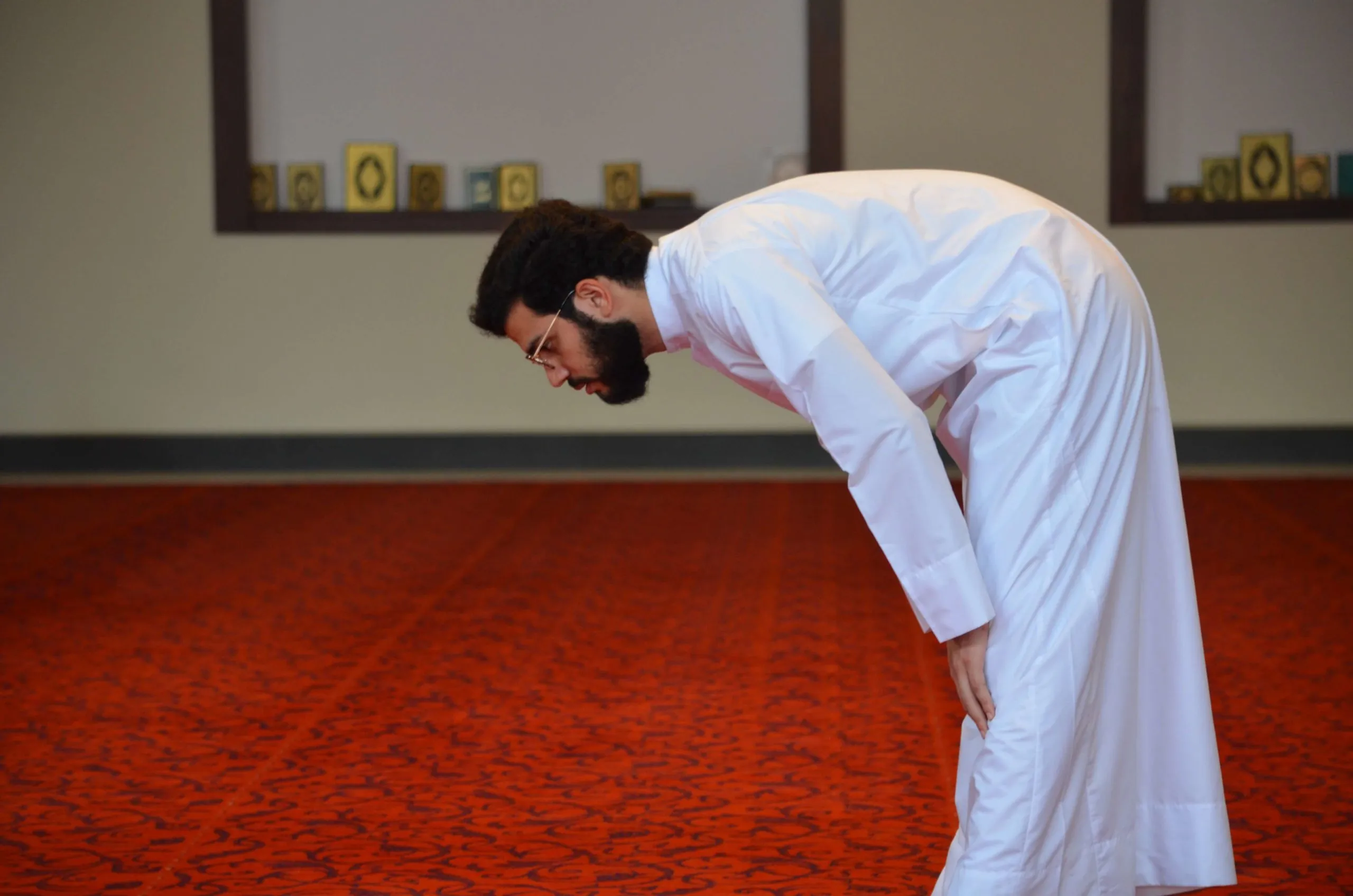
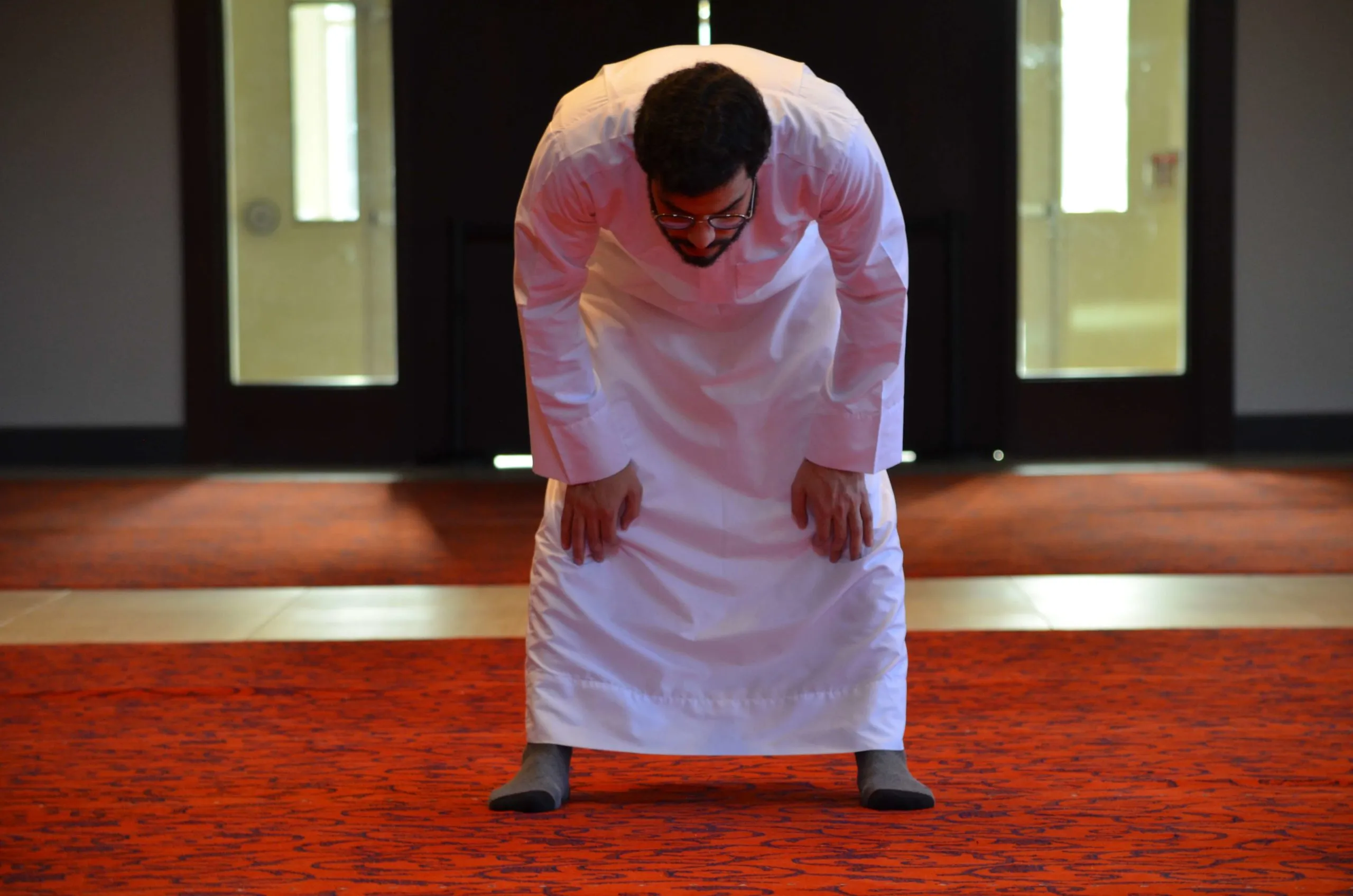
After the recitation, say Allahu Akbar and bow down. Keep your back straight and place your hands on your knees.
In this position, repeat three times:
سُبْحَانَ رَبِّيَ الْعَظِيمِ
Transliteration: Subhana Rabbiyal-‘Azim.
Translation: Glory be to my Lord, the Magnificent.

Then rise back to a standing position and say:
سَمِعَ اللَّهُ لِمَنْ حَمِدَهُ
Transliteration: Sami‘a Allahu liman hamidah.
Translation: Allah hears the one who praises Him.

Then say:
رَبَّنَا وَلَكَ الْحَمْدُ
Transliteration: Rabbana wa laka al-hamd.
Translation: Our Lord, to You belongs all praise.
Step 5 — Prostration, or Sujud
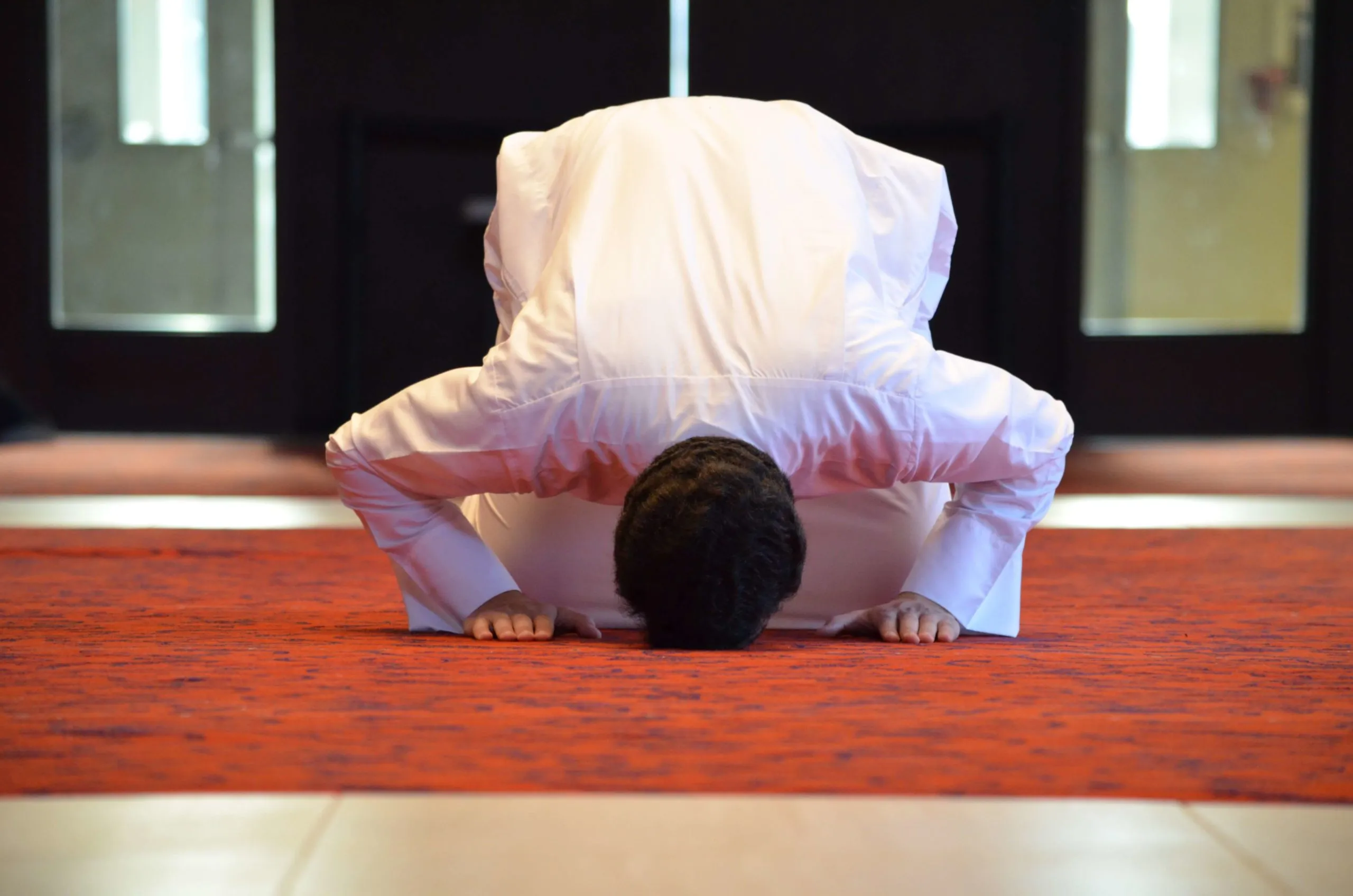
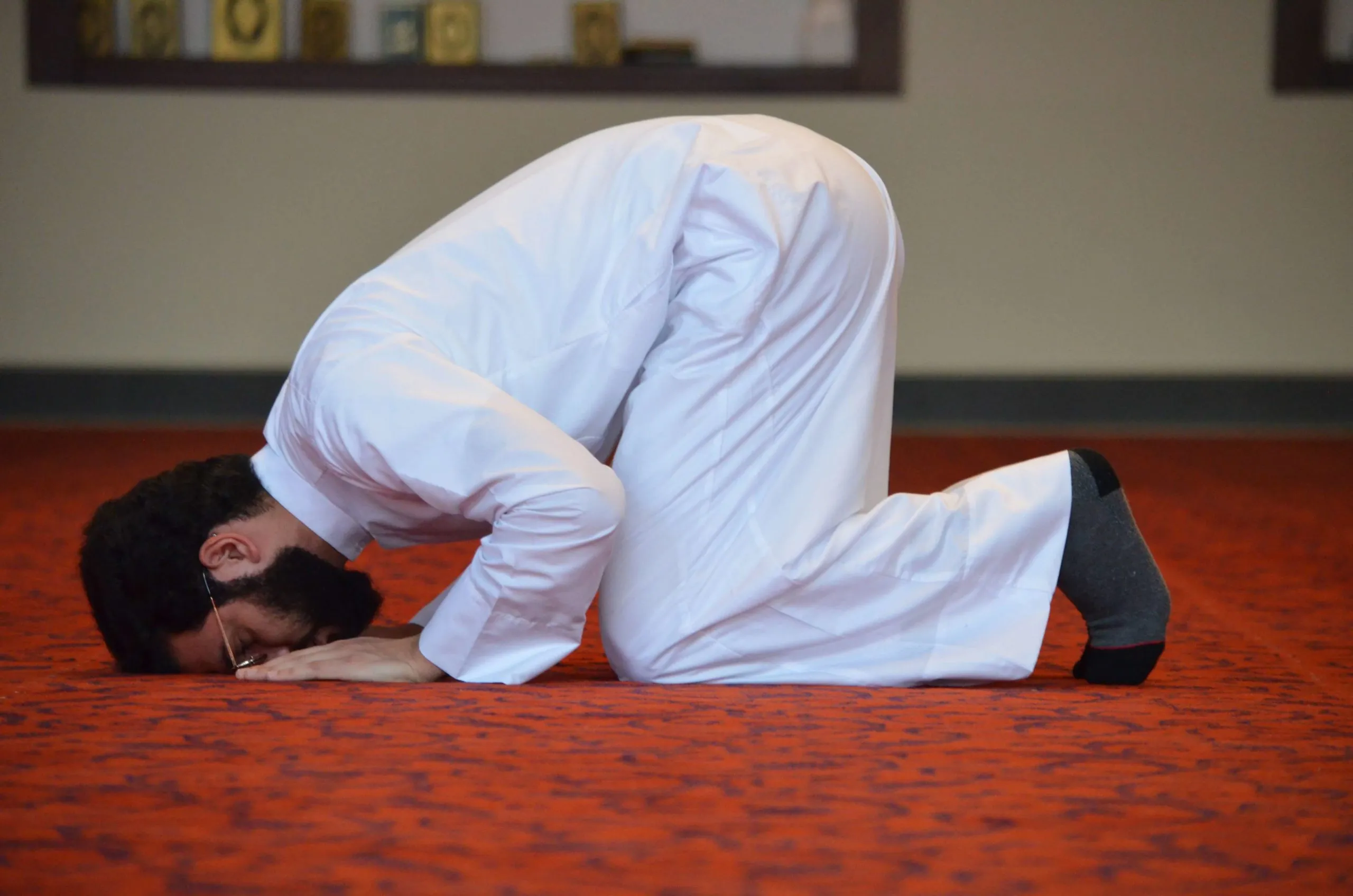
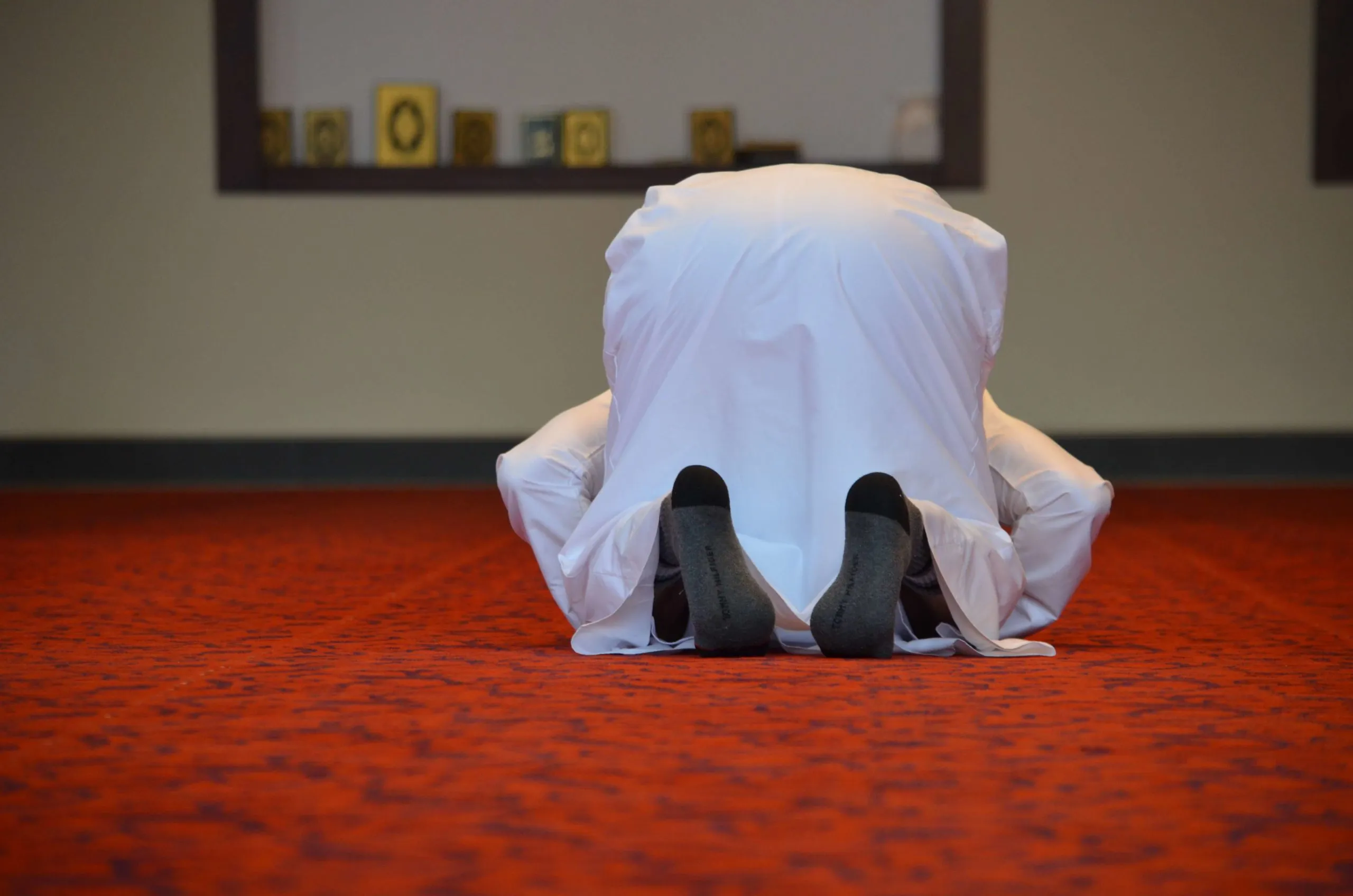
Say Allahu Akbar and go down into prostration. Your palms, forehead, nose, knees and toes should touch the ground.
In this position, repeat three times:
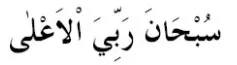
سُبْحَانَ رَبِّيَ الْأَعْلَى
Transliteration: Subhana Rabbiyal-A‘la.
Translation: Glory be to my Lord, the Most High.
Step 6 — Sitting between the two prostrations
Rise from the first Sujud by saying Allahu Akbar, then sit briefly.
In this position, you may say:
رَبِّ اغْفِرْ لِي
Transliteration: Rabbi-ghfir li.
Translation: My Lord, forgive me.
Then prostrate a second time by saying Allahu Akbar and repeat:
سُبْحَانَ رَبِّيَ الْأَعْلَى
After this second prostration, you have completed one rakah.
Step 7 — Sitting and Tashahhud
After two rakats, or in the final rakah depending on the prayer, you sit to recite the Tashahhud.
First part of the Tashahhud
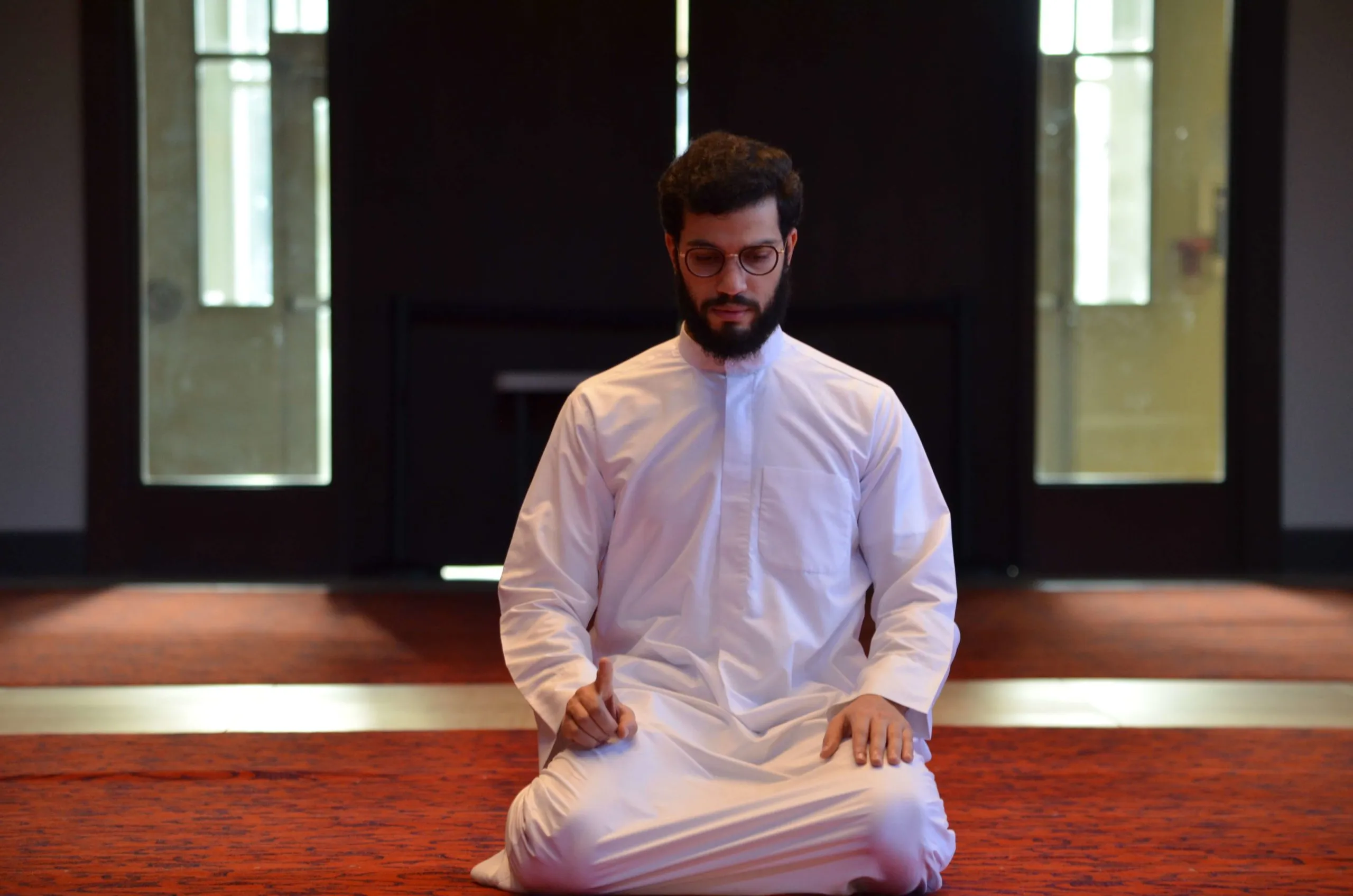
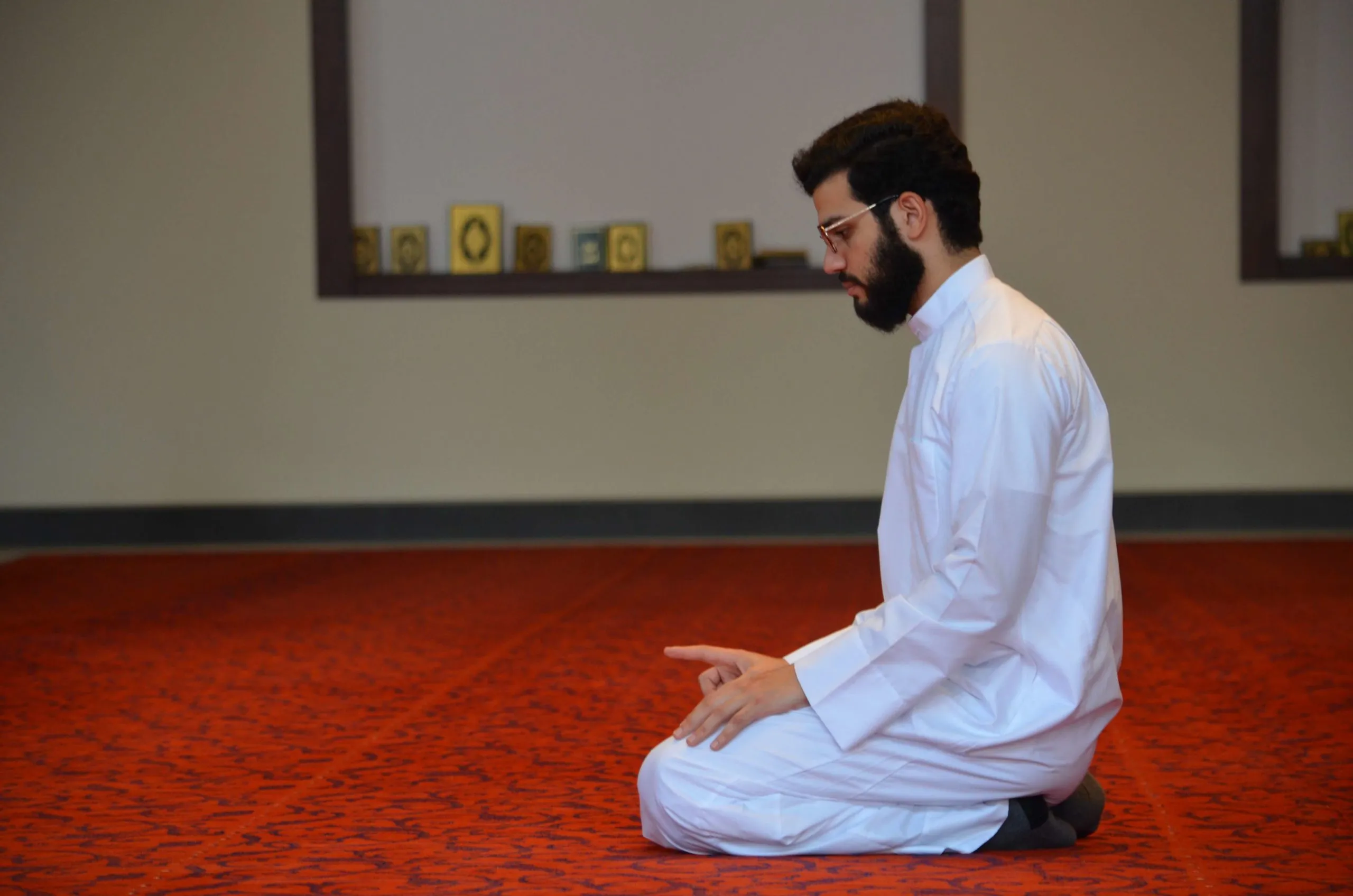
In the sitting position, recite:
التَّحِيَّاتُ لِلَّهِ وَالصَّلَوَاتُ وَالطَّيِّبَاتُ، السَّلَامُ عَلَيْكَ أَيُّهَا النَّبِيُّ وَرَحْمَةُ اللَّهِ وَبَرَكَاتُهُ، السَّلَامُ عَلَيْنَا وَعَلَى عِبَادِ اللَّهِ الصَّالِحِينَ، أَشْهَدُ أَنْ لَا إِلَهَ إِلَّا اللَّهُ، وَأَشْهَدُ أَنَّ مُحَمَّدًا عَبْدُهُ وَرَسُولُهُ
Transliteration: At-tahiyyatu lillahi was-salawatu wat-tayyibat. As-salamu ‘alayka ayyuhan-nabiyyu wa rahmatullahi wa barakatuh. As-salamu ‘alayna wa ‘ala ‘ibadillahis-salihin. Ashhadu an la ilaha illa Allah, wa ashhadu anna Muhammadan ‘abduhu wa rasuluh.
Translation: All compliments, prayers and pure words are due to Allah. Peace be upon you, O Prophet, and the mercy of Allah and His blessings. Peace be upon us and upon the righteous servants of Allah. I bear witness that there is no deity worthy of worship except Allah, and I bear witness that Muhammad is His servant and Messenger.
Second part of the Tashahhud
In the final rakah, you also recite the prayers upon Prophet Muhammad ﷺ:
اللَّهُمَّ صَلِّ عَلَى مُحَمَّدٍ وَعَلَى آلِ مُحَمَّدٍ، كَمَا صَلَّيْتَ عَلَى إِبْرَاهِيمَ وَعَلَى آلِ إِبْرَاهِيمَ، إِنَّكَ حَمِيدٌ مَجِيدٌ، اللَّهُمَّ بَارِكْ عَلَى مُحَمَّدٍ وَعَلَى آلِ مُحَمَّدٍ، كَمَا بَارَكْتَ عَلَى إِبْرَاهِيمَ وَعَلَى آلِ إِبْرَاهِيمَ، إِنَّكَ حَمِيدٌ مَجِيدٌ
Transliteration: Allahumma salli ‘ala Muhammad wa ‘ala ali Muhammad, kama sallayta ‘ala Ibrahim wa ‘ala ali Ibrahim, innaka Hamidun Majid. Allahumma barik ‘ala Muhammad wa ‘ala ali Muhammad, kama barakta ‘ala Ibrahim wa ‘ala ali Ibrahim, innaka Hamidun Majid.
Translation: O Allah, send prayers upon Muhammad and upon the family of Muhammad, as You sent prayers upon Ibrahim and the family of Ibrahim. You are indeed Praiseworthy and Glorious. O Allah, bless Muhammad and the family of Muhammad as You blessed Ibrahim and the family of Ibrahim. You are indeed Praiseworthy and Glorious.
How to end the prayer with Taslim
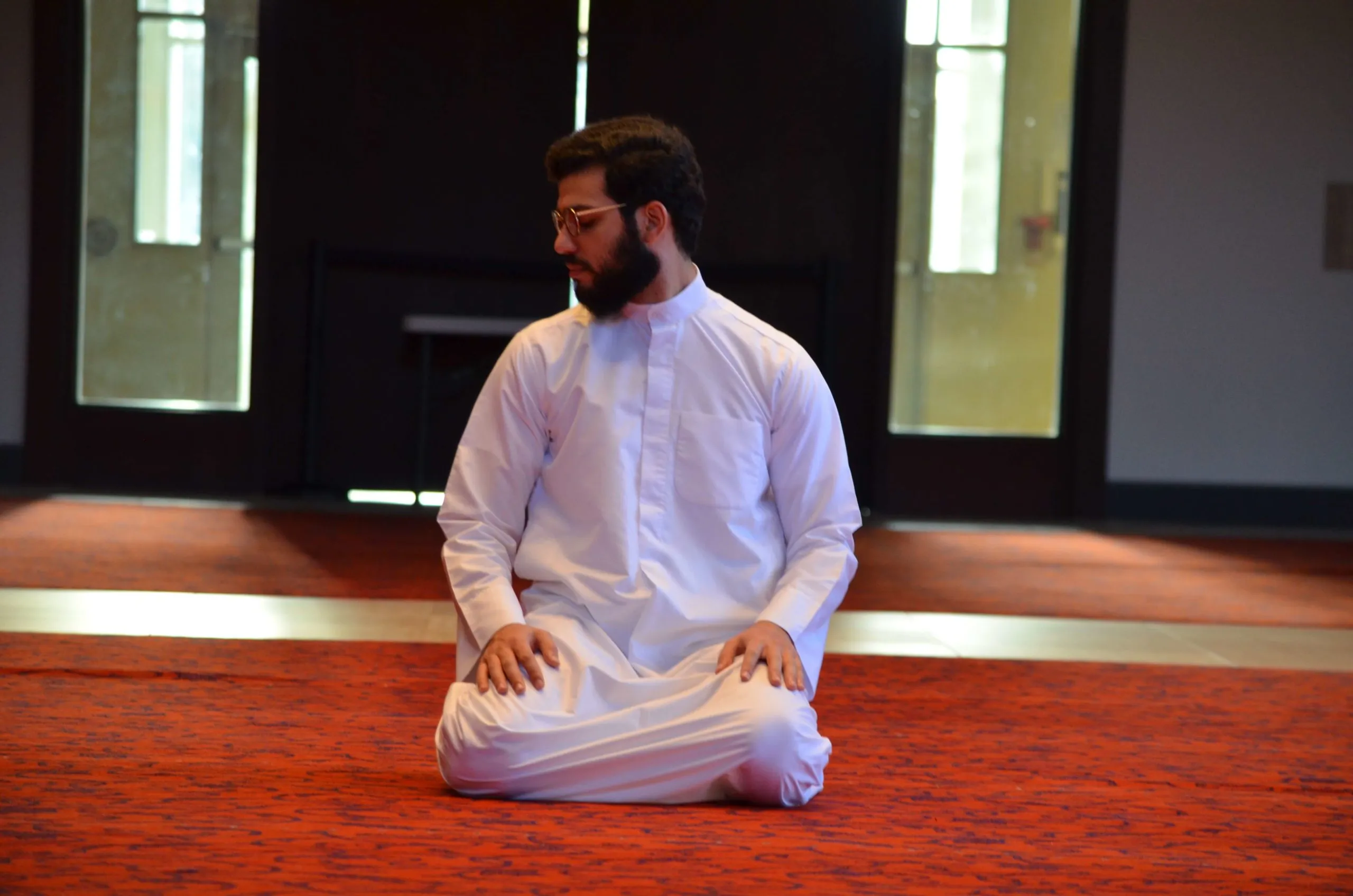
To finish the prayer, turn your head to the right and say:
السَّلَامُ عَلَيْكُمْ وَرَحْمَةُ اللَّهِ
Transliteration: As-salamu ‘alaykum wa rahmatullah.
Translation: May the peace and mercy of Allah be upon you.
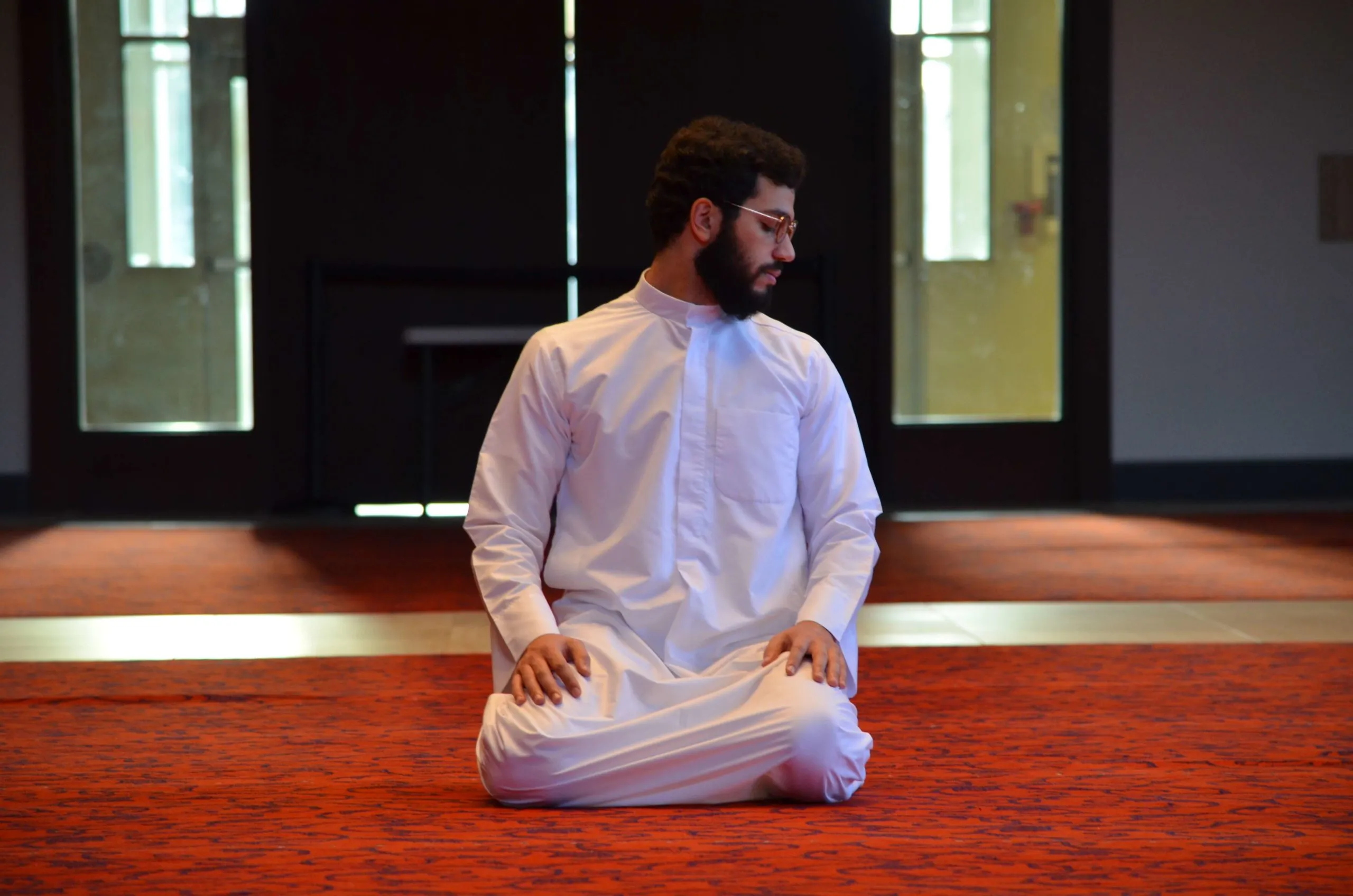
Then repeat the same formula while turning your head to the left:
السَّلَامُ عَلَيْكُمْ وَرَحْمَةُ اللَّهِ
How many rakats are in each prayer?
The five obligatory prayers have a specific number of rakats:
- Fajr, the dawn prayer: 2 rakats;
- Dhuhr, the noon prayer: 4 rakats;
- Asr, the afternoon prayer: 4 rakats;
- Maghrib, the sunset prayer: 3 rakats;
- Isha, the night prayer: 4 rakats.
Dhuhr and Asr are recited silently. Fajr, Maghrib and Isha are recited aloud in the first two rakats.
It is also recommended to recite a short surah or some Quranic verses after Al-Fatiha in the first two rakats of each prayer.
Common mistakes when learning how to pray
When you are a beginner, making mistakes is normal. What matters is to continue learning and correcting your prayer gradually.
- trying to learn everything in one day;
- relying only on transliteration without learning Arabic gradually;
- neglecting the pronunciation of Al-Fatiha;
- forgetting the number of rakats;
- confusing the words of Ruku, Sujud and Tashahhud;
- giving up because of fear of making mistakes;
- not asking for help when a teacher can correct errors.
Learn Salat with a teacher
Reading the words of prayer in transliteration can help at the beginning, but learning to read Arabic allows you to pronounce Al-Fatiha, the duas of Ruku and Sujud, the Tashahhud and the main formulas of prayer more accurately.
With a teacher, you can learn step by step: the conditions of prayer, the movements, the required words, correct recitation and the meaning of the main formulas.
- Online Islamic studies courses to learn prayer, ablution, the pillars of Islam and the basics of faith.
- Online Quranic Arabic courses to understand the words of prayer, supplications and religious vocabulary.
- Online Tajweed courses to improve the recitation of Al-Fatiha and short surahs.
Would you like to learn Salat with a teacher?
A free 30-minute trial can help you choose the right course for your level: Islamic basics, learning how to pray, Quranic Arabic or Tajweed.
Useful articles for learning how to pray
To continue learning, you may also read these resources:
- Guide to learning two units of prayer in Islam
- Surahs to learn first as a beginner
- Online Islamic studies courses
- Online Quranic Arabic courses
- Online Tajweed courses
FAQ about learning how to pray in Islam
How can I learn how to pray in Islam as a beginner?
Start by learning the main movements, the number of rakats, Surah Al-Fatiha, the formulas of Ruku and Sujud, the Tashahhud and the Taslim. You can learn gradually with a reliable guide or a teacher.
Can I pray using transliteration at the beginning?
Transliteration can help at the beginning, especially if you cannot yet read Arabic. However, it is important to gradually learn the Arabic recitation, especially Al-Fatiha, because it has a central place in the prayer.
How many rakats are there in the five daily prayers?
Fajr has 2 rakats, Dhuhr 4, Asr 4, Maghrib 3 and Isha 4. Some prayers also have recommended voluntary rakats.
Do I need to understand Arabic to pray?
The prayer is recited in Arabic, but a believer can gradually learn the meaning of what they recite. Understanding Al-Fatiha, Tashahhud and the main supplications helps improve concentration in prayer.
Which surah should I learn first for prayer?
Surah Al-Fatiha is the priority because it is recited in every rakah. After that, beginners can learn short surahs such as Al-Ikhlas, Al-Falaq, An-Nas or Al-Kawthar.
Conclusion
You now know the main steps to learn how to pray in Islam: intention, Takbir, recitation of Al-Fatiha, Ruku, Sujud, sitting, Tashahhud, Taslim and the number of rakats for each prayer.
If you are a beginner, progress gradually. Learn the movements and essential formulas first, then improve your recitation, pronunciation and understanding of the words of Salat.
With consistency, sincerity and suitable guidance, you can learn to pray with more confidence, concentration and understanding.



No Comments
No comments yet.