
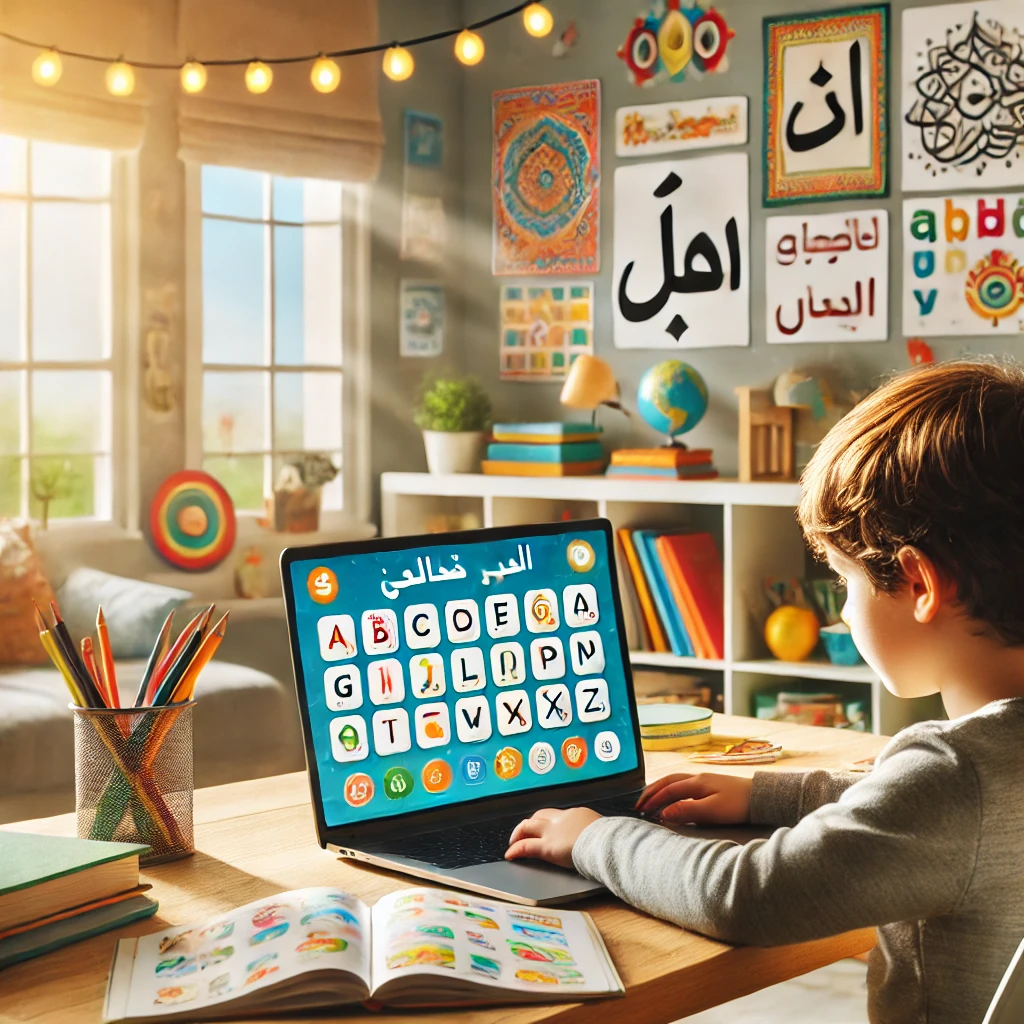
Introducing Arabic to a child can be a meaningful step, whether your goal is to help them read the language, connect with family culture, understand some Quranic words or simply develop a new language skill.
But for a child to make real progress, online Arabic classes for kids must be adapted to their age, level and attention span. Children do not learn like adults. They need a reassuring structure, a gradual method, a patient teacher and activities that keep them engaged.
In this article, you will learn how to help your child start Arabic online in the right way, what goals to set, how to keep them motivated and why learning with an Arabic teacher for kids can make a real difference.
Why choose online Arabic classes for kids?
Online Arabic classes make it easier for families to organize language learning without travel and with more flexible schedules. This is especially helpful for parents who want to include Arabic in their child’s routine without overloading the week.
A good Arabic course for children can gradually help them work on:
- the Arabic alphabet;
- letter recognition;
- Arabic reading;
- Arabic pronunciation;
- basic vocabulary;
- simple sentences;
- listening comprehension;
- confidence with the language.
If you are looking for a structured program with a teacher, you can explore our Arabic classes for kids, designed to support children according to their age, level and learning pace.
What is the best age to start Arabic for children?
There is no single perfect age to start. Some children can become familiar with Arabic sounds and letters very early, while others may need to wait until they are more comfortable with reading and concentration.
The most important point is to adapt the goal to the child’s age:
- Before age 6: the child can discover sounds, letters, simple songs and a few everyday words.
- From 7 to 12: the child can learn the Arabic alphabet, start reading, memorize vocabulary and build short sentences.
- From age 12: the child can move towards more fluent reading, better comprehension, basic grammar and speaking practice.
The goal is not to start too fast, but to start with a method that fits the child. A course that is too difficult may quickly discourage them.
Start with the Arabic alphabet and pronunciation
For a beginner child, the Arabic alphabet is the first step. The child needs to recognize the letters, distinguish them, and gradually read them in syllables and simple words.
This stage should be very gradual because Arabic writing is different from English. Arabic letters also change shape depending on their position in the word, which can take time for a child to understand.
Recognizing Arabic letters step by step
A good course for children does not introduce all letters too quickly. It moves step by step, with repetition, visual examples and short exercises.
The child can learn to:
- recognize isolated letters;
- connect each letter with its sound;
- distinguish similar-looking letters;
- read letters with short vowels;
- build small syllables;
- read their first Arabic words.
To support this stage, you can use our dedicated resource on the Arabic alphabet.
Correcting pronunciation from the beginning
Pronunciation is essential when learning Arabic. Some Arabic letters do not exist in English, and children may easily confuse several sounds if they are not corrected.
A teacher can listen to the child, gently correct mistakes and help them repeat difficult sounds. Regular correction prevents bad habits from becoming fixed.
For a child, correction should always remain encouraging. The goal is not to make the child feel uncomfortable, but to help them progress with confidence.
Choose a method adapted to your child’s age
Children learn better when the course matches their age and personality. Some children respond well to images, while others remember better through repetition, reading, songs or interaction with the teacher.
A good online Arabic course for children should therefore be flexible, lively and progressive.
For young children
With young children, the main goal is to create a positive first contact with Arabic. Lessons should be short, simple and visual.
The teacher may use:
- pictures;
- sounds;
- recognition games;
- large letters;
- short repetition exercises;
- words related to the child’s daily life.
At this age, the goal is not to move too fast. The child should first enjoy hearing, recognizing and repeating Arabic.
For children aged 7 to 12
At this age, children can usually follow a more structured learning path. They can start reading, memorizing vocabulary and building simple sentences.
Lessons may include:
- gradual reading of letters and words;
- pronunciation exercises;
- thematic vocabulary;
- short sentences;
- small dialogues;
- regular revision.
This is often a good age to build a real learning routine.
For teenagers
Teenagers can follow a method closer to adult learning, but they still need clear and motivating goals. They can work on reading, grammar, vocabulary, comprehension or speaking.
Depending on their goal, they may also move towards Modern Standard Arabic or Quranic Arabic.
Set simple and realistic goals
To keep a child motivated, goals should be clear, short and achievable. A goal that is too ambitious can create pressure, while gradual progress gives the child a reason to continue.
Examples of suitable goals include:
- recognizing five new letters;
- reading a few simple syllables;
- memorizing ten vocabulary words;
- repeating difficult sounds correctly;
- reading a short sentence;
- introducing themselves in Arabic with a few words;
- reviewing one lesson with a parent.
Every small step matters. For children, the feeling of success is very important. It supports motivation and makes them more willing to attend the next lesson.
Create a calm learning space at home
To follow an online lesson, the child needs a simple and calm environment. You do not need a special room, but distractions should be limited during the class.
A good learning space may include:
- a suitable table;
- a comfortable chair;
- a computer or tablet placed correctly;
- headphones if needed;
- a notebook for writing;
- a pencil;
- simple visual materials such as the Arabic alphabet.
Before the lesson, it is useful to prepare the materials and make sure the child is ready. This avoids losing the first few minutes and helps the child enter a regular learning routine.
Keep your child motivated during Arabic lessons
A child’s motivation can change from one week to another. This is normal. To keep them engaged, the lesson should include learning, repetition, interaction and encouragement.
The most effective activities are often simple:
- letter games;
- sound repetition;
- reading small words;
- visual guessing games;
- short songs;
- short stories;
- review questions;
- encouragement after each effort.
The goal is for the child to associate Arabic learning with a positive experience. The more capable they feel, the more willing they are to make an effort.
The role of parents in Arabic learning
Parental support is very important, especially at the beginning. Children progress better when they feel that their efforts are noticed, encouraged and valued.
Parents can help even if they do not know Arabic. They can simply:
- prepare the child before the lesson;
- encourage them after class;
- ask what they learned;
- display a few Arabic letters at home;
- review for five minutes with the child;
- praise effort, even small effort;
- keep a regular routine.
It is better to avoid too much pressure. The child should understand that Arabic is a gradual learning process, not an immediate performance.
Can children learn Arabic with apps alone?
Apps, videos and educational games can be useful for review. They can help children revisit letters, listen to sounds and memorize vocabulary.
However, for children, these tools cannot replace a teacher. An Arabic teacher for kids can correct pronunciation, adapt the pace, explain differently when the child does not understand and maintain real interaction.
Digital tools are helpful complements, but they work best when used alongside a structured course.
What if the goal is also connected to the Quran?
Many parents want their child to learn Arabic in order to read the Quran better or become familiar with Quranic words. In this case, it is important to separate the learning steps.
The child should first learn to recognize the letters, read correctly and pronounce sounds with care. Then, depending on their level, they can move towards Quranic Arabic, Quran reading or Tajweed.
If your main goal is recitation, you can combine Arabic learning with online Quran and Tajweed classes.
Learn Arabic with a teacher for kids
At Al-Dirassa Institute, online Arabic classes for kids are designed to help each child progress according to their age, level and learning pace. Children can work on the Arabic alphabet, reading, pronunciation, vocabulary and first sentences with a teacher.
The lessons are private, which allows the teacher to adapt the session to the child, correct mistakes and encourage progress step by step.
If you want to help your child start in the right conditions, you can book a free trial lesson to assess their level and discover the method.
Book your free trial of 30 minutes
Registration form
Conclusion
Online Arabic classes for kids can be very effective when they are adapted to the child’s age, level and personality. To start well, the learning path should be gradual, beginning with the Arabic alphabet, pronunciation and a simple routine.
This article helps you understand the foundations of a good start. But for a child to progress over time, they need a clear method, regular practice, encouragement and personalized correction.
With an Arabic teacher for kids, learning becomes more structured, reassuring and motivating. The child can build strong foundations in reading, pronunciation and vocabulary without being left alone with the difficulty.



No Comments
No comments yet.