

Today, there are many free resources to learn Arabic online: videos, PDFs, apps, alphabet lessons, reading exercises and Quranic Arabic materials. For a beginner, this can be an excellent starting point.
However, not all free resources are equal. Some help you begin properly, while others give the impression of learning without offering real progression. The most important thing is to know what to choose, how to use it and when to move toward more structured learning.
In this guide, you will discover how to recognize a good free online Arabic course, which types of resources are useful and what limits you should keep in mind.
Can you really learn Arabic online for free?
Yes, you can start learning Arabic for free. Online resources can help you discover the alphabet, sounds, first vowels, basic vocabulary and simple rules.
A beginner can learn for free:
- the letters of the Arabic alphabet;
- the forms of letters depending on their position;
- short vowels;
- how to read simple syllables;
- a few frequent words;
- the basics of pronunciation;
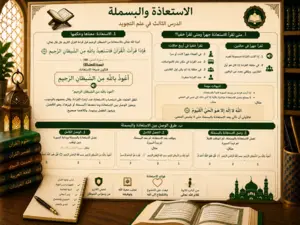
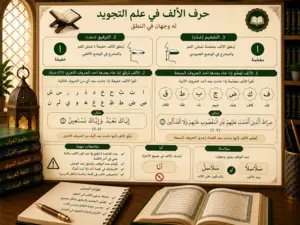
- some foundations of Quranic Arabic or Tajweed.
These resources are useful for testing your motivation and building your first foundations. But they do not always replace guided lessons, especially when you need pronunciation correction or regular progress.
What a good free Arabic course should offer
A good free course should not only provide content. It should also offer a clear progression.
Before following a free resource, check whether it includes:
- a logical order of lessons;
- simple explanations;
- clear examples;
- audio to hear the sounds;
- reading exercises;
- regular review;
- a precise objective: alphabet, reading, vocabulary, Tajweed or grammar.
If a resource starts directly with complex rules or long word lists without a method, it may waste your time.
The best types of free online Arabic courses
There is no single “best” free course for everyone. The right choice depends on your goal.
If you are a complete beginner, start with the alphabet and reading. If you already know how to read, you can work on vocabulary, basic grammar or Quranic Arabic. If your goal is the Quran, you will also need to pay close attention to pronunciation and Tajweed.
The most useful free resources are usually:
- videos for alphabet and reading;
- structured PDFs;
- revision apps;
- pronunciation audio;
- introductory courses;
- vocalized reading exercises;
- Quranic Arabic materials for beginners.
Free videos
Videos are often the first contact with Arabic. They allow you to see the letters, hear the sounds and follow visual explanations.
They are useful for:
- discovering the alphabet;
- listening to pronunciation;
- understanding the first rules;
- seeing reading examples;
- reviewing at your own pace.
Their limit is simple: a video cannot correct your own pronunciation. You may hear the correct sound without knowing whether you are producing it correctly.
PDFs and written materials
Free PDFs can be very useful for organizing your learning. They help you review letters, copy words, read exercises and keep a written record of the lessons.
They are especially helpful for:
- learning letter forms;
- practising writing;
- reading syllables and simple words;
- reviewing vowels;
- following a progression away from the screen.
But a PDF alone remains limited. It does not let you hear pronunciation or check whether your reading is correct. Ideally, it should be used with audio or guided lessons.
Arabic learning apps
Apps can help you review regularly. They are practical for memorizing vocabulary, revising letters or keeping daily contact with the language.
They are useful for:
- reviewing a few minutes per day;
- memorizing words;
- using flashcards;
- testing your knowledge;
- keeping a light routine.
But apps are not always enough to learn Arabic properly. They can encourage mechanical repetition without real understanding, especially if they are not connected to a structured method.
Free introductory courses
A free introductory course is often more useful than a single isolated video, because it offers progression. It can help you discover your level, understand your first difficulties and decide whether you want to go further.
A good introductory course may include:
- an introduction to the alphabet;
- reading exercises;
- audio lessons;
- simple explanations;
- an introduction to Quranic Arabic;
- a first level assessment.
These courses are useful for starting without commitment, but they are often limited in duration and personalized correction.
The limits of free courses
Free courses are useful for getting started, but they have limits. It is important to know these limits so you do not become discouraged or think you are progressing while mistakes are becoming habits.
The most common limits are:
- no personalized correction;
- pronunciation is not checked;
- progression may be incomplete;
- little or no follow-up;
- risk of moving from one resource to another;
- difficulty knowing what to study next;
- little adaptation to the learner’s real level.
Free resources are therefore very useful for discovery and review. But to make lasting progress, a clearer framework is often needed.
How to choose according to your goal
The best free course depends on what you want to learn.
- To learn the alphabet: choose a resource with audio, writing practice and reading exercises.
- To read Arabic: look for vocalized texts and a syllable-by-syllable progression.
- To understand the Quran: begin with frequent vocabulary and simple verse structures.
- To learn Tajweed: use reliable audio, but plan to get correction from a teacher.
- To speak Arabic: focus on simple dialogues and speaking practice.
If your goal is connected to the Quran, you can also read our guide on how to learn Arabic, Tajweed and Quran online for free.
When should you move to lessons with a teacher?
It is recommended to move to lessons with a teacher as soon as you begin reading aloud, working on pronunciation or trying to progress beyond the basics.
A teacher becomes especially useful if:
- you are not sure whether you pronounce correctly;
- you confuse certain letters;
- you are stuck despite using free resources;
- you lack consistency;
- you want to learn Quranic Arabic;
- you want to read the Quran more accurately;
- you need a clear program.
After testing free resources, you can move to online Arabic courses with a teacher to correct your pronunciation and follow a more structured progression.
Réservez votre essai gratuit de 30 minutes
Formulaire d'inscription
How Al-Dirassa can complete free resources
Al-Dirassa can support students who have started with free resources and then want to move forward with more structure. Lessons can help review the basics, correct reading, work on pronunciation and build a progression adapted to the student’s goal.
Depending on your objective, the program can focus on the alphabet, reading, Quranic Arabic, Tajweed, basic grammar, vocabulary or comprehension.
The goal is not to abandon free resources, but to complete them with human follow-up and a clearer method.
Conclusion
Free online Arabic courses are an excellent way to begin. They help you discover the alphabet, sounds, first reading steps and sometimes the basics of Quranic Arabic.
But to choose the best resources, you need to look at structure, audio, exercises and clarity of progression. You should also know the limits of free learning: lack of correction, limited follow-up and the risk of getting scattered.
The most effective path is often to start for free, then move to guided learning when you need correction, consistency and a program adapted to your level.
Réservez votre essai gratuit de 30 minutes
Formulaire d'inscription
FAQ — Best Free Online Arabic Courses
Can I learn Arabic online for free?
Yes, you can start for free with videos, PDFs, apps and introductory courses. These resources are useful for discovering the alphabet, sounds and first foundations.
What are the best free Arabic courses for beginners?
The best free courses for beginners are those that offer clear progression: alphabet, sounds, vowels, syllables, reading simple words and regular exercises.
Are apps enough to learn Arabic?
Apps can help with review, but they are not always enough to correct pronunciation, understand grammar and follow a complete progression.
Can I learn Quranic Arabic for free?
You can discover the basics of Quranic Arabic for free, especially frequent vocabulary and reading. To progress correctly, a teacher is recommended.
When should I move to Arabic lessons with a teacher?
As soon as you begin reading aloud, working on pronunciation or trying to go beyond the basics. A teacher helps correct mistakes and structure your learning.



Aucun commentaire
Aucun commentaire pour le moment.