
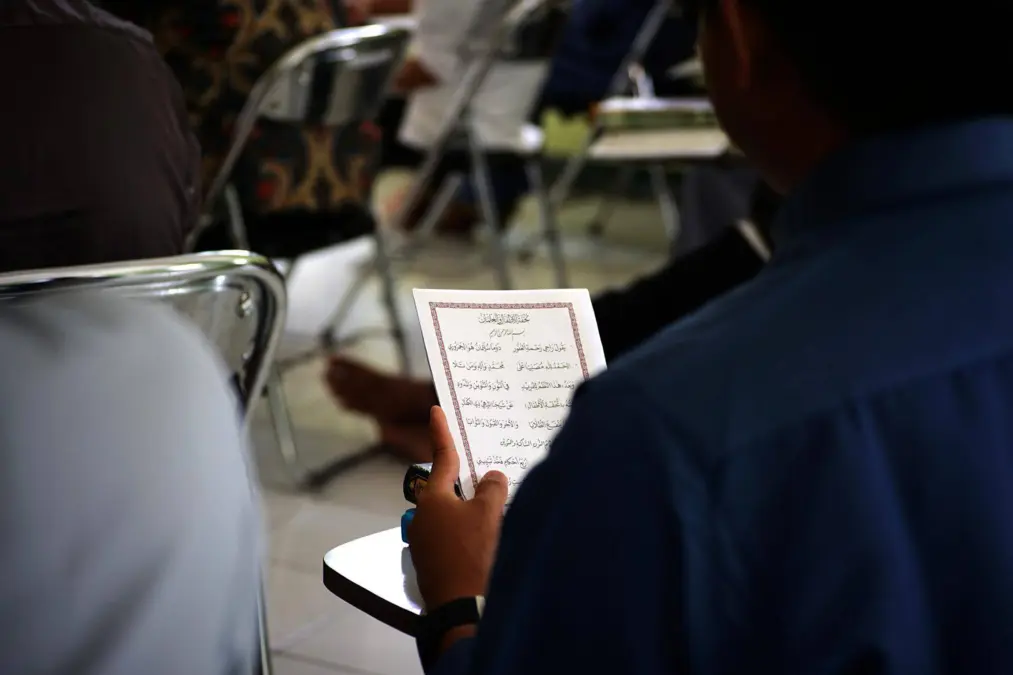
Improving your Arabic skills requires more than memorizing a few words or watching occasional videos. Arabic is a rich language with its own alphabet, sounds, grammar, vocabulary and cultural depth. To make real progress, you need a clear method, regular practice and correction.
Many learners start with motivation, but then feel blocked. They may know some Arabic letters, a few expressions or basic vocabulary, but still struggle to read fluently, pronounce correctly or understand sentence structure. This is normal, especially for students at the Arabic for beginners level.
In this article, you will discover seven practical strategies to improve your Arabic skills step by step. These strategies can help you strengthen Arabic reading, Arabic pronunciation, Arabic vocabulary, Arabic grammar and confidence, while showing why structured online Arabic classes with a teacher can make your progress clearer and more consistent.
Why Improving Arabic Can Feel Difficult
Arabic can feel challenging because it is different from English in several ways. It is written from right to left, the letters change shape depending on their position in the word, and some sounds do not exist in English.
Students may also feel confused by the difference between Modern Standard Arabic, classical Arabic, Quranic Arabic and spoken dialects. Each form of Arabic has its place, but beginners need a structured path to avoid mixing everything too early.
The key is not to rush. Improving Arabic requires building strong foundations first, then practicing regularly with materials adapted to your level.
1. Strengthen the Arabic Alphabet Foundations
The Arabic alphabet is the foundation of Arabic learning. If you do not recognize the letters clearly, it becomes difficult to read, write, memorize vocabulary or understand grammar.
To improve your Arabic, start by reviewing the letters, their sounds and their different forms. Arabic letters can appear in isolated, initial, medial and final forms. A student may recognize a letter on its own but fail to recognize it inside a word.
If you need to review this foundation, you can study our complete guide to the Arabic alphabet. This step is especially important before moving toward reading longer words or sentences.
2. Read a Little Arabic Every Day
Arabic reading improves with regular exposure. You do not need to read long texts at the beginning. A few syllables, short words or simple sentences every day can make a real difference.
Start slowly. Read aloud, repeat difficult words and focus on accuracy before speed. Over time, your eyes will recognize letter patterns more easily, and your reading will become more natural.
Daily reading also helps connect letters, sounds and meaning. This is an essential step for students who want to progress toward Modern Standard Arabic, Quranic Arabic or Arabic reading for religious texts.
3. Correct Your Arabic Pronunciation
Arabic pronunciation is one of the areas where many learners need correction. Some Arabic sounds are unfamiliar to English speakers, and it is easy to develop habits that become difficult to correct later.
Listening is important, but listening alone is not always enough. You should repeat sounds, compare your pronunciation and receive feedback when possible. A teacher can hear mistakes that an app or video may not detect.
Correct pronunciation is especially important if your goal is Quran reading, Tajweed, conversation or clear communication with Arabic speakers.
4. Learn Arabic Vocabulary in Context
Vocabulary is essential, but isolated word lists are not always effective. To remember Arabic vocabulary more easily, learn words in context: short sentences, dialogues, themes and real situations.
For example, instead of memorizing only a word for “book”, learn how to use it in a sentence. This helps you understand word order, grammar and meaning at the same time.
You can organize vocabulary by useful themes: family, home, school, travel, worship, time, numbers, food, work or daily routines. This makes learning more practical and easier to review.
5. Study Arabic Grammar Progressively
Arabic grammar can seem complex if you try to learn everything at once. A better method is to study grammar progressively, according to your level.
Beginners should first understand simple structures: nouns, verbs, adjectives, gender, number, pronouns, prepositions and basic sentence order. Later, they can study conjugation, cases, derived forms and more advanced rules.
If your goal is to read formal texts, articles or educational content, Modern Standard Arabic gives you a strong foundation. It is widely used in writing, media, formal communication and teaching.
6. Immerse Yourself in Level-Appropriate Arabic Content
Immersion can help you improve Arabic, but it must be adapted to your level. Watching advanced videos or listening to fast conversations too early can be discouraging.
Choose simple and useful content first: short dialogues, beginner texts, slow audio, children’s stories, vocabulary videos or guided reading. As your level improves, you can move toward podcasts, lectures, articles, Quranic vocabulary or native-level content.
Students interested in religious Arabic can also explore Quranic Arabic, especially if they want to recognize frequent words and structures found in the Quran.
7. Progress with an Arabic Teacher
Self-study tools can support your learning, but they do not always provide correction. Videos, apps, flashcards and books can help you review, but they cannot fully replace a teacher who listens, corrects and adapts the lesson to your needs.
A private Arabic teacher can help you identify your weaknesses, correct your pronunciation, improve your reading, explain grammar and organize your learning path. This is especially useful if you feel stuck or if you have studied Arabic before without clear progress.
At Al-Dirassa, students can learn Arabic online with qualified teachers and personalized support. Lessons can be adapted to beginners, adults, children, Quranic Arabic students or learners who want to improve Modern Standard Arabic.
You can also complete your learning with free Arabic books for beginners and, for families, dedicated Arabic classes for kids.
Book your free trial of 30 minutes
Registration form
Conclusion: Improving Arabic Requires Method and Regular Practice
Improving your Arabic skills takes time, but it becomes much easier when you follow a clear method. Start with the Arabic alphabet, read a little every day, correct your pronunciation, learn vocabulary in context and study grammar progressively.
Immersion is useful, but it should match your level. If the content is too difficult, it may discourage you. If it is adapted to your level, it can help you build confidence and increase your exposure to the language.
To make real progress, Arabic learning requires regular practice and correction. With a teacher, you can avoid common mistakes, receive personalized feedback and move step by step toward stronger Arabic reading, pronunciation, vocabulary, grammar and comprehension.



No Comments
No comments yet.