
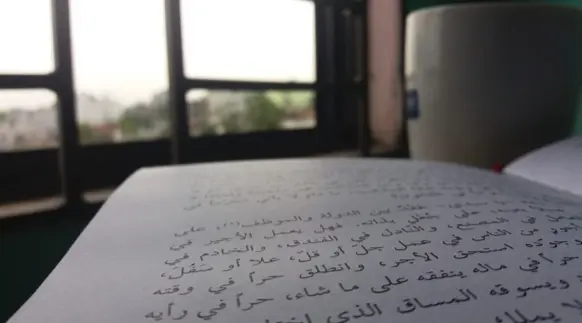
Learning Arabic online is not only about watching videos or downloading exercises. To make real progress, the student needs to take part actively: read, repeat, answer, ask questions, receive corrections and practise regularly.
This is the difference between passive learning and interactive learning. Arabic requires listening, pronunciation, reading, repetition and precise feedback on mistakes.
In this article, you will discover why an interactive method can make online Arabic learning clearer, more motivating and more effective.
What does interactive online Arabic learning mean?
An interactive Arabic lesson does not only give information. It involves the student directly in the learning process.
In practical terms, this means that the student:
- reads aloud;
- repeats difficult sounds;
- answers the teacher’s questions;
- does exercises during the lesson;
- corrects mistakes in real time;
- asks personal questions;
- receives follow-up adapted to their level.
This interaction makes learning more active. The student is not only watching or listening. They are participating and building real skills.
Why passive learning is not enough
Videos, apps and free resources can be useful for discovering Arabic. They can help you review the alphabet, listen to sounds or memorize a few words.
But these resources have one major limit: they cannot tell you whether you are pronouncing correctly, reading accurately or understanding a rule in the right way.
Many learners spend a lot of time watching content without really practising. They feel that they are learning, but their mistakes remain invisible.
For a language like Arabic, interaction is essential because some mistakes need to be corrected quickly.
The importance of live correction
Live correction is one of the main advantages of interactive learning. It allows a mistake to be corrected as soon as it appears, before it becomes a habit.
This is especially important for pronunciation. Some Arabic letters do not exist in English, such as ع, خ, ح, غ and ق.
A student can listen to these sounds many times without knowing whether they are producing them correctly. A teacher can hear the mistake, explain it and ask the student to repeat until the sound improves.
This immediate correction is also useful for reading, vowels, grammar and sentence construction.
Practising speaking from the first stages
Even beginners can practise speaking. This does not mean holding a full conversation from the first weeks. It means pronouncing letters, repeating simple words and answering basic questions.
Speaking practice helps students:
- memorize sounds;
- gain confidence;
- improve fluency;
- get used to the rhythm of Arabic;
- reduce the fear of speaking.
The goal is not to speak perfectly at the beginning. The goal is to create regular contact with the language.
Interacting with a teacher to understand better
A grammar rule explained in a book can feel abstract. But when a teacher explains it with examples, then asks you to use it in a sentence, the rule becomes easier to understand.
Interaction allows the teacher to adapt the explanation to the student. If something is unclear, the teacher can rephrase, give another example or return to an earlier step.
This is especially useful for Arabic grammar, which is logical but different from English. Students often need simple examples to understand how Arabic sentences are built.
Exercises, repetition and follow-up
Good interactive learning relies on three elements: exercises, repetition and follow-up.
Exercises show whether the lesson has been understood. Repetition helps fix sounds, words and structures in memory. Follow-up helps measure whether the student is truly progressing.
During an interactive lesson, the teacher can observe:
- which letters are difficult for the student;
- repeated reading mistakes;
- grammar points that are not yet clear;
- vocabulary that is often forgotten;
- problems with concentration or consistency.
This kind of follow-up prevents the student from staying stuck without understanding why.
Interactive learning and Quran reading
For students who want to read the Quran, interactivity is even more important. Quran reading requires precise pronunciation, correct articulation of letters and careful attention to vowels.
A video can show the correct recitation, but it cannot correct your own reading.
With a teacher, the student can read aloud, receive correction, repeat difficult passages and progress with more confidence.
This approach is especially useful for avoiding pronunciation mistakes and building solid foundations before moving further.
Why interactive courses help motivation
One of the biggest challenges in online learning is consistency. Many learners start with motivation, then slow down after a few weeks.
An interactive course helps maintain rhythm because the student has a lesson time, a teacher, goals and follow-up.
It becomes easier to continue when you know what to work on, when you can see your progress and when someone encourages you along the way.
Interaction also creates a real learning relationship. The student is not alone in front of a screen. They are learning with someone who listens, corrects and guides them.
How to choose an interactive Arabic course online
To choose a good interactive Arabic course, several elements should be checked.
- Correction: the teacher should correct pronunciation, reading and understanding mistakes.
- Progression: the lessons should follow a clear order adapted to the student’s level.
- Practice: the student should read, repeat, speak and do exercises.
- Follow-up: the program should help measure progress.
- Goal: the course should match the student’s objective: Quranic Arabic, reading, speaking, grammar or vocabulary.
An effective interactive course should not only feel enjoyable. It should help the student make visible progress.
How Al-Dirassa makes online Arabic lessons more interactive
Al-Dirassa offers online Arabic lessons based on real interaction between the student and the teacher. Lessons can be adapted to the level, objective and rhythm of each learner.
Depending on the student’s needs, lessons can focus on the alphabet, reading, pronunciation, Quranic Arabic, grammar, vocabulary or comprehension.
If you want to learn through real interaction, live correction and regular follow-up, our online Arabic courses with a teacher offer an interactive framework adapted to your level.
Book your free trial of 30 minutes
Registration form
Conclusion
Learning Arabic online interactively helps students move beyond passive learning. The student does not only watch or listen: they read, repeat, answer, practise and receive corrections.
This interaction is essential for improving pronunciation, reading, grammar and comprehension. It also helps students stay motivated and consistent.
With a clear method, an attentive teacher and active practice, online Arabic learning becomes more structured, more engaging and more effective.
Book your free trial of 30 minutes
Registration form
FAQ — Learn Arabic Online Interactively
What is an interactive online Arabic course?
It is a course where the student participates actively: reading, repeating, answering questions, doing exercises and receiving corrections from the teacher.
Why is interaction important for learning Arabic?
Because Arabic requires precise correction, especially for pronunciation, reading and vowels. Interaction helps mistakes be corrected quickly.
Can I learn Arabic only with videos?
Videos can help you discover the language, but they cannot correct your mistakes. To progress properly, human feedback is often needed.
Are interactive Arabic lessons suitable for beginners?
Yes. Beginners benefit strongly from interaction because they can correct their foundations from the start: alphabet, sounds, vowels and reading.
Can an interactive course help with Quran reading?
Yes, especially if the teacher corrects pronunciation and reading. To read the Quran correctly, listening and correction are very important.



No Comments
No comments yet.