
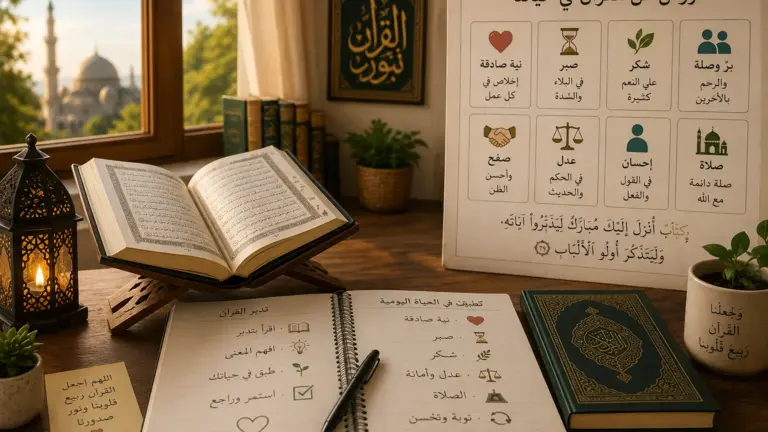
The Quran is a source of guidance for belief, worship, behavior and human relationships. Living by the Quran does not only mean reading or reciting its verses. It also means seeking to understand its teachings and applying them gradually in daily life.
The lessons of the Quran concern the heart, the tongue, actions, family, work, social relationships and the way one faces trials. They invite the believer to move forward with sincerity, patience, gratitude, justice, kindness and humility.
In this article, we will look at several Quranic teachings that are useful in everyday life, along with simple ways to strengthen one’s relationship with the Book of Allah without making the process heavy or unrealistic.
What does it mean to live by the Quran?
Living by the Quran means taking the Book of Allah as guidance in life. It is not limited to knowing religious information. It means allowing the teachings of the Quran to influence intentions, words, choices and behavior.
This requires consistency and humility. No one progresses perfectly overnight. The goal is to move forward step by step, correcting what needs to be corrected and trying to bring one’s life closer to the values taught by the Quran.
The Quran is therefore not only a text recited at certain moments. It is guidance that enlightens the way one thinks, speaks, acts, shows patience, gives thanks and returns to Allah.
Begin with a sincere intention
In Islam, intention has an essential place. Before acting, the believer is invited to examine what motivates the action: is it seeking good, the pleasure of Allah, benefit for others, or only appearance and praise?
Living by the Quran begins in the heart. An outwardly correct action may lose value if it is driven by pride, showing off or personal interest. On the other hand, sincere intention can transform ordinary actions into opportunities for good.
In daily life, this can be very simple: working honestly, helping one’s family, learning beneficial knowledge, guarding one’s tongue or fulfilling a responsibility with the intention of pleasing Allah.
Cultivate patience during trials
The Quran often mentions patience. Life includes difficulties, delays, disappointments, losses and moments of uncertainty. Patience does not mean being passive, but keeping trust in Allah while making the necessary efforts.
Patience helps one avoid reacting with anger, giving up too quickly or losing spiritual balance during hardship. It appears in worship, relationships, learning and self-control.
Applying this lesson daily may mean pausing before responding, continuing a good action despite fatigue, or accepting that religious and personal progress takes time.
Respond with kindness and forgiveness
The Quran teaches kindness, restraint and forgiveness. In family, professional or social relationships, the believer may face hurtful words, injustice or misunderstandings.
Living by the Quran invites one not to let every conflict become a cause of harshness or rupture. Responding with wisdom, forgiving when possible and avoiding excess in reaction are behaviors that calm relationships.
Forgiveness does not mean accepting injustice or removing all responsibility. It means seeking a balanced response, protecting the heart from resentment and preferring what brings one closer to good.
Recognize the blessings of Allah with gratitude
Gratitude, or shukr, is a central value in the life of a believer. It means recognizing that blessings come from Allah, thanking Him and using those blessings in ways that please Him.
Gratitude is not limited to major visible blessings. It also includes health, faith, time, family, safety, the ability to learn, food, speech and opportunities to correct oneself.
In daily life, gratitude may appear through words of thanks, humility, avoiding waste and using blessings responsibly.
Act with justice and honesty
The Quran calls to justice, even when it goes against one’s personal interests. This justice concerns words, judgments, responsibilities, commitments and relationships with others.
Honesty is part of this justice. Telling the truth, keeping promises, avoiding deception and admitting mistakes are concrete ways to apply Quranic values.
In daily life, this may concern trade, work, studies, family relationships or online interactions. Living by the Quran requires consistency between declared faith and actual behavior.
Guard your tongue
The tongue can be a source of good or harm. A word may reconcile, encourage and remind others of Allah. It may also hurt, divide, humiliate or spread injustice.
Living by the Quran therefore involves paying attention to what one says: avoiding lies, mockery, backbiting, insults and useless words that harden the heart.
Guarding the tongue does not mean remaining silent when good can be spoken. It means speaking responsibly, choosing words carefully and remembering that speech is part of one’s deeds.
Preserve prayer as a daily connection with Allah
Prayer is one of the pillars of Muslim life. It structures the day, reminds the believer of Allah’s presence and helps one return regularly to what matters most.
Preserving prayer also means preserving a living connection with the Quran. In every prayer, the Muslim recites verses and stands before the Lord. The more one understands what is recited, the more attentive and deep prayer can become.
This is why learning to read, recite and understand the meaning of verses can help strengthen focus in prayer.
Repent and seek personal reform
Living by the Quran does not mean being free from mistakes. The believer may forget, become distracted or fall into sin. What matters is returning to Allah, seeking forgiveness and sincerely trying to improve.
Repentance, or tawbah, prevents the believer from remaining trapped by mistakes. It opens a path of return, humility and personal reform.
In practice, this means recognizing shortcomings, feeling sincere regret, leaving the sin and taking concrete steps to improve.
Bring the Quran into daily choices
Applying the Quran daily is not limited to major spiritual moments. It also concerns ordinary choices: how to speak to family, manage time, work, respond to difficulty or treat someone weaker than oneself.
The believer can regularly ask: does this choice bring me closer to Allah? Is this word fair? Is this reaction balanced? Does this attitude reflect the mercy, justice and humility taught by the Quran?
These simple questions help transform Quranic teachings into practical guidance in life.
How can you better understand Quranic teachings?
To apply the Quran, one should seek to understand it with respect and method. Fast or irregular reading may inspire, but it is not always enough to build solid understanding.
It is useful to combine recitation, studying the general meaning and gradually learning Quranic Arabic. This approach helps the believer better understand the messages of the Quran and connect them to daily life.
To organize your progress, you can read our guide to learn the Quran, explore our online Quran courses or deepen your understanding of the verses with our Quranic Arabic courses.
Book your free trial of 30 minutes
Registration form
FAQ — Living by the Quran
What does it mean to live by the Quran?
It means taking the Quran as guidance in beliefs, worship, speech, behavior and daily choices.
Do you need to understand the whole Quran before applying it?
No. The believer can begin by applying the clear teachings already known, then gradually deepen understanding.
How can the Quran guide relationships?
Through justice, kindness, forgiveness, sincerity, guarding the tongue and respecting the rights of others.
Why does prayer help us live by the Quran?
Because it regularly reminds the believer of Allah, structures the day and maintains a living connection with the verses recited.
How can one progress without becoming discouraged?
By moving step by step, correcting one thing at a time, renewing intention and not giving up after a mistake or period of weakness.
Conclusion: making the Quran a living guide
Living by the Quran means seeking to bring its teachings into daily choices: intention, patience, gratitude, justice, honesty, prayer, forgiveness, guarding the tongue and repentance.
This progress requires time, sincerity and consistency. The Quran is not only a text to read, but guidance to understand, reflect upon and apply with humility.
By learning the Quran with method, gradually studying its meaning and correcting recitation, every learner can strengthen their connection with the Book of Allah and move toward more conscious practice.





No Comments
No comments yet.
No comments yet.