
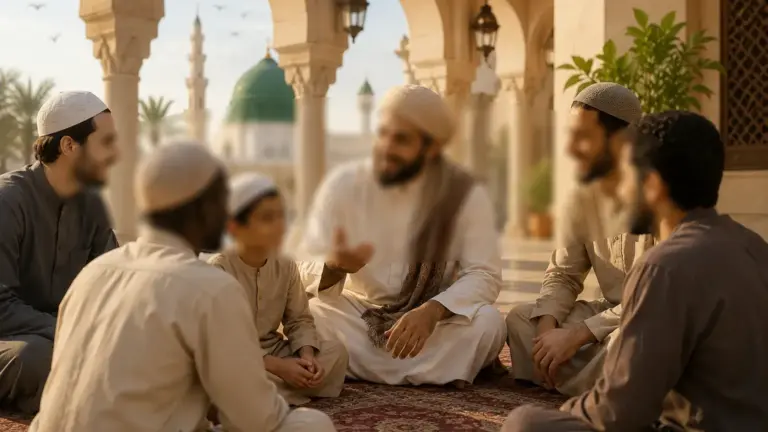
The character of Prophet Muhammad ﷺ is a model for every Muslim. He was not only a messenger who taught belief, prayer and worship. He also showed, through his daily behavior, how a believer should treat family, companions, neighbors, children, strangers and even those who disagreed with him.
Among the many character traits of the Prophet ﷺ, one quality is especially important in daily life: he made people feel valued, respected and cared for. Those who sat with him did not feel ignored or insignificant. They felt seen, heard and honored.
In this article, we will explore this beautiful quality through the hadith of `Amr ibn al-`As رضي الله عنه, and explain how Muslims can follow this Sunnah through kindness, respect, good speech and sincere attention to others.
Why Study the Character of the Prophet ﷺ?
Learning Islam is not limited to studying rules and information. It also means learning how to live with faith, mercy, humility and good manners. The Prophet ﷺ taught Islam through words, but also through his character.
His behavior showed how knowledge should change the heart and actions. A Muslim who learns the Quran and Sunnah should also work on patience, honesty, modesty, kindness, forgiveness and respect for others.
Studying the character of the Prophet ﷺ helps us understand that good manners are not secondary in Islam. They are part of the religion and part of true Islamic education.
A Central Quality: Making People Feel Valued
One of the beautiful qualities of the Prophet ﷺ was his ability to make people feel important in his presence. He gave people attention, listened to them and treated them with warmth.
This does not mean that he praised people falsely or ignored the truth. Rather, he honored people with sincerity, justice and mercy. He recognized their dignity and treated them in a way that brought comfort to their hearts.
In a world where many people feel unseen, ignored or judged, this prophetic quality remains deeply relevant. A smile, a kind word, sincere listening and respectful treatment can have a strong effect on a person’s heart.
The Hadith of `Amr ibn al-`As رضي الله عنه
`Amr ibn al-`As رضي الله عنه once asked the Prophet ﷺ who was the most beloved person to him. The Prophet ﷺ replied: Aisha رضي الله عنها. When `Amr asked about men, the Prophet ﷺ mentioned her father, Abu Bakr رضي الله عنه.
This narration shows the Prophet’s ﷺ love for those close to him. It also teaches another lesson: `Amr رضي الله عنه had felt so warmly treated by the Prophet ﷺ that he hoped to be among the most beloved to him.
This reflects the Prophet’s ﷺ noble character. He did not make people feel small. He gave them attention, welcomed them and treated them with care, while still being truthful and just.
Kindness in Daily Relationships
Following the Prophet ﷺ in this quality does not require complicated actions. It begins with small daily behaviors that show people they matter.
Greeting people warmly
A warm greeting can soften the heart. Saying salam with attention, smiling sincerely and showing that you are pleased to meet someone are simple actions, but they reflect good manners.
Many people interact quickly and coldly. A Muslim should try to bring warmth, respect and peace into ordinary meetings.
Listening with attention
Listening is an important part of kindness. When someone speaks, give them attention instead of cutting them off, looking away or making them feel unimportant.
Listening does not mean agreeing with everything. It means giving the person their right to be heard with dignity.
Saying positive words
Good words can strengthen relationships. A sincere compliment, a dua for someone, a word of encouragement or a simple expression of gratitude can bring happiness to another person.
The believer should avoid harshness, mockery, insults and unnecessary criticism. The tongue can either heal hearts or wound them.
Mercy and Respect in the Sunnah
The Sunnah of the Prophet ﷺ teaches mercy and respect. He showed kindness to children, patience with new Muslims, concern for the weak and generosity toward those around him.
This prophetic mercy was not weakness. It was strength guided by faith. He was firm when firmness was needed, but his general character was full of compassion, justice and dignity.
Muslims today need this balance. We should be attached to truth, but without arrogance. We should advise others, but without humiliation. We should practice Islam, but without becoming harsh in our homes and communities.
How Can We Apply This Quality Today?
This prophetic quality can be practiced in many simple ways:
- greet people with salam and a sincere smile;
- make dua for others;
- show appreciation to family members;
- listen before judging;
- help someone without waiting for a reward;
- avoid embarrassing people in public;
- forgive when possible;
- speak with gentleness and respect.
These actions may seem small, but they can change the atmosphere of a home, a classroom, a workplace or a community.
Teaching Good Manners to Children
Children learn Islam not only through lessons, but also through examples. When they see adults speak kindly, forgive, show respect and care for others, they understand that Islam is a religion of mercy and good character.
Teaching children about the Prophet ﷺ should include stories of his patience, honesty, kindness, courage and mercy. It should also include practical habits: saying salam, thanking others, speaking truthfully, helping parents and respecting people.
For families who want a structured path, Islamic classes for kids can help children learn faith, Quran, supplications and good manners step by step.
Learning Islam Through the Quran, Sunnah and Adab
The character of the Prophet ﷺ is part of Islamic education. To follow him properly, a Muslim needs to learn the Quran, the Sunnah, belief, worship and adab, meaning Islamic manners.
Good manners become stronger when they are connected to knowledge. A person understands why kindness matters, why arrogance is dangerous, why the tongue must be controlled and why people’s rights should be respected.
If you want to learn Islam with a clear and progressive approach, Al-Dirassa offers courses adapted to beginners, adults and families.
You can also study Islamic studies online, read more Islamic articles, or strengthen your connection with revelation through our online Quran and Tajweed classes.
Book your free trial of 30 minutes
Registration form
Conclusion
Among the beautiful character traits of Prophet Muhammad ﷺ was his ability to make people feel valued, respected and cared for. This quality is deeply needed in our families, communities and daily relationships.
Following this Sunnah begins with simple actions: warm greetings, sincere listening, kind words, service, forgiveness and respect. These actions reflect the beauty of Islam when they are done sincerely for Allah.
Understanding the character of the Prophet ﷺ is a first step. To learn Islam more completely, a person needs method, regularity, reliable sources and guidance from a qualified teacher.



No Comments
No comments yet.
No comments yet.