
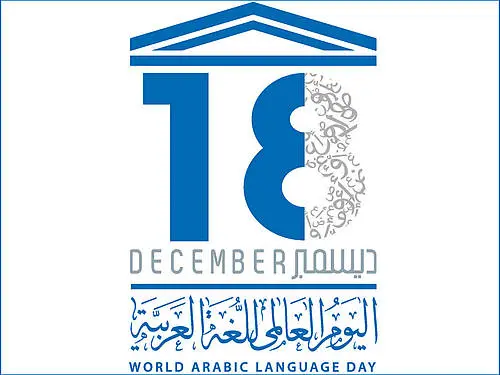
World Arabic Language Day: Why Celebrate It on 18 December?
Every year on 18 December, World Arabic Language Day celebrates one of the richest and most influential languages in the world. This day reminds us of the importance of Arabic in culture, literature, science, spirituality and international communication.
For native speakers, students, teachers and language enthusiasts, this date is an opportunity to better understand the place of Arabic in history and in today’s world. It can also become a starting point for anyone who wants to discover the Arabic alphabet, learn a few useful words or begin a more regular learning path.
But why does this day exist? Why does the Arabic language hold such an important place? And how can it be celebrated in a simple, useful and enriching way, even for beginners?
What is World Arabic Language Day?
World Arabic Language Day is celebrated every year on 18 December. It highlights the Arabic language, its richness, its history and its role in dialogue between cultures.
This date refers to the adoption of Arabic as one of the official languages of the United Nations in 1973. Since then, Arabic has held an important place in diplomacy, international institutions, media, education, literature and global communication.
This day is therefore not only for Arabic-speaking countries. It also concerns students, teachers, families, cultural institutions and anyone who wants to know this language better.
Why is the Arabic language so important?
An international language
Arabic is used in many countries, in the media, in international institutions and in cultural exchanges. It is a language of communication, but also a language of identity, transmission and civilization.
Learning Arabic can therefore open important doors: understanding another culture, travelling more meaningfully, communicating with Arabic speakers or developing new personal and professional skills.
A language of culture, science and literature
Arabic has a very rich cultural heritage. It has transmitted knowledge in fields such as medicine, mathematics, astronomy, philosophy, poetry, grammar and literature.
Throughout the centuries, many scholars, writers and poets used Arabic to transmit their ideas. Arabic is therefore much more than a communication tool: it is also a language of thought, beauty and transmission.
A central language for understanding the Quran
For Muslims, Arabic has a special place because the Quran was revealed in Arabic. Many students therefore choose to learn Arabic in order to better read, recite and understand religious texts.
In this case, learning can begin with Arabic reading, then move toward vocabulary, grammar and Quranic Arabic. This progression takes time, but it helps learners better understand words and sentence structures.
Students interested in this goal can explore our Quranic Arabic course or our online Quran and Tajweed lessons.
Why celebrate World Arabic Language Day?
To remember the richness of Arabic
This day reminds us that Arabic is a living language, both ancient and modern. It has a rich grammar, a vast vocabulary and a strong presence in global culture.
It also helps highlight Modern Standard Arabic, classical Arabic, Arabic dialects and the many forms of expression connected to the language: poetry, calligraphy, literature, recitation, speeches, proverbs and everyday expressions.
To encourage Arabic learning
World Arabic Language Day can be an excellent motivation to start learning. Many people want to learn Arabic but do not always know where to begin.
The first step is often the Arabic alphabet, followed by reading, pronunciation, vocabulary and basic grammar. With a clear method, even a beginner can progress step by step.
To pass the language on to children
This day can also be an opportunity to introduce children to the Arabic language. Families can organize a simple activity: learning a few letters, listening to a story in Arabic, reading short words or discovering an educational song.
For parents who want a more regular framework, Arabic classes for kids allow children to learn progressively with a method adapted to their age and pace.
How can you celebrate World Arabic Language Day?
Discover the Arabic alphabet
For beginners, the best way to celebrate this day is to start with a simple action: discovering a few letters of the Arabic alphabet. This helps learners understand that Arabic has its own writing system, with letters that change shape depending on their position in the word.
This first step is essential for learning to read Arabic correctly. You can start with our guide to the Arabic alphabet.
Learn a few useful Arabic words
You can also learn a few simple Arabic words related to daily life, such as greetings, numbers, colors or polite expressions.
- السَّلَامُ عَلَيْكُمْ: peace be upon you;
- شُكْرًا: thank you;
- كِتَاب: book;
- لُغَة: language;
- عَرَبِيَّة: Arabic.
These words make learning more concrete and motivating, especially for beginners.
Read or listen to Arabic
Listening to Arabic is an excellent way to get used to the sounds of the language. You can listen to a short recitation, an educational video, a children’s story or a simple conversation.
Reading is also important. Even a few minutes a day can help improve letter recognition, fluency and pronunciation.
Discover Arabic calligraphy
Arabic calligraphy is one of the best-known artistic expressions of the Arabic language. It shows the beauty of writing and the visual richness of Arabic letters.
For this day, you can discover different styles of calligraphy, write your name in Arabic or observe how letters connect to one another.
Use free resources
Free resources can help you start without pressure. You can use worksheets, books, exercises or audio materials to discover the basics.
Al-Dirassa also offers free Arabic books for beginners, useful for reviewing the alphabet, reading and basic vocabulary.
Can World Arabic Language Day become a starting point?
Yes. This day can be an ideal moment to turn simple curiosity into a real learning project.
Many students begin with cultural, religious or family motivation. Over time, they discover that learning Arabic requires method: knowing the letters, practising reading, correcting pronunciation, memorizing vocabulary and gradually understanding Arabic grammar.
Depending on your goal, you can choose different paths: beginner Arabic, Modern Standard Arabic, Quranic Arabic, conversation or classes for children.
Learning Arabic after World Arabic Language Day
A day of celebration can create motivation, but progress comes with consistency. Self-study can be useful for discovering the language, but a teacher helps you go further by correcting mistakes, explaining rules, adapting the pace and guiding the student with method.
With Al-Dirassa, you can follow online Arabic courses with a teacher. Lessons are adapted to adults, children, beginners and students who want to improve reading, pronunciation, grammar or Quranic Arabic comprehension.
Book your free trial of 30 minutes
Registration form
Conclusion
World Arabic Language Day is an opportunity to celebrate an international, cultural and spiritual language. It reminds us of the importance of Arabic in history, literature, science, dialogue between peoples and the understanding of religious texts.
This article has shown why this day matters and how to celebrate it simply. But to truly learn Arabic, you need a clear method, regular practice and precise correction.
With suitable support, discovering Arabic can become a strong, lasting and deeply enriching learning journey.




No Comments
No comments yet.
No comments yet.