
DCL Arabic, or the Arabic Language Competence Diploma, is a certification that helps you officially prove your Arabic level in a professional context. It can be useful for adults, students, employees, job seekers and anyone who wants to show their Arabic skills for an academic or career project.
Unlike a simple vocabulary test, DCL Arabic evaluates your ability to use the language in a situation close to real working life. The candidate may need to understand documents, listen to information, speak and produce a written response in Arabic according to their level.
In this article, you will learn what DCL Arabic is, why Arabic language certification can be useful, which skills are tested and how to prepare seriously with a clear method.
What is DCL Arabic?
DCL stands for Diplôme de Compétence en Langue, which means Language Competence Diploma. It is a French professional language diploma designed to assess how a person can use a language in practical and professional situations.
For Arabic, the certification evaluates the candidate’s ability to understand and use Arabic in work-related situations, professional communication or personal development projects.
DCL Arabic is linked to the CEFR levels, also known as the Common European Framework of Reference for Languages. The result helps place the candidate’s level on a known scale such as A1, A2, B1, B2 or C1, depending on the certification and current examination rules.
Why take an Arabic language certification?
An Arabic language certification can be useful when you want to prove your level more clearly than with a simple line on a resume. It gives a more objective indication of your skills.
Strengthening your resume
Saying that you have studied Arabic is useful. But showing a certified level can be more convincing for an employer, a school or a training organization.
Arabic can be useful in many fields: international business, translation, teaching, tourism, social work, diplomacy, humanitarian work, public relations and cooperation with Arabic-speaking countries.
Preparing for a professional or academic project
A certification can also support a study project, mobility plan, career change or professional development. It can show that your Arabic learning is not only based on personal impression, but on structured assessment.
It can also be useful if you already work with Arabic-speaking people or if you want to develop an additional language skill for your job.
Which Arabic levels are tested?
Arabic language certifications often use CEFR levels. These levels describe language skills in a progressive way.
CEFR levels: A1, A2, B1, B2 and C1
- A1: beginner level, very simple expressions and first exchanges.
- A2: elementary level, simple sentences related to common situations.
- B1: intermediate level, understanding and communication in familiar situations.
- B2: independent level, ability to understand more complex texts and express yourself with more ease.
- C1: advanced level, precise understanding and structured expression in varied contexts.
The goal is not only to know rules, but to use Arabic in a practical way.
Reading, listening, speaking and writing
A serious certification does not only test grammar. It usually evaluates several skills:
- written comprehension;
- listening comprehension;
- written expression;
- spoken expression;
- interaction in a given situation.
This is why preparation must be complete. It is not enough to memorize Arabic vocabulary. You also need to read, listen, write, speak and reformulate ideas.
Which skills should you build for an Arabic certification?
To prepare for an Arabic certification, you need to build solid foundations and use them in practical situations. Regular work is essential.
Arabic reading and written comprehension
Arabic reading is a central skill. You need to recognize words, understand sentences, find important information and follow the logic of a text.
If you are a beginner, learning the Arabic alphabet is essential. Without correct reading, it will be difficult to move toward professional or academic texts.
Listening and speaking skills
Listening comprehension requires regular exposure to the language. You need to listen to different types of material: dialogues, announcements, conversations, presentations or audio extracts adapted to your level.
Speaking also requires practice. You need to learn how to introduce yourself, explain a situation, give your opinion, ask questions and answer with clear sentences.
Writing, grammar and vocabulary
Written expression requires a good understanding of sentence structure. Arabic grammar helps you organize words, choose correct forms, use pronouns, conjugate verbs and express ideas accurately.
Vocabulary should also be studied by theme: work, studies, family, time, organization, documents, requests, answers, opinions, problems and solutions.
Which type of Arabic should you learn for certification?
For a certification such as DCL Arabic, it is better to study clear, structured and widely understood Arabic. Dialects can be useful in some contexts, but they are not always suitable for a general professional language certification.
Modern Standard Arabic
Modern Standard Arabic is usually the strongest foundation. It is the form used in written documents, media, formal texts and many learning contexts.
For certification preparation, this foundation helps you work on reading, comprehension, grammar and expression in a more coherent way.
Professional vocabulary and work situations
Because DCL Arabic is oriented toward professional use of the language, it is useful to learn vocabulary connected to work situations: making an appointment, understanding instructions, presenting information, explaining a problem, writing a message or answering a request.
This vocabulary should be learned inside sentences and practical situations, not only as isolated word lists.
How to prepare effectively for DCL Arabic
To prepare well, you first need to identify your current level. A beginner will not prepare in the same way as a student who can already read and have a basic conversation.
A serious preparation plan can follow these steps:
- evaluate your starting level;
- strengthen reading and pronunciation;
- review the basics of Arabic grammar;
- develop general and professional vocabulary;
- practise listening comprehension;
- train yourself to speak in simple situations;
- write short texts, then more structured texts;
- practise with exercises close to the exam format.
This preparation should be regular. It is better to study a little every week than to review everything at the last moment.
Why prepare with an online Arabic teacher?
Preparing alone can be difficult, especially if you do not know which mistakes you are making. An Arabic teacher can correct your reading, pronunciation, grammar and expression.
With online Arabic classes, you can study from home with a programme adapted to your level and goal. The teacher can organize the lessons around the skills tested: reading, listening, speaking, writing and interaction.
Private Arabic lessons also allow the exercises to be personalized. If your main difficulty is speaking, the teacher can make you practise more. If your weak point is writing, the teacher can correct your texts and explain your mistakes.
Book your free trial of 30 minutes
Registration form
Extra resources to strengthen your level
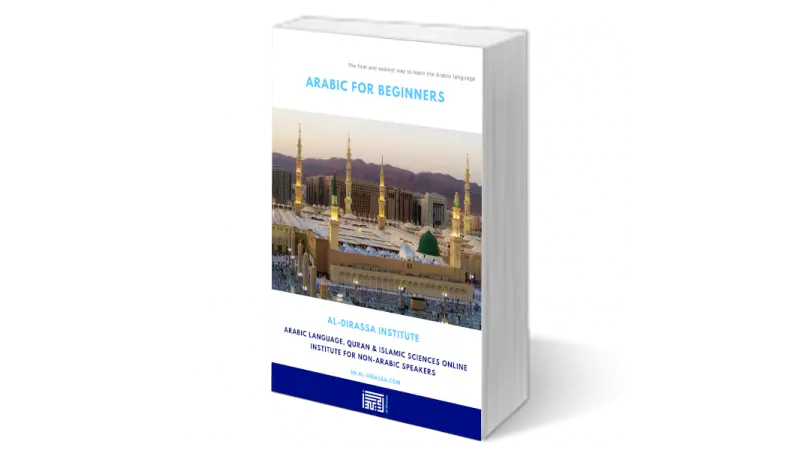
Alongside lessons, you can use written resources to revise. Free Arabic books for beginners can help you strengthen reading, vocabulary and some useful foundations between lessons.
These resources are helpful, but they should be part of a clear method. If your goal is certification, correction and practical use remain essential.
Conclusion: certifying your Arabic level requires method and consistency
DCL Arabic can be a useful way to prove your Arabic level in a professional context. It evaluates several skills and requires complete preparation: written comprehension, listening comprehension, written expression, spoken expression and interaction.
This article has helped you understand the purpose of Arabic language certification, the skills you need to build and the steps to prepare. To go further, complete Arabic learning requires a progressive method, regular practice and personalized correction.
With a teacher, you can build a stronger level, correct your mistakes and move toward certification with more confidence.





No Comments
No comments yet.
No comments yet.