
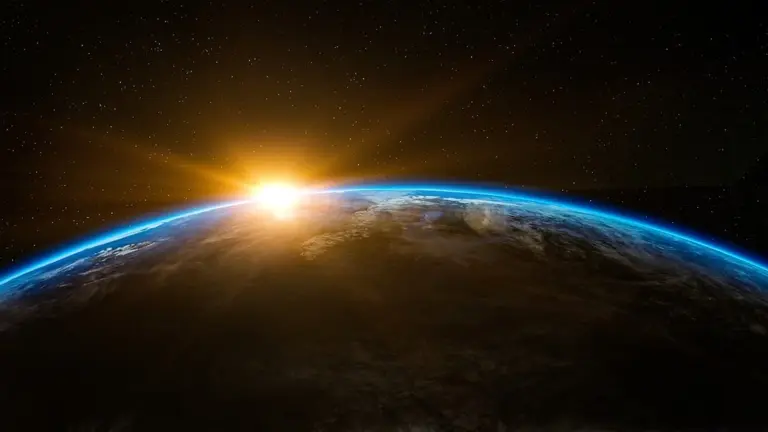
For more than fourteen centuries, the Quran has invited human beings to observe creation, reflect on the universe, life, their own bodies and the signs of Allah around them. Among the topics often discussed in this context, the scientific miracles of the Quran occupy an important place in contemporary conversations.
Some verses are compared to realities observed today in fields such as embryology, astronomy, geology, oceanography or the water cycle. These comparisons may strengthen the believer’s reflection, provided they are approached with balance, caution and respect for the Quranic text.
The Quran is not a science textbook. It is first and foremost a book of guidance, faith, reminder and reform of the heart. However, its verses often draw attention to signs within creation, leading human beings to recognize the power, wisdom and oneness of Allah.
What Does “Scientific Miracle” in the Quran Mean?
A “scientific miracle of the Quran” is often understood as a Quranic passage that appears to correspond to a natural reality better understood in modern times. It may concern a verse about the universe, human development, rain, mountains, seas or natural phenomena.
This expression should be used with nuance. The miracle of the Quran is not limited to scientific observations. The Quran is miraculous through its divine origin, eloquence, guidance, depth, spiritual impact and preservation.
Scientific comparisons may be useful, but they should not become the only way to demonstrate the truth of the Quran. Science evolves, while the Quran remains a stable revelation and a guide for humanity.
Is the Quran a Book of Science?
The Quran is not a book of biology, physics, geology or astronomy. It does not present natural phenomena as a technical manual. Rather, it mentions them as signs that invite reflection.
When it speaks of the sky, earth, rain, life or the human being, the Quran directs the gaze toward the Creator. It encourages human beings to reflect on order, precision and the dependence of all things upon Allah.
It is therefore important to distinguish between:
- the religious and spiritual meaning of the verse;
- the explanations given by scholars of Tafsir;
- modern scientific comparisons proposed by authors;
- forced interpretations that should be avoided.
Science, Faith and Caution in Interpretation
Speaking about the scientific miracles of the Quran requires caution. Some Muslim authors have presented interesting correspondences between verses and modern observations. Other scholars have reminded us that we should avoid imposing changing scientific theories onto the Quranic text.
A balanced approach recognizes that the Quran invites reflection on creation, while avoiding excessive claims such as “the Quran proved this scientific theory in every detail.”
The believer may be amazed by Allah’s signs in the universe, but must remain attached to method, the Arabic language, Tafsir and scholarly understanding.
The Creation of the Universe in the Quran
The Quran mentions the creation of the heavens and the earth as a major sign of Allah’s power. A verse often cited in discussions about the universe is found in Surah Al-Anbiya:
أَوَلَمْ يَرَ الَّذِينَ كَفَرُوا أَنَّ السَّمَاوَاتِ وَالْأَرْضَ كَانَتَا رَتْقًا فَفَتَقْنَاهُمَا
Approximate meaning: Have those who disbelieved not seen that the heavens and the earth were joined together, then We separated them?
Reference: Surah Al-Anbiya, 21:30.
Some readers compare this verse to modern discussions about the origin of the universe. However, the wording should remain cautious: the verse affirms Allah’s creative power and invites reflection on the origin of the heavens and the earth. Scientific comparisons should remain secondary to the verse’s main message.
The Expansion of the Universe: A Sign for Reflection
Another verse often mentioned in discussions about scientific miracles concerns the sky and its expansion:
وَالسَّمَاءَ بَنَيْنَاهَا بِأَيْدٍ وَإِنَّا لَمُوسِعُونَ
Approximate meaning: The heaven We built with power, and indeed We are expanding it.
Reference: Surah Adh-Dhariyat, 51:47.
This verse is sometimes compared to the idea of an expanding universe. This reading may nourish the believer’s reflection on Allah’s greatness and the vastness of His creation.
However, the Quran does not develop a detailed cosmological theory. It directs the heart toward the One who created, organized and sustains the universe.
Human Embryonic Development in the Quran
The Quran mentions several stages of the creation of the human being. Surah Al-Mu’minun refers to the drop, the clinging form and the gradual formation of the human being:
ثُمَّ خَلَقْنَا النُّطْفَةَ عَلَقَةً فَخَلَقْنَا الْعَلَقَةَ مُضْغَةً
Approximate meaning: Then We made the drop into a clinging form, then We made the clinging form into a chewed-like mass.
Reference: Surah Al-Mu’minun, 23:14.
These verses are often cited in discussions about embryology. They show the gradual creation of the human being and remind us of total dependence upon Allah from the very beginning.
Some authors have compared these descriptions with certain modern observations on embryonic development. Yet the main message of the verse remains spiritual: the human being should recognize humble origins, the precision of creation and the power of the Creator.
Mountains in the Quran
The Quran mentions mountains many times as signs of Allah’s creation. In Surah An-Naba, Allah says:
وَالْجِبَالَ أَوْتَادًا
Approximate meaning: And the mountains as pegs.
Reference: Surah An-Naba, 78:7.
Some contemporary commentators compare this image with modern geological knowledge about the structure of mountains. However, the verse should not be presented as a complete technical description of geology.
The Quran uses a strong, accessible and reflective expression. It draws attention to the stability, greatness and function of mountains within the order created by Allah.
The Water Cycle in the Quran
The Quran repeatedly mentions the sending down of rain, water entering the earth, vegetation emerging from it and the dependence of living beings on water.
Allah says:
أَلَمْ تَرَ أَنَّ اللَّهَ أَنزَلَ مِنَ السَّمَاءِ مَاءً فَسَلَكَهُ يَنَابِيعَ فِي الْأَرْضِ
Approximate meaning: Do you not see that Allah sends down water from the sky and causes it to flow as springs in the earth?
Reference: Surah Az-Zumar, 39:21.
These verses remind us that water is a mercy from Allah and a cause of life. They invite observation of rain, springs, crops and the revival of the earth after dryness.
Some compare these passages with the modern understanding of the water cycle. Once again, the Quran’s objective is first to lead to gratitude, faith and meditation.
The Barrier Between the Seas
The Quran also mentions the meeting of two seas and the presence of a barrier between them:
مَرَجَ الْبَحْرَيْنِ يَلْتَقِيَانِ بَيْنَهُمَا بَرْزَخٌ لَا يَبْغِيَانِ
Approximate meaning: He released the two seas, meeting side by side; between them is a barrier they do not transgress.
Reference: Surah Ar-Rahman, 55:19-20.
This passage is often cited in discussions about oceanography, especially regarding differences in salinity, density or properties between water masses.
The believer may see in it a sign of the order established by Allah in creation. However, one should remain faithful to the meaning of the verse and avoid imposing overly precise scientific explanations not directly established by the text.
Why Do These Signs Strengthen the Believer’s Reflection?
Verses related to creation push the believer to reflect. The Quran does not call to blind faith detached from observation. It invites us to look at the sky, earth, living beings, water, mountains and ourselves.
Allah says:
سَنُرِيهِمْ آيَاتِنَا فِي الْآفَاقِ وَفِي أَنفُسِهِمْ
Approximate meaning: We will show them Our signs in the horizons and within themselves.
Reference: Surah Fussilat, 41:53.
These signs are not only objects of intellectual study. They are reminders of Allah’s power, wisdom, knowledge and the return to Him.
Avoiding Forced Interpretations
It is important not to turn every verse into a scientific theory. Some verses speak about creation in a general, spiritual or reflective way. Forcing an exact scientific correspondence onto them may weaken religious discourse.
A balanced approach consists of:
- respecting the Arabic meaning of the verse;
- consulting explanations from scholars of Tafsir;
- avoiding exaggerated scientific claims;
- distinguishing established facts from changing theories;
- keeping the spiritual message of the Quran central;
- using these topics as a gateway to reflection, not as the only foundation of faith.
Learning Quran and Arabic to Better Understand the Verses
To understand the scientific miracles of the Quran with balance, it is essential to return to the Arabic language, Tafsir and methodical Quranic study.
Reading a translation may help, but it does not replace understanding the Arabic text. Studying Quranic Arabic helps better grasp the words, nuances and structures of the verses.
Al-Dirassa also offers online Quran and Tajweed classes to improve recitation and strengthen the connection with the Book of Allah.
To place these subjects within a broader understanding of religion, you can follow Islamic sciences online courses or explore our Islam and culture resources.
The signs of the Quran are not limited to phenomena in creation. To discover the eloquence and inimitability of the revealed text, read our article on the linguistic miracles of the Quran.
Book your free trial of 30 minutes
Registration form
FAQ — Scientific Miracles of the Quran
What are the scientific miracles of the Quran?
They are verses that some authors compare to realities observed by modern science, especially in the universe, embryology, water, mountains or seas.
Is the Quran a science book?
No. The Quran is first and foremost a book of guidance. It mentions creation to invite reflection, recognition of Allah and meditation on His signs.
Can science be used to understand the Quran?
Science may help observe aspects of creation, but it should not replace Tafsir, Arabic language and religious understanding of the text.
Do Muslims have to believe in scientific miracles to be Muslim?
Islamic faith is based on belief in Allah, His messengers, His books and the foundations of Islam. Scientific miracles may strengthen reflection, but they are not the only foundation of faith.
Why should forced interpretations be avoided?
Because scientific theories evolve and the Quran should not be reduced to fragile technical readings. The text, its context and spiritual message must be respected.
Conclusion
The scientific miracles of the Quran invite the believer to reflect on Allah’s signs in the universe, nature and the human self. Verses about creation, water, mountains, seas or human development may strengthen wonder and faith.
However, these subjects must be approached with caution. The Quran is not a science textbook: it is a book of guidance. Scientific comparisons may be useful when balanced, but they should never replace Tafsir, Arabic language and the spiritual purpose of the Quranic message.
Studying the Quran methodically, learning Quranic Arabic and drawing closer to Islamic sciences helps Muslims understand Allah’s signs with faith, knowledge and humility.





No Comments
No comments yet.
No comments yet.