
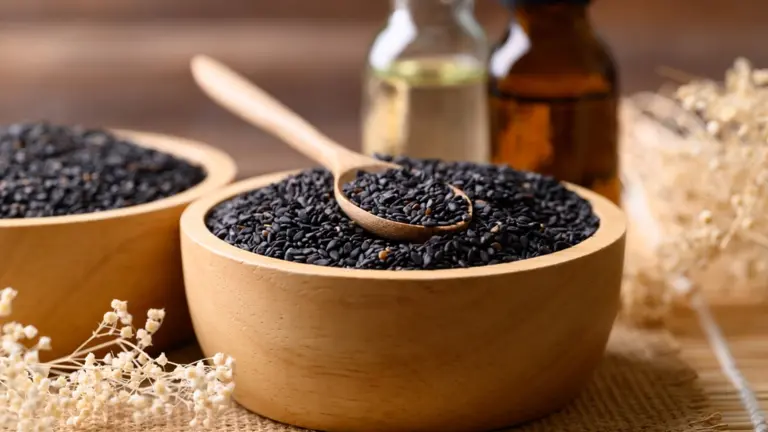
Black seed holds a special place in the Muslim tradition. Known by several names such as black cumin, Nigella sativa, kalonji or الحبة السوداء, it is mentioned in well-known hadiths and is often associated with Prophetic medicine.
For centuries, Muslims have used black seed or black seed oil in family, spiritual and traditional contexts. It is valued for its place in Islamic texts, its long-standing traditional use and the interest it now receives in some research on medicinal plants.
However, it is important to keep a balanced approach. Black seed should not be presented as a guaranteed treatment for every illness. It may be used as a traditional supplement, but it does not replace medical advice, diagnosis or treatment prescribed by a healthcare professional.
What Is Black Seed?
Black seed comes from the plant Nigella sativa, a flowering plant cultivated in the Middle East, North Africa, Asia and parts of Europe. Its small black seeds have long been used in food, traditional preparations and natural remedies.
It is often called black cumin, although it is not exactly the same as the common cumin spice. In the Muslim world, it is also known as habba sawda, habbat al-barakah or the blessed seed.
Black seed may be used in different forms: whole seeds, ground seeds, black seed oil or dietary supplements. Each form should be used with caution, moderation and consideration of one’s personal situation.
The Names of Black Seed: Nigella, Black Cumin and Habba Sawda
Black seed is known by several names depending on languages and regions:
- black seed;
- black cumin;
- Nigella sativa;
- nigella;
- kalonji in some parts of Asia;
- الحبة السوداء, al-habba as-sawda in Arabic;
- habba sawda or habbat al-barakah in popular usage.
These different names can sometimes create confusion. When speaking about the hadith on black seed, it refers to the seed known in Arabic as الحبة السوداء.
Black Seed in the Hadiths
Black seed is mentioned in authentic hadiths. Prophet Muhammad ﷺ indicated that black seed contains healing for every disease except death.
This hadith is very well known in the Muslim tradition and explains why black seed has an important place in traditional Muslim use.
It is important to understand this text with respect, but also with knowledge. The believer accepts the Prophetic statement while avoiding turning this hadith into a simplistic medical promise or a replacement for known means of treatment.
How Should the Hadith About Black Seed Be Understood?
The hadith about black seed shows its merit and usefulness. It indicates that Allah placed benefits and means of healing in this seed. However, this does not mean that every person, every illness and every situation will respond to black seed in the same way.
In Islamic understanding, healing comes from Allah. Remedies are only means. Some means are suitable for certain people, in certain situations, under certain conditions. Others may need medical treatment, specialized follow-up or a different approach.
A Muslim may therefore use black seed with trust in Allah, but also with caution, reason and respect for medical advice.
Black Seed and Prophetic Medicine
Black seed is often associated with Prophetic medicine, called الطب النبوي. This expression refers to teachings, practices and recommendations reported in Islamic texts concerning certain remedies, lifestyle habits and ways to preserve health.
Prophetic medicine reminds the believer to take care of the body, because the body is a trust from Allah. It also encourages using permissible means, making dua, seeking healing and not despairing of Allah’s mercy.
However, using a traditional remedy does not mean abandoning modern medicine when it is needed. Islam encourages taking useful and lawful means.
Active Compounds in Black Seed
Black seed contains several compounds that interest researchers, including thymoquinone, thymol, nigelline and other natural compounds.
Thymoquinone is often mentioned as one of the most studied components of Nigella sativa. Some research explores its potential effects on inflammation, oxidative stress and other biological mechanisms.
This research should not be interpreted as proof that black seed cures every disease. Rather, it shows that this plant has studied properties that require serious and nuanced scientific understanding.
Benefits Traditionally Associated with Black Seed
In traditional use, black seed is associated with several benefits. It is used in some Muslim families to support general well-being, vitality or certain everyday discomforts.
Commonly mentioned benefits include:
- supporting digestive comfort;
- supporting respiratory well-being;
- interest for skin care when used as oil;
- popular use for immune support;
- nutritional value of the seed;
- traditional use during periods of fatigue;
- supporting a more natural lifestyle.
These uses largely belong to tradition and popular experience. They should be approached with moderation, especially in cases of chronic illness, pregnancy, breastfeeding, medical treatment or allergy.
What Does Modern Research Say About Nigella Sativa?
Modern research is interested in Nigella sativa and some of its active compounds. Studies explore its potential antioxidant and anti-inflammatory effects, as well as its possible influence on certain metabolic markers.
Some research also studies black seed in areas such as cholesterol, blood sugar, skin health or respiratory comfort. However, these topics should be interpreted cautiously.
Scientific results may vary according to dosage, product quality, form used, duration of use and the health condition of individuals. Black seed should therefore not be used as a replacement for prescribed medical treatment.
Black Seed Oil or Seeds: What Is the Difference?
Black seed may be used as seeds or as oil. Seeds may be consumed in small amounts, sometimes ground or added to certain foods. Black seed oil is more concentrated and should be used with greater caution.
The oil is often used externally for the skin or internally according to personal habits. However, its concentration may be stronger than whole seeds.
Before using black seed oil regularly, especially internally, it is better to check product quality, respect suggested amounts and ask for advice in case of doubt.
How to Use Black Seed Carefully
Black seed should be used with moderation. The fact that a product is natural does not mean that it suits everyone or can be consumed without limits.
Here are some general tips:
- start with small amounts;
- choose a quality product;
- avoid excess;
- do not replace medical treatment without professional advice;
- pay attention to the body’s reactions;
- seek advice in case of chronic illness;
- avoid self-medication for serious diseases.
Black seed may support a healthy lifestyle, but it does not replace prayer, supplication, medicine, balanced nutrition or lawful means of healing.
Important Precautions Before Use
Some people should be especially careful before using black seed or black seed oil.
Medical advice is recommended in cases such as:
- pregnancy;
- breastfeeding;
- diabetes;
- use of blood-thinning medication;
- chronic illness;
- known allergy;
- regular medical treatment;
- use in children.
In case of serious or persistent symptoms, a healthcare professional should be consulted. Spirituality and medicine are not opposed: the believer places trust in Allah while taking useful means.
Is Black Seed a Remedy for Every Disease?
The hadith mentions that black seed contains healing for every disease except death. Scholars explain this type of text with respect and nuance. It may mean that black seed has great benefits and is among the means of healing that Allah placed in creation.
This does not mean that it works automatically, in every case, for every person, without dosage, diagnosis or other means of care.
The correct attitude is to believe in the merit of what has been reported, use permissible means wisely and avoid absolute medical promises.
Learning Islam with Method
Black seed shows how Islam connects faith, the body, health, supplications and means of healing. To understand these subjects with balance, it is important to study Islam methodically and through reliable sources.
Al-Dirassa offers Islamic sciences online courses to learn the basics of belief, religious practice, purification, prayer, supplications and Muslim manners.
To better understand religious texts, hadiths, supplications and Arabic terms, you can also follow a path to learn Arabic online.
Studying Quranic Arabic also helps better understand religious vocabulary found in the Quran, Sunnah and supplications.
To improve your Quran reading and recitation, you can explore our online Quran and Tajweed classes.
To read more content related to Prophetic remedies, supplications and Muslim life, explore our Islam and culture resources.
Book your free trial of 30 minutes
Registration form
FAQ — Black Seed in Islam
What is black seed in Islam?
Black seed, or Nigella sativa, is a seed mentioned in authentic hadiths. It is known in Muslim tradition as a beneficial remedy and is associated with Prophetic medicine.
What is the hadith about black seed?
Prophet Muhammad ﷺ indicated that black seed contains healing for every disease except death. This hadith is reported in authentic collections.
Does black seed cure every disease?
The hadith shows its great merit, but it does not mean that it automatically works as the only treatment for every illness. Healing comes from Allah, and remedies are means to be used wisely.
What is the difference between black seed and black seed oil?
Black seed refers to the whole or ground seed. Black seed oil is extracted from the seed and may be more concentrated, so it should be used with caution.
Can black seed be taken every day?
Some people use it regularly in small amounts, but excess should be avoided. In case of illness, medical treatment, pregnancy or breastfeeding, it is better to seek medical advice.
Does black seed replace medicine?
No. It should not replace prescribed treatment without medical advice. It may be considered a traditional supplement, not a substitute for necessary medical care.
What are the names of black seed?
It is also called Nigella sativa, black cumin, kalonji, habba sawda or الحبة السوداء in Arabic.
Conclusion
Black seed has an important place in the Muslim tradition because of the hadiths mentioning its benefits. It is known by several names, including black cumin, habba sawda and Nigella sativa.
Its use should remain balanced. The believer recognizes its merit, uses it wisely and avoids exaggerated medical claims.
Healing comes from Allah. Black seed may be among the permissible means, but it should be accompanied by caution, trust in Allah, supplication and proper medical care when the situation requires it.





No Comments
No comments yet.
No comments yet.