Quranic Arabic is the language of the Quran. Learning it helps students better understand the verses, religious vocabulary, grammatical structures and depth of the revealed message. This category brings together free Quranic Arabic lessons and resources to help beginners and non-Arabic speakers progress step by step.
Unlike Arabic used for travel, conversation or work, Quranic Arabic requires a specific approach. The goal is not only to memorize words, but to understand the meaning of the verses, Quranic expressions and the linguistic foundations needed for a more conscious reading of the Book of Allah.
The resources offered here follow a clear, progressive and accessible method. They help students study Quranic vocabulary, essential Arabic grammar, sentence structure and common expressions found in the Quran.
These free lessons are designed for anyone who wants to learn Quranic Arabic in order to better understand the Quran, strengthen their connection with the revelation and progress with a method adapted to their level. To go further with structured guidance, you can also discover our Quranic Arabic online course.
30
Dec
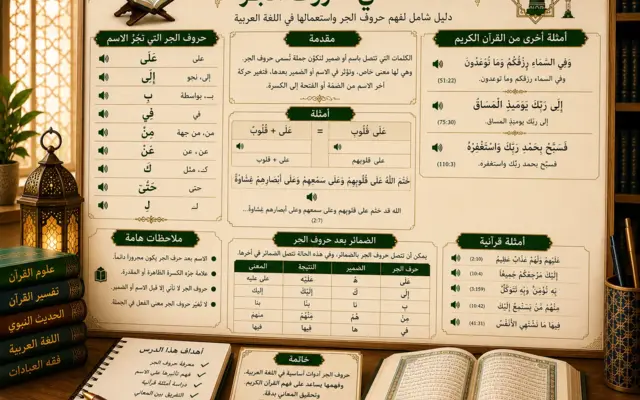
In this Arabic grammar lesson, we will study Arabic prepositions, called حُرُوفُ الْجَرِّ. This topic is essential for learning Arabic, connecting words together and understanding the structure of sim…
Read more

30
Dec
Introduction
In Arabic, the Past Continuous tense is formed by using the helping verb كَانَ (kana), which means "was" or "were, " followed by the imperfect tense of the main verb. This tense is used t…
Read more
30
Dec
Introduction
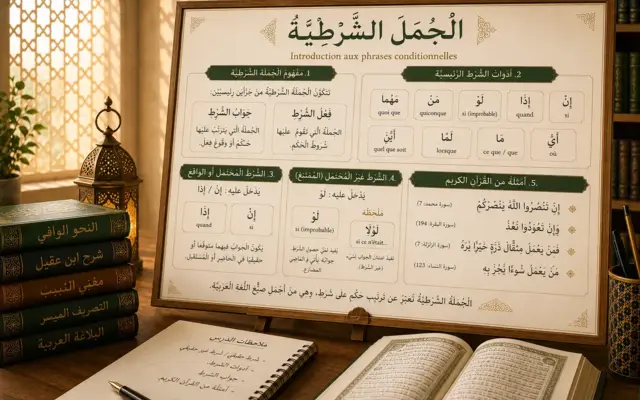
In Arabic grammar, conditional sentences are composed of two primary components: the condition itself, termed the protasis or فِعْلُ الشَّرْطِ, and the consequence or result of that condi…
Read more
30
Dec
Introduction
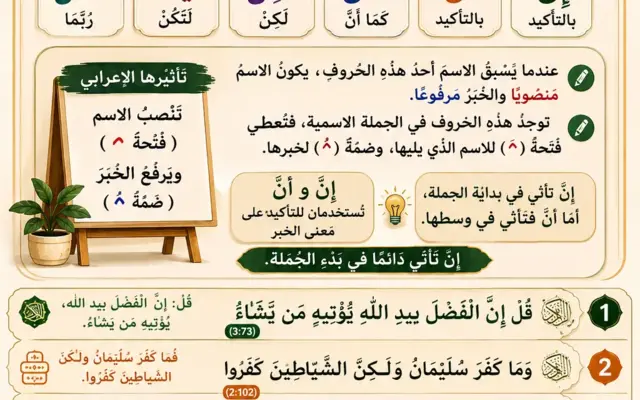
The particles known as "Inna and its sisters" - إِنَّ وَ أَخَوَاتُهَا - hold a significant position in Arabic syntax, imbuing nominal sentences with emphasis and nuance.
إِنَّ (certainl…
Read more
30
Dec
Introduction
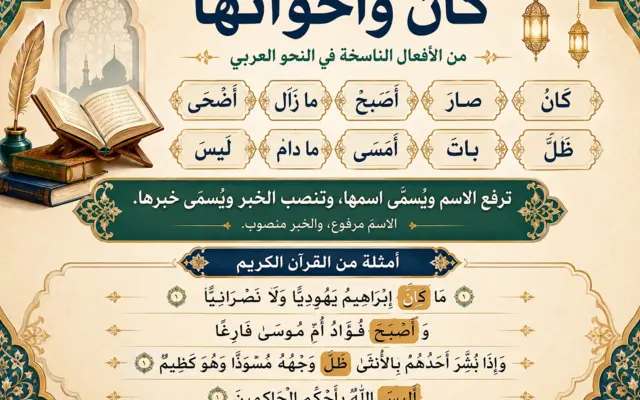
The group of particles known as "Kaana and its Sisters" - كَانَ وَ أَخَوَاتُهَا:
1. **كَانَ (kaana)** - "to was"2. **صَارَ (ṣāra)** - "to become"3. **أَصْبَحَ (aṣbaḥa)** - "to become, " "…
Read more

30
Dec
Introduction
Conjunctions are grammatical elements used to link words within sentences.
1. Types of particles of conjunction
Here is a refined list of conjunctions:
1. وَ - "and." This is known as وَا…
Read more