
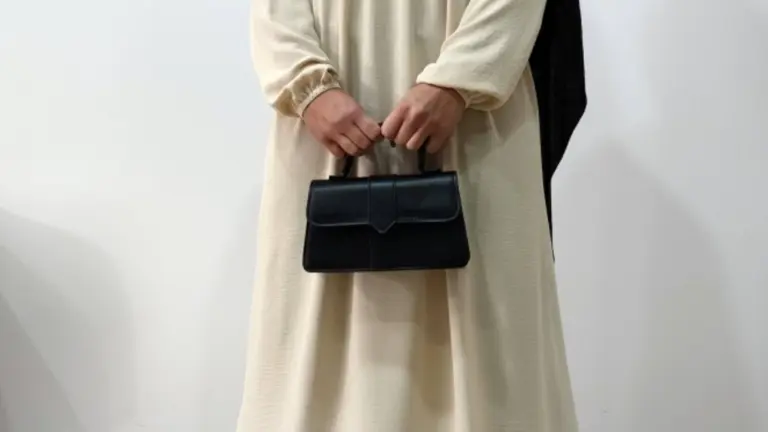
Clothing has an important place in Islam. For a Muslim woman, it is not simply a way to dress. It can also express modesty, dignity and respect for Islamic teachings.
The Quran and the Sunnah encourage Muslim men and women to wear modest clothing that protects their privacy and reflects respectful behaviour. Muslim women’s clothing can therefore combine Islamic principles, comfort and elegance.
What are the principles of Muslim women’s clothing?
Muslim scholars have explained several conditions that help define modest clothing in Islam. Some details may differ according to recognised schools of Islamic law, but several basic principles are generally accepted.
A Muslim woman’s clothing should:
- cover the parts of the body that must be covered according to recognised Islamic opinions;
- not be transparent;
- not be so tight that it clearly shows the shape of the body;
- remain modest and not be worn to attract unnecessary attention;
- be clean, suitable and appropriate for the situation;
- be worn with the sincere intention of following Allah’s guidance.
These principles allow every woman to choose clothing that suits her daily life, environment and activities while protecting her modesty.
Why is modest clothing important in Islam?
Modesty, known as al-haya in Arabic, is not limited to clothing. It also includes behaviour, speech, the way a person looks at others and the way people interact.
Clothing nevertheless helps a Muslim woman protect her privacy and show her attachment to Islamic values. Choosing modest clothing can become an act of worship when it is done with the intention of pleasing Allah and following His guidance.
Modesty does not mean that a woman must neglect her appearance. Islam encourages cleanliness, dignity and personal care, as long as elegance remains compatible with modesty.
The main types of clothing worn by Muslim women
Today, Muslim women can choose from many modest outfits suited to their needs, lifestyle and the different seasons.
The abaya
An abaya is a long, loose-fitting dress worn by many Muslim women around the world. It is valued for its flowing cut, comfort and ease of use in daily life.
There are many styles of abayas, including open and closed designs, wide-sleeved models, butterfly cuts and more traditional styles. To respect the principles of modesty, an abaya should remain loose enough and should not be transparent.
The jilbab
A jilbab is a loose garment that generally covers a large part of the body. Depending on the design, it may be made as one piece or as a two-piece set with a long outer garment and a skirt.
Its wide cut helps hide the shape of the body and provides suitable coverage for women looking for a more covering outfit.
The khimar
A khimar is a head covering that covers the hair, neck and shoulders. Depending on its length, it may also cover a larger part of the upper body.
Khimars are available in short, medium and long styles. Some models have an integrated headband or ties that make them easy to adjust. The right choice depends on the amount of coverage desired, the woman’s body shape and her personal preferences.
Prayer outfits
Prayer outfits allow Muslim women to quickly put on suitable clothing for performing salah. They are especially useful at home, at the mosque or while travelling.
These outfits may include a long dress or a skirt with a matching head covering. Models for young girls are also available, helping them become familiar with prayer clothing step by step.
How should you choose suitable Muslim clothing?
Choosing modest clothing is not only about appearance. Several points should be considered when looking for comfortable, durable clothing that is suitable for everyday use.
Choose a loose-fitting cut
The cut is one of the first things to consider. Clothing may show the shape of the body even when it covers the skin. It is therefore better to choose a size and design that provide enough room and freedom of movement.
Check that the fabric is not transparent
Some fabrics may become transparent when exposed to light. It is important to check the opacity of the material, especially with light-coloured clothing or very thin fabrics.
Consider the season
During summer, light and breathable fabrics improve air circulation and reduce discomfort caused by heat. During winter, thicker materials can be chosen and combined with warm clothing worn underneath the abaya or jilbab.
Choose clothing that allows easy movement
Clothing worn regularly should make it easy to walk, sit, work and carry out everyday activities. The length of the garment, the width of the sleeves and the strength of the seams are therefore important.
The importance of good-quality clothing
Choosing high-quality clothing usually allows it to last longer and remain comfortable over time. Careful production reduces the risk of weak seams, damaged fabric or colours that fade too quickly.
Light, breathable and comfortable fabrics are particularly popular. Medina silk, for example, is appreciated for its flowing appearance, opacity and elegant finish. Other premium fabrics can also provide a good balance between comfort, strength and easy care.
Before buying a garment, it is useful to check:
- the fabric composition;
- the level of opacity;
- the quality of the seams and finishing;
- the washing instructions;
- the exact measurements of the garment;
- whether it includes decorations that may be too noticeable.
How can modesty and elegance be combined?
Modesty does not prevent elegance. A Muslim woman can wear simple, attractive and well-made clothing without choosing an extravagant style.
A flowing cut, matching colours and quality fabrics can create an elegant outfit while respecting the principles of modesty. The aim is not necessarily to wear clothing without style, but to choose a dignified appearance that does not depend on showing the body or attracting excessive attention.
Some women choose neutral colours such as black, beige, brown, grey or navy blue. Others prefer softer or more natural colours. The choice may vary according to personal taste, culture and circumstances, as long as the clothing remains suitable and modest.
Adapting clothing to different situations
A Muslim woman’s clothing may change according to her activities. Clothing worn at home does not necessarily meet the same needs as an outfit for work, study, the mosque or a family event.
For daily life, a simple and comfortable abaya may be a suitable choice. For prayer, a covering outfit that is easy to put on can be especially practical. For a special occasion, a more detailed outfit may be chosen while still keeping a modest cut and balanced decoration.
Active women may also look for clothing suitable for walking, working or travelling. The quality of the fabric, the width of the sleeves and easy-care materials then become important points.
Where can you find good-quality modest clothing?
Many specialist shops now offer clothing designed for Muslim women. Before ordering, it is recommended to check the quality of the materials, the measurements, the delivery conditions and the information provided for each item.
Women looking for a selection of abayas, khimars, jilbabs, prayer outfits for women and children, as well as different accessories, can visit Bismillah Boutique.
The shop offers clothing designed to combine modesty, comfort, simplicity and quality, supporting Muslim women in their daily lives and religious practice.
Finding balance between intention and modesty
Muslim women’s clothing should not be viewed only as an outward appearance. It forms part of a wider approach that includes intention, behaviour, spirituality and the desire to please Allah.
It is also important to remain balanced and kind. Every woman has her own personal situation, spiritual journey and level of practice. Religious advice should therefore be given with wisdom, respect and gentleness, without humiliation or harsh judgement.
Conclusion
Muslim women’s clothing is connected to modesty, dignity and worship. When it follows the general principles of Islam, it helps protect privacy while providing comfort and peace of mind.
Thanks to the wide range of abayas, jilbabs, khimars and prayer outfits available today, every woman can find clothing suited to her body shape, activities and preferences.
The main goal is to choose clothing that is opaque, loose, suitable and worn with a sincere intention. To discover different styles of modest clothing for women and children, visit Bismillah Boutique.



No Comments
No comments yet.
No comments yet.