
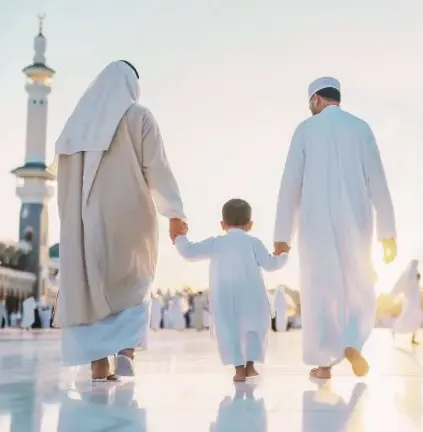
For many Muslims, performing Umrah is not simply a spiritual journey. It is a return to what matters most, a moment of repentance, purification and closeness to Allah.
In a daily life often filled with material concerns, distractions and spiritual fatigue, Umrah can become a deep pause for the heart. It reminds the believer of essential priorities: worshipping Allah, returning to Him, seeking forgiveness and reforming one’s life.
This article focuses on the spiritual benefits of Umrah. To learn the detailed order of the rituals, it is better to read a practical Umrah guide for beginners.
Key benefits of Umrah in Islam
Umrah is an act of worship performed in Makkah, around the Kaaba, according to specific rites taught in Islam. It includes entering the state of ihram, performing tawaf, walking between Safa and Marwa, then shaving or shortening the hair.
However, its importance is not limited to these actions. Umrah carries many spiritual benefits:
- purification of the heart;
- sincere return to Allah;
- strengthening of tawhid;
- humility before Allah;
- remembrance of the Hereafter;
- increase in dhikr and supplications;
- inner renewal;
- a clearer awareness of religious priorities.
Umrah as a sincere return to Allah
Umrah invites the believer to leave the usual environment temporarily and turn to Allah in a sacred place. This change helps the heart detach from distractions and rediscover the meaning of worship.
When entering the state of ihram, the Muslim leaves aside certain ordinary aspects of daily life. The pilgrim is reminded that true value is not found in appearance, status or wealth, but in faith, sincerity and fear of Allah.
This awareness can become the beginning of a real inner change.
Spiritual purification during Umrah
Umrah is often experienced as a purification of the heart. The pilgrim increases supplications, seeks forgiveness, remembers personal shortcomings and tries to return to Allah sincerely.
This purification is not only about feeling a strong emotion during the journey. It also means deciding to move away from sins, improve prayer, guard one’s tongue and strengthen the relationship with the Quran.
To preserve this purification, it is important to continue learning the religion after returning home. A structured path to learn Islam online can help build solid foundations with a clear method.
Tawaf: a moment of remembrance and humility
Tawaf around the Kaaba reminds the believer that life should revolve around the worship of Allah. Muslims do not walk around the Kaaba as a mere tradition; they perform a prescribed rite in a sacred place while worshipping Allah alone.
During tawaf, the heart fills with dhikr, supplication, repentance and hope. The believer sees Muslims from many countries, speaking different languages, yet all turning to the same Lord.
This moment teaches humility, unity and sincerity.
Sa’i: patience, effort and trust in Allah
Sa’i between Safa and Marwa recalls the story of Hajar, her patience, effort and complete trust in Allah. She acted, searched, walked and hoped, then Allah granted her relief through His mercy.
This rite teaches that the believer should take the means while relying upon Allah. Umrah reminds Muslims that faith is not passivity: it brings together effort, supplication and trust.
Umrah as a reminder of the Hereafter
Ihram, the gathered crowds and the rites performed with obedience and humility remind the believer of the Day of Judgment. Each person stands before Allah without hiding behind status, origin or wealth.
This reminder should not create paralyzing fear, but a deeper awareness of life. Umrah teaches that worldly life is temporary, that every action matters and that the return to Allah is certain.
The link between Umrah, dhikr and supplication
Umrah is a privileged time to increase dhikr and supplications. The believer can seek forgiveness, thank Allah, pray for family, ask for guidance, stability, beneficial knowledge and protection from sins.
During Umrah, the tongue is filled with remembrance, the heart turns to Allah and distractions decrease. This spiritual atmosphere helps the pilgrim rediscover the sweetness of worship.
After Umrah, it is beneficial to keep a routine of dhikr, supplications and Quran recitation in order to preserve the effects of the journey.
What Umrah teaches the believer
Umrah teaches deep lessons that go beyond the rituals themselves:
- humility, because ihram reminds the pilgrim of standing before Allah without outward display;
- patience, because crowds, tiredness and waiting refine the character;
- trust in Allah, reminded by sa’i between Safa and Marwa;
- brotherhood, because Muslims from around the world gather in the same worship;
- sincerity, because every rite must be performed for Allah alone;
- personal reform, because Umrah should encourage lasting change.
How to prepare spiritually for Umrah
Preparation for Umrah should not only be administrative or material. It should also be spiritual.
Before travelling, it is recommended to:
- renew one’s intention;
- learn the essential rituals;
- repent sincerely;
- settle debts and conflicts when possible;
- learn useful supplications;
- prepare a personal list of duas;
- read about tawaf, sa’i and ihram;
- ask Allah to accept this worship.
A spiritually prepared pilgrim experiences Umrah with more presence of heart, serenity and focus.
After Umrah: preserving the benefits of the journey
The effects of Umrah should not stop when the pilgrim returns home. When performed with sincerity, it can become the beginning of lasting reform.
After Umrah, the believer can preserve its benefits by:
- maintaining regular prayer;
- reading or listening to the Quran every day;
- keeping a routine of dhikr;
- avoiding the sins one decided to leave;
- improving family behavior;
- continuing to learn the religion;
- keeping good company;
- keeping awareness of the Hereafter alive.
Learning Islam, Arabic and Quran before or after Umrah
Umrah reminds Muslims that faith is nourished by knowledge, practice and consistency. Understanding the rites, supplications and verses recited during the journey helps the believer experience this worship more deeply.
To better understand the foundations of faith, prayer and worship, you can follow Islamic courses online.
To improve your recitation and connection with the Book of Allah, you can explore our online Quran and Tajweed classes.
Reading supplications and verses in Arabic with more accuracy also helps Muslims experience Umrah more deeply. To progress step by step, you can learn Arabic online or study Quranic Arabic.
Families can also introduce these meanings to younger learners through an Islam course for children.
To read more content about worship, supplications and Muslim life, visit our Islam and culture section.
Book your free trial of 30 minutes
Registration form
FAQ — The benefits of Umrah
What are the main benefits of Umrah?
Umrah encourages repentance, purification of the heart, a stronger connection with Allah, humility, patience, dhikr and a return to spiritual priorities.
Does Umrah erase sins?
Authentic texts mention the great merit of Umrah. However, the believer should avoid excessive wording and remember that acceptance belongs to Allah. Sincerity, repentance and conformity to Islamic teachings are essential.
How can the benefits of Umrah be preserved after returning home?
It is recommended to maintain prayer, read Quran, continue dhikr, avoid sins, improve behavior and keep learning Islam regularly.
Can Umrah be a new beginning?
Yes, if it is performed with sincerity and followed by real effort after returning home. Umrah can help the believer reorganize priorities and strengthen Islamic practice.
Conclusion
Umrah is one of the deepest spiritual experiences for those who seek closeness to Allah. It reminds the believer of humility, repentance, the Hereafter, patience and the importance of returning to what matters most.
But Umrah should not remain an isolated memory. Its real fruit appears when the believer returns with a more living faith, more regular prayer, a stronger relationship with the Quran and a sincere desire to improve behavior.
With sincere intention, proper preparation and continuous learning of Islam, Arabic and Quran, Umrah can become a true new beginning in the life of a Muslim.




No Comments
No comments yet.
No comments yet.