
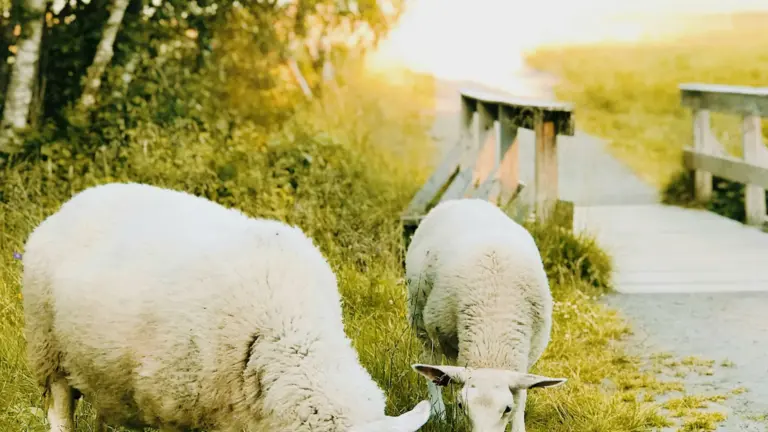
The birth of a child is a great blessing. In Islam, this event is welcomed with gratitude, supplication and respect for certain prophetic recommendations. Among them is the Aqiqah, a sacrifice performed to thank Allah for the birth of a newborn.
Aqiqah is not only a family tradition. It reminds parents that a child is a trust from Allah, that the family should welcome the baby with faith, and that the joy of birth should also be shared with relatives and people in need.
In this article, we will explain what Aqiqah is in Islam, when it may be performed, the general rules to know and how this topic is connected to the Islamic education of a child.
What Is Aqiqah in Islam?
Aqiqah is the sacrifice of an animal performed on the occasion of a child’s birth. It is part of the recommended practices in the Sunnah and expresses the parents’ gratitude to Allah for the blessing of a newborn.
It is also linked to the idea of sharing. The meat may be eaten by the family, offered to relatives and given to people in need, according to known practices and scholarly opinions.
Aqiqah therefore reminds us that family joy should not be separated from gratitude to Allah and generosity toward others.
Is Aqiqah Obligatory or Recommended?
The majority of scholars consider Aqiqah to be a strongly recommended Sunnah for those who are able to perform it. It is not presented as an obligation at the same level as the pillars of Islam.
A family that does not have the financial ability to perform it should not put itself in hardship. Islam does not impose a burden beyond what a person can bear.
It is important to avoid two extremes: neglecting this Sunnah when it can easily be performed, or making a family feel guilty when they do not have the means to do it.
When Should Aqiqah Be Performed?
The recommended time for Aqiqah is often mentioned as the seventh day after birth. This day is also associated, in several teachings, with giving the child a name and shaving the newborn’s hair.
If Aqiqah cannot be performed on the seventh day, many scholars allow it to be done later. Some families perform it on the fourteenth day, the twenty-first day or at another possible time.
What matters is to preserve the spirit of this Sunnah: thanking Allah, acting sincerely and performing the sacrifice in a lawful manner.
How Many Animals for a Boy or a Girl?
According to the well-known view, it is recommended to sacrifice two sheep or goats for a boy, and one sheep or goat for a girl. Some opinions also mention the possibility of one animal for a boy in certain situations.
The rulings may be detailed according to schools of Fiqh and individual circumstances. It is therefore better to ask a qualified person when there is doubt about a specific case.
This point should not be understood as a difference in value between a boy and a girl. In Islam, a child is a blessing, whether male or female, and every birth deserves gratitude, protection and good education.
How Should the Aqiqah Meat Be Distributed?
The meat of the Aqiqah may be shared between the family, relatives, neighbors and people in need. Some families choose to cook part of the meat and invite relatives. Others prefer to distribute a portion directly to the poor.
The aim is to combine gratitude, joy and generosity. It is not only a social celebration, but an act performed with a religious intention.
It is also important to respect health regulations, animal welfare and the legal framework of the country where the sacrifice is performed.
Other Recommended Acts After Birth
Aqiqah is part of a set of recommendations connected to welcoming a newborn. These acts remind us that Islamic education begins from the earliest moments of life.
Giving a good name
Parents should choose a good name for their child. A name accompanies a person throughout life. It should therefore have a correct meaning and be chosen with care.
A good name may remind the child of a noble value, a righteous figure or a positive meaning.
Shaving the newborn’s hair
Shaving the newborn’s hair is mentioned with Aqiqah in several teachings. It is also known to give charity equivalent to the weight of the hair in silver, according to the family’s means.
This practice expresses purification, gratitude and generosity at the time of birth.
Making dua for the child
Supplications for the child are essential. Parents ask Allah to protect the child, grant faith, good health, righteousness, beneficial knowledge and good character.
A child’s education does not begin only with words and rules. It also begins with faith, love, gentleness and the duas of the parents.
Aqiqah, Gratitude and Islamic Education
Aqiqah reminds us of a central idea: a child is both a blessing and a responsibility. Parents thank Allah for this gift, but they should also prepare themselves to transmit the foundations of Islam with wisdom.
This transmission comes through example, prayer, gentleness, learning the Quran, good speech, modesty, respect for parents and gradual knowledge of the religion.
For families, Aqiqah can be an opportunity to reflect on the Islamic education of the child: how can we teach the child to love Allah, know the Prophet ﷺ, recite the Quran and develop good manners?
Can You Delegate Aqiqah to a Provider?
In some countries, families cannot always perform Aqiqah themselves in suitable conditions. It may then be possible to delegate the sacrifice to a serious provider, provided that several points are checked.
The provider should respect the rules of sacrifice, the legal framework, health conditions, proper treatment of the animal and distribution of the meat according to the family’s intention.
If an article mentions a practical solution such as a provider or service, this mention should remain secondary. The main purpose of the article should be to explain Aqiqah in Islam, not to turn the content into an advertisement.
Learning Family Rulings in Islam
Aqiqah is part of topics related to the Muslim family, birth, the rights of the child and Islamic education. To understand these subjects properly, it is useful to learn the basics of Islam with method.
A complete learning path may cover Islamic belief, prayer, purification, Muslim manners, the Quran, the Sunnah, the rights of parents, the rights of children and family rulings.
If you want to learn Islam with a progressive approach, Al-Dirassa offers courses adapted to adults, beginners and families.
For younger students, our Islamic classes for kids help transmit the foundations of faith, Quran, supplications and good manners with age-appropriate teaching.
You can also study Islamic studies online or read more Islamic articles to better understand Muslim practice in daily life.
Book your free trial of 30 minutes
Registration form
Conclusion
Aqiqah in Islam is a Sunnah connected to the birth of a child. It expresses gratitude to Allah, the joy of the family and sharing with relatives and people in need.
It is generally performed on the seventh day when possible, with a sacrifice carried out according to Islamic rules. Details may vary according to circumstances and scholarly opinions, which is why it is important to ask for guidance in case of doubt.
Understanding Aqiqah is a first step. To transmit Islam to children in a complete way, parents need knowledge, gentleness, consistency and guidance from qualified people.


No Comments
No comments yet.
No comments yet.