
Free Tajwid Courses
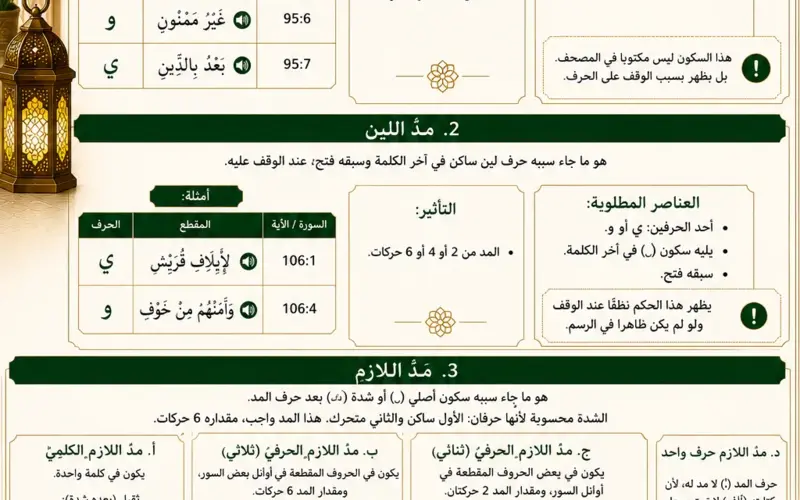
Tajweed Madd Rules: Elongation Followed by Sukun or Shadda
- Al-Dirassa Institute
Introduction In this fifteenth lesson on learning the Tajweed of the Holy Quran, we continue our study of the rules of elongation. Here, we will examine the elongations that are followed by a sukun or…
Read more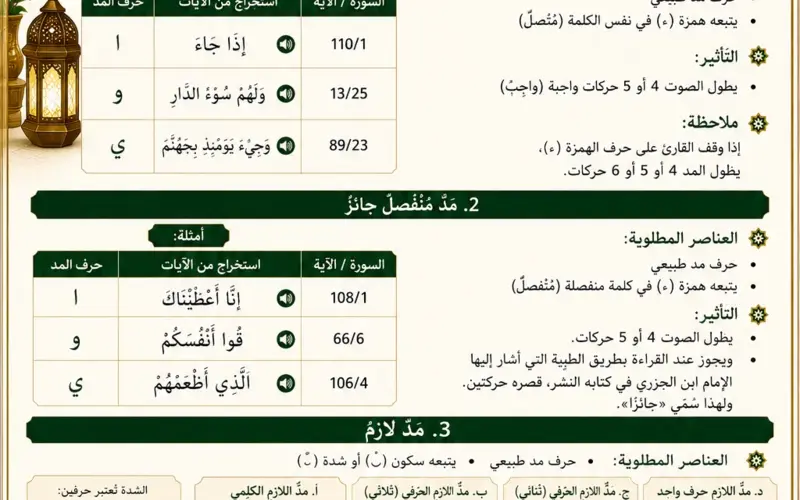
Tajweed Madd Rules: Elongation Followed by Hamza
- Al-Dirassa Institute
Introduction In this fourteenth lesson on learning the Tajweed rules of the Holy Quran, we continue our study of elongation rules. Here, we will examine the elongations that are followed by the letter…
Read more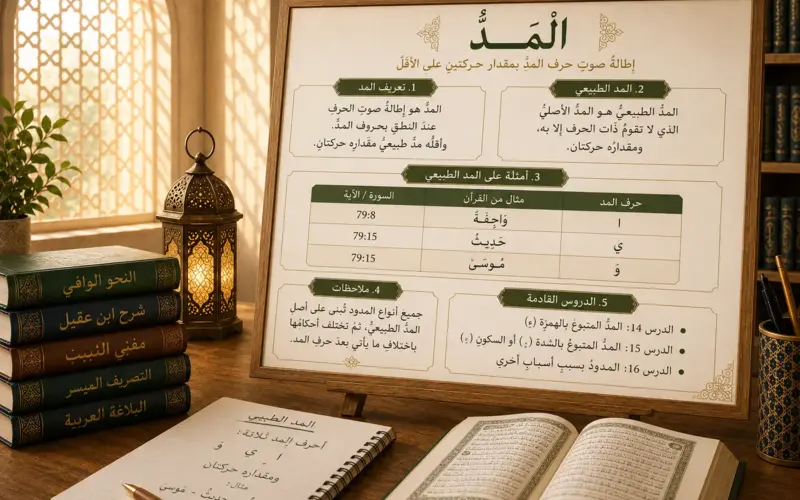
Tajweed Mastery: The Essentials of Prolongation Rules
- Al-Dirassa Institute
In the realm of the Arabic language, the term "madd" is used, which can be translated as "extension" or "prolongation". Within the framework of Tajweed rules, "madd" refers to the elongation of a soun…
Read more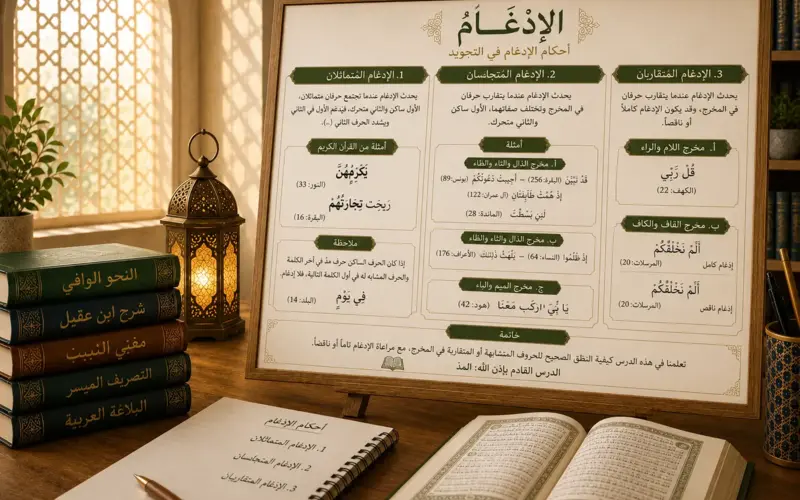
The assimilation of two letters | Free Tajweed Course
- Al-Dirassa Institute
Introduction In the rich tapestry of the Arabic language, the term ‘assimilation’ or ‘idgham’ metaphorically captures the essence of one entity merging seamlessly into another. Within the realm of Taj…
Read more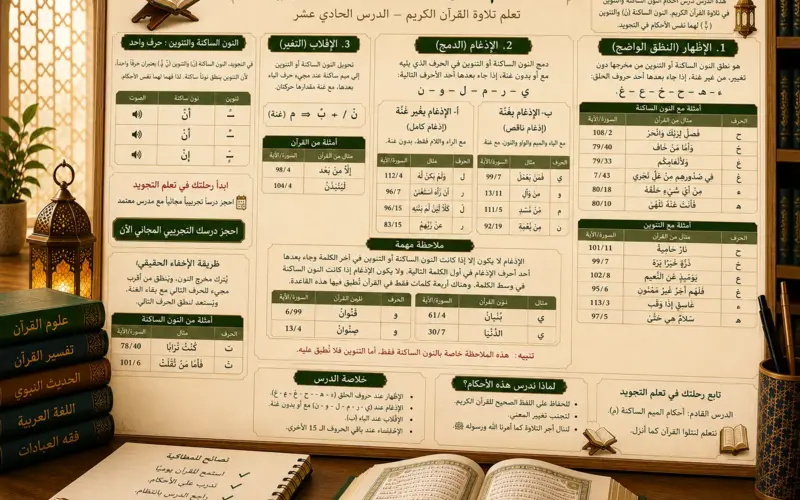
Noon Sakeena and Tanween: The 4 Tajweed Rules to Know
- Al-Dirassa Institute
The rules of Noon Sakinah and Tanween are among the essential foundations of Tajweed. They help the reader recite the Quran with greater precision, fluency, and respect for the rules of pronunciation.…
Read more
Guidelines for the Letter Meem As Sakeena
- Al-Dirassa Institute
The letter "Mim" (م) and its variant, "Meem As Sakeena" (مْ), are both considered labial letters, which means they are articulated using the contact of the two lips. In the case of "Meem As Sakeena, "…
Read more
Recent articles
-

-
 June 17, 2026
 -

-
 June 10, 2026