
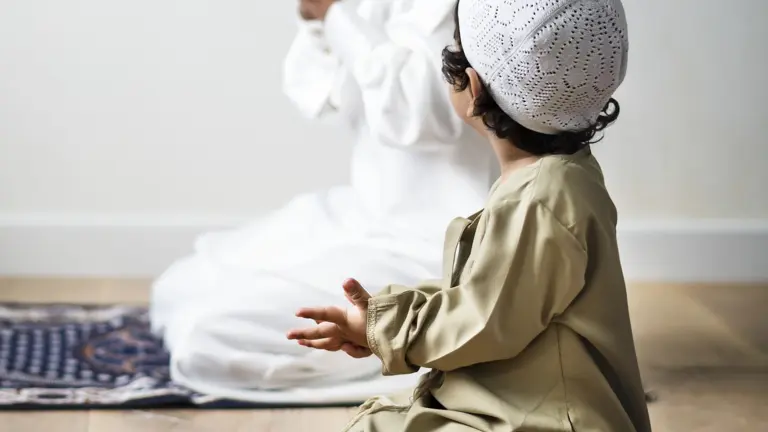
Making dua for one’s children is an act of love, faith and responsibility. In Islam, parents do not only feed, protect and educate their children; they also ask Allah to guide them, protect them and grant them goodness in this world and the Hereafter.
Children are an amanah, a precious trust from Allah. Parents act, advise, support and teach, but they know that hearts are in the hands of Allah.
Supplications for children allow parents to ask Allah for protection, faith, good character, health, beneficial success, mercy, forgiveness and spiritual stability.
To strengthen your understanding of faith, supplications and Islamic upbringing, you can also visit our page to learn Islam.
Key points about duas for children
Parents can call upon Allah to ask for goodness, protection, guidance, faith, health and success for their children. These duas do not replace education, listening, parental example and religious learning, but they accompany and strengthen them.
A short supplication parents can recite for their children is:
اللَّهُمَّ احْفَظْ أَوْلَادِي مِنْ كُلِّ شَرٍّ ظَاهِرٍ وَبَاطِنٍ
Transliteration: Allahumma ihfaz awladi min kulli sharrin zahirin wa batin.
Meaning: O Allah, protect my children from every visible and hidden harm.
Why make dua for your children?
Parents naturally wish the best for their children: good health, strong faith, good manners, a balanced life, lawful provision, beneficial success and a good share in the Hereafter.
Dua allows parents to entrust these wishes to Allah with humility and trust. It reminds them that a child’s success does not depend only on human effort, but also on Allah’s blessing, protection and guidance.
Making dua for children means asking Allah:
- to protect them from visible and hidden harms;
- to preserve their faith and hearts;
- to guide them toward prayer and good character;
- to grant them good health;
- to keep them away from bad influences;
- to give them a good share in this life and the Hereafter;
- to help them love Allah, the Quran and acts of worship.
Duas for children belong to a broader understanding of education, patience, faith and the role of parents. To study these concepts with structure, students can follow Islamic studies online courses adapted to their level.
Dua to protect children
This short supplication can be recited regularly by parents to ask Allah for complete protection for their children.
Arabic text:
اللَّهُمَّ احْفَظْ أَوْلَادِي مِنْ كُلِّ شَرٍّ ظَاهِرٍ وَبَاطِنٍ
Transliteration: Allahumma ihfaz awladi min kulli sharrin zahirin wa batin.
Meaning: O Allah, protect my children from every visible and hidden harm.
Meaning explained: This supplication asks Allah to protect children from visible and invisible dangers. It may be recited in the morning, evening, after prayer or before sleep.
Dua for forgiveness, purity of heart and chastity
This supplication is short, deep and easy to learn. It asks Allah for three essential blessings: forgiveness, inner purity and protection of conduct.
Arabic text:
اللَّهُمَّ اغْفِرْ ذَنْبَهُ، وَطَهِّرْ قَلْبَهُ، وَحَصِّنْ فَرْجَهُ
Transliteration: Allahumma ighfir dhanbahu, wa tahhir qalbahu, wa hassin farjah.
Meaning: O Allah, forgive his sins, purify his heart and preserve his chastity.
Adaptation: For a girl, one may say: Allahumma ighfir dhanbaha, wa tahhir qalbaha, wa hassin farjaha.
Meaning explained: This dua reminds us that upbringing is not only about external behavior. The child’s heart, modesty, faith and relationship with Allah are also important.
Dua for children’s guidance and faith
Parents can ask Allah to guide their children to the straight path, fill their hearts with faith and protect them from paths that lead away from Him.
Arabic text:
رَبِّ اجْعَلْهُمْ عَلَى الصِّرَاطِ الْمُسْتَقِيمِ، وَامْلَأْ قُلُوبَهُمْ بِالْإِيمَانِ
Transliteration: Rabbi-j‘alhum ‘ala s-sirati l-mustaqim, wa imla’ qulubhum bil-iman.
Meaning: My Lord, guide my children on the straight path and fill their hearts with faith.
Meaning explained: This supplication reminds us that guidance belongs to Allah. Parents educate and teach, but Allah opens the hearts.
Dua for children’s health and success
This supplication asks Allah to grant children goodness in their body, life, faith and future.
Arabic text:
اللَّهُمَّ أَنْعِمْ عَلَى أَوْلَادِي بِالصِّحَّةِ، وَوَفِّقْهُمْ فِي الدُّنْيَا وَالْآخِرَةِ
Transliteration: Allahumma an‘im ‘ala awladi bis-sihhah, wa waffiqhum fi d-dunya wa l-akhirah.
Meaning: O Allah, grant my children health and give them success in this life and the Hereafter.
Meaning explained: True success is not only academic, professional or material. It is also spiritual, moral and connected to the Hereafter.
Dua for children who seek forgiveness
Parents can ask Allah to give their children living hearts: hearts that love good, recognize mistakes and return to Allah.
Arabic text:
اللَّهُمَّ اجْعَلْ أَوْلَادِي مِنَ الَّذِينَ إِذَا أَحْسَنُوا اسْتَبْشَرُوا، وَإِذَا أَسَاءُوا اسْتَغْفَرُوا
Transliteration: Allahumma-j‘al awladi mina lladhina idha ahsanu istabsharu, wa idha asa’u istaghfaru.
Meaning: O Allah, make my children among those who rejoice when they do good, and seek forgiveness when they make a mistake.
Meaning explained: This supplication helps parents ask for balanced spiritual awareness for their children: loving good, recognizing mistakes and returning to Allah without despair.
Dua for goodness in this life and the Hereafter
This supplication reflects the meaning of a well-known Quranic dua. It gathers the good of this life, the good of the Hereafter and protection from punishment.
Arabic text:
اللَّهُمَّ آتِهِمْ فِي الدُّنْيَا حَسَنَةً، وَفِي الْآخِرَةِ حَسَنَةً، وَقِهِمْ عَذَابَ النَّارِ
Transliteration: Allahumma atihim fi d-dunya hasanah, wa fi l-akhirati hasanah, wa qihim ‘adhaba n-nar.
Meaning: O Allah, grant them goodness in this world and goodness in the Hereafter, and protect them from the punishment of the Fire.
Reference: This supplication reflects the meaning of Surah Al-Baqarah, 2:201.
Meaning explained: It is very comprehensive because it asks Allah for overall goodness for the child: in present life, spiritual future and the Hereafter.
Dua for stability of heart and faith
The child’s heart needs protection. Parents can ask Allah to preserve their children’s faith and uprightness.
Arabic text:
رَبِّ لَا تُزِغْ قُلُوبَهُمْ بَعْدَ إِذْ هَدَيْتَهُمْ، وَهَبْ لَهُمْ مِنْ لَدُنْكَ رَحْمَةً، وَهَيِّئْ لَهُمْ مِنْ أَمْرِهِمْ رَشَدًا
Transliteration: Rabbi la tuzigh qulubhum ba‘da idh hadaytahum, wa hab lahum min ladunka rahmah, wa hayyi’ lahum min amrihim rashada.
Meaning: My Lord, do not let their hearts deviate after You have guided them. Grant them mercy from You and prepare for them a right way in their affairs.
Meaning explained: This supplication asks Allah to preserve guidance, faith and uprightness in the hearts of children.
Dua for remembrance of Allah and good worship
This supplication is very beautiful for children because it asks Allah to make remembrance, gratitude and sincere worship easy for them.
Arabic text:
اللَّهُمَّ أَعِنْهُمْ عَلَى ذِكْرِكَ، وَشُكْرِكَ، وَحُسْنِ عِبَادَتِكَ
Transliteration: Allahumma a‘inhum ‘ala dhikrika, wa shukrika, wa husni ‘ibadatik.
Meaning: O Allah, help them remember You, thank You and worship You in the best way.
Meaning explained: This supplication reminds us that even worship is a blessing from Allah. The parent asks Allah to make religious practice loved and easy for the child.
A complete supplication to ask for all good for children
Parents may also formulate a longer supplication asking Allah for goodness, protection, health, success, righteousness, peace of heart and ease for their children.
Arabic text:
اللَّهُمَّ اجْعَلْ أَبْنَائِي مِمَّنْ أَطَلْتَ أَعْمَارَهُمْ، وَحَسَّنْتَ أَعْمَالَهُمْ، وَأَتْمَمْتَ عَلَيْهِمْ نِعْمَتَكَ، وَحَفِظْتَهُمْ مِنْ فُجَاءَةِ نِقْمَتِكَ، وَرَضِيتَ عَنْهُمْ.
اللَّهُمَّ أَمْتِعْهُمْ بِرَاحَةِ الْبَالِ، وَصَلَاحِ الْحَالِ، وَقَبُولِ الْأَعْمَالِ، وَأَنْعِمْ عَلَيْهِمْ بِصِحَّةِ الْأَبْدَانِ.
اللَّهُمَّ اجْعَلْ لَهُمْ نَصِيبًا فِي سَعَةِ الْأَرْزَاقِ، وَقَضَاءِ الْحَاجَاتِ، وَإِجَابَةِ الدَّعَوَاتِ.
اللَّهُمَّ الْطُفْ بِقُلُوبِهِمْ، وَأَحْوَالِهِمْ، وَأَيَّامِهِمْ، وَتَوَلَّهُمْ بِعَظِيمِ فَضْلِكَ، إِنَّكَ عَلَى كُلِّ شَيْءٍ قَدِيرٌ.
Meaning: O Allah, make my children among those to whom You grant long life, good deeds, complete blessings, protection from sudden trials and Your pleasure.
O Allah, grant them peace of mind, righteousness in their affairs, acceptance of their deeds and good health.
O Allah, grant them a share of abundant provision, fulfillment of needs and answered supplications.
O Allah, be gentle with their hearts, their circumstances and their days. Take care of them through Your immense grace, for You are capable of all things.
Note: This supplication may be freely formulated by parents. It gathers many requests for goodness, but it should not be presented as a required formula to recite word for word.
When should parents make dua for their children?
It is possible to call upon Allah for children at any time. Some moments are especially suitable:
- after obligatory prayers;
- during prostration;
- in the last third of the night;
- on Friday;
- while fasting;
- in the morning and evening;
- before the child sleeps;
- when the child is sick or worried;
- before an exam or important step;
- during family difficulty.
Parents may also make dua for their children in their own words. It is not necessary to always use a long formula. What matters is sincerity, humility and trust in Allah.
How to teach supplications to children
Supplications can be naturally integrated into family life. It is not necessary to learn everything at once. What matters most is regularity, gentleness and understanding.
To help a child learn duas:
- start with a short supplication;
- explain the meaning with simple words;
- repeat it regularly without pressure;
- connect dua to love of Allah, not fear;
- praise the child for effort;
- recite with the child in the morning or before sleep;
- set an example by making dua yourself.
Children learn better when religion is transmitted with love, patience and consistency.
The role of parents toward children in Islam
In Islam, parents have an important responsibility toward their children. This responsibility is not limited to food, housing or material safety. It also includes spiritual, moral and emotional education.
Transmitting faith and good values
Parents are the first religious reference points for their children. They gradually teach them to know Allah, love the Quran, respect prayer, speak the truth, be patient, grateful and kind.
Protecting children with kindness
Protecting children means watching over their physical safety, but also their faith, emotional balance and environment. This protection should be accompanied by gentleness, dialogue and wisdom.
Being an example in behavior
Children learn a great deal through example. A parent who prays, speaks respectfully, asks forgiveness after making a mistake and treats family with gentleness transmits powerful lessons without long speeches.
Listening and supporting children
Children may have questions, doubts or difficulties. The role of parents is to support them patiently, answer according to their age and guide them toward reliable answers.
Helping children love the Quran, Arabic and supplications
Supplications are a beautiful gateway to religious learning. By learning a few simple duas, children discover the vocabulary of faith, trust in Allah and the importance of daily remembrance.
Learning to read Arabic, memorizing short surahs and understanding the foundations of Islam can help a child build a more stable relationship with religion.
To support your child in this progress, Al-Dirassa offers Islamic courses for children adapted to age and level.
Your child can also progress with Quran and Tajweed online courses, or gradually learn to read and understand supplications through our program to learn Arabic online.
Studying a Quranic Arabic course also helps children better understand short surahs, supplications and religious vocabulary.
For more articles related to supplications, education and Muslim life, you can visit our Islam and culture section.
Book your free trial of 30 minutes
Registration form
FAQ — Dua for children in Islam
What dua can parents recite to protect their children?
Parents may recite: Allahumma ihfaz awladi min kulli sharrin zahirin wa batin, meaning: O Allah, protect my children from every visible and hidden harm.
What dua can be recited for children’s guidance?
Parents can ask Allah to guide their children on the straight path, fill their hearts with faith and help them love prayer, Quran and good character.
Can parents make dua for their children in English?
Yes. It is permissible to call upon Allah in English or in one’s mother tongue. Learning some supplications in Arabic remains beneficial for preserving wording and pronunciation.
What are the best times to make dua for children?
Parents may make dua at any time, especially after prayer, during prostration, in the morning, in the evening, before sleep, during the night or when the child is facing difficulty.
Can children learn these supplications themselves?
Yes. It is better to begin with short supplications, explain their meaning in simple words and repeat them gently without excessive pressure.
Do supplications replace Islamic education?
No. Supplications accompany education, but they do not replace it. Children also need good example, a caring framework and gradual learning of Islam.
How can parents help children love duas?
Parents should connect supplications to love of Allah, explain their meaning, recite them as a family and avoid turning learning into pressure.
Conclusion: asking goodness for children with faith and gentleness
Making dua for children is a beautiful way to ask Allah for their protection, guidance, health, success, righteousness and happiness in this world and the Hereafter.
Dua reminds parents that education rests on effort, example, patience, kindness and trust in Allah.
By regularly making dua for children and supporting them with love, parents contribute to their spiritual, moral and family balance.





No Comments
No comments yet.
No comments yet.