
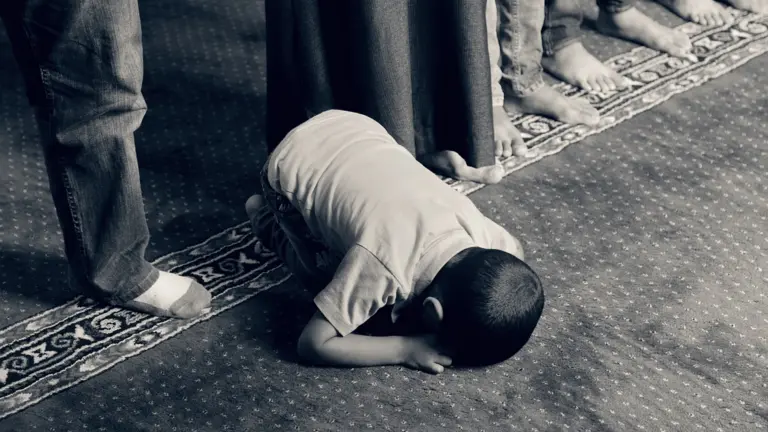
Every Ramadan, many Muslims ask an important question: can you fast Ramadan without praying? This question matters because it concerns two major pillars of Islam: prayer, called الصلاة, and fasting the month of Ramadan, called الصيام.
Some Muslims fast during Ramadan but neglect prayer. Others return to prayer during this blessed month, then fear they may not be able to maintain it afterwards. This topic must therefore be addressed seriously, but also with wisdom, without harsh judgment and without minimizing the seriousness of abandoning Salah.
This article explains the central place of prayer in Islam, the link between Salah and fasting, scholarly views on fasting without prayer, and most importantly how to return to prayer gradually and sincerely.
Why Does This Question Often Come Up During Ramadan?
Ramadan is a month of return to Allah. Many Muslims who have become distant from religious practice feel an inner call during this month: they want to fast, make dua, read Quran, return to the mosque or resume prayer.
This return is a good sign. Wanting to fast and draw closer to Allah is already a sign of hope. But Ramadan should not be treated as an isolated spiritual period where one fasts without trying to rebuild the other pillars of faith.
The question “Is my fast valid if I do not pray?” should therefore lead to a deeper reflection: what place does prayer have in my life? How can I return to Allah in a lasting way? How can I learn the basics of Islam properly?
To build these foundations step by step, you can follow a structured path to learn Islam online with a teacher.
The Central Place of Prayer in Islam
Prayer is one of the greatest pillars of Islam after the testimony of faith. It connects the servant to Allah every day, structures the believer’s life and reminds us that worship is not limited to one month of the year.
Allah says in the Quran:
إِنَّ الصَّلَاةَ تَنْهَىٰ عَنِ الْفَحْشَاءِ وَالْمُنكَرِ
Approximate meaning: Prayer prevents immorality and wrongdoing.
Reference: Surah Al-‘Ankabut, 29:45.
Prayer is not just a ritual act. It educates the heart, reminds the believer of Allah, disciplines the day, strengthens faith and protects from many forms of wrongdoing.
Prophet Muhammad ﷺ also taught that the first deed for which the servant will be questioned on the Day of Resurrection is prayer. This shows its immense importance in Muslim practice.
Ramadan Fasting and Prayer: Two Connected Pillars
Fasting Ramadan is also a pillar of Islam. Allah prescribed it for the believers so they may develop taqwa: awareness of Allah, sincerity, patience and self-control.
Allah says:
يَا أَيُّهَا الَّذِينَ آمَنُوا كُتِبَ عَلَيْكُمُ الصِّيَامُ كَمَا كُتِبَ عَلَى الَّذِينَ مِنْ قَبْلِكُمْ لَعَلَّكُمْ تَتَّقُونَ
Approximate meaning: O you who believe, fasting has been prescribed for you as it was prescribed for those before you, so that you may attain piety.
Reference: Surah Al-Baqarah, 2:183.
Fasting and prayer are therefore deeply connected. Fasting educates the body and heart. Prayer maintains the daily connection with Allah. Ramadan becomes complete when the believer tries to preserve both: fasting sincerely and praying regularly.
To understand the wider meaning of this blessed month, you can read our guide on Ramadan in Islam.
Can You Fast Ramadan Without Praying?
This question must be treated with caution, because scholars have discussed the situation of the one who abandons prayer. Several cases should be distinguished.
The One Who Denies That Prayer Is Obligatory
Whoever denies that prayer is obligatory rejects an evident pillar of Islam. This is an extremely serious matter and cannot be compared to the situation of someone who recognizes the obligation of prayer but is weak, negligent or inconsistent.
The One Who Recognizes the Obligation but Does Not Pray Out of Negligence
Some Muslims recognize that prayer is obligatory but do not pray due to laziness, weakness, lack of religious education or bad habits. This remains very serious, but scholars have differed regarding the exact status of such a person and the legal consequences for other acts of worship.
Some scholars consider total abandonment of prayer to take a person outside Islam, based on very strong texts concerning Salah. According to this view, the question of the fast’s validity becomes extremely serious.
Other scholars consider that the one who abandons prayer out of negligence while recognizing its obligation commits an enormous major sin, but does not necessarily leave Islam. According to this view, the fast may be legally valid, but it remains spiritually incomplete and seriously deficient.
In all cases, abandoning prayer must never be treated lightly. Even if a person fasts, Ramadan should be seen as an opportunity to return to Salah immediately.
Is Fasting Without Prayer Accepted by Allah?
The legal validity of an act and its acceptance by Allah are two different matters. A person may perform an act that is outwardly valid, while acceptance depends on sincerity, faith, obedience and Allah’s mercy.
A Muslim should therefore not only ask: “Does my fast count?” He or she should also ask: “How can I make Ramadan a true return to Allah? How can I preserve prayer after this month?”
Praying Only During Ramadan and Then Stopping: A Spiritual Danger
Many people return to prayer during Ramadan and then abandon it after Eid. One should not look down on someone who tries to return to Allah during this month, because Ramadan can be a real starting point.
However, one must avoid treating prayer as a temporary practice limited to Ramadan. Salah is a daily obligation throughout the year. Ramadan should be an entry point into a more regular practice, not a spiritual pause with no continuation.
If you return to prayer during Ramadan, set a realistic goal: maintain at least the obligatory prayers after Ramadan, even if your progress is gradual. Allah loves sincerity, consistency and regular efforts.
How to Return to Prayer Gradually
Returning to prayer may feel difficult when it has been neglected for a long time. But guilt should not become an obstacle. Sincere repentance begins with a decision: return to Allah now, even with simple steps.
Here are some tips to resume prayer:
- ask Allah sincerely for forgiveness;
- recognize that prayer is a central obligation;
- start immediately, without waiting to be “perfect”;
- learn wudu and prayer correctly;
- organize your day around the prayer times;
- do not despair after a mistake;
- seek an environment that encourages practice;
- learn the basics of Islam with method.
If you do not yet know how to pray correctly, it is better to learn step by step than to delay. Prayer can be learned, corrected and strengthened over time.
A Dua to Ask Allah for Help in Worship
The believer can ask Allah for help in praying, remembering Him and worshipping Him properly. Among the useful supplications is:
Arabic Text
اللَّهُمَّ أَعِنِّي عَلَى ذِكْرِكَ وَشُكْرِكَ وَحُسْنِ عِبَادَتِكَ
Transliteration
Allahumma a‘inni ‘ala dhikrika wa shukrika wa husni ‘ibadatik.
Translation
O Allah, help me remember You, thank You and worship You in the best way.
This dua is especially suitable for someone who wants to return to prayer during Ramadan and continue after Ramadan. It reminds us that worship is a gift from Allah: we make efforts, but we also ask for His help.
Tarawih, Tahajjud and Night Prayers: Do Not Confuse Them with the Obligation
During Ramadan, many Muslims pray Tarawih, stand at night, listen to the Quran and increase supplications. These actions are excellent and highly rewarded.
However, priorities must remain clear: the five obligatory prayers come before voluntary prayers. A person should not be attached to Tarawih while neglecting Fajr, Dhuhr, Asr, Maghrib or Isha.
To learn more about the night prayers of Ramadan, you can read our dedicated guide to Tarawih prayer during Ramadan.
Learning the Basics of Prayer and Fasting with Method
The question of fasting without prayer shows the importance of learning Islam clearly. Many Muslims want to practice but do not always know where to begin: purification, wudu, prayer, fasting, belief, supplications, Quran and manners.
Step-by-step learning helps build solid foundations without confusion. It helps understand the place of prayer, the meaning of fasting, the pillars of Islam and the priorities of religious practice.
Al-Dirassa offers online Islam courses for adults, beginners and those who want to return to the basics with a teacher.
For younger learners, an Islam course for children can help them gradually learn prayer, supplications, Quran and Muslim values.
Since Ramadan is also the month of the Quran, you can strengthen your recitation with our online Quran and Tajweed classes.
Book your free trial of 30 minutes
Registration form
FAQ — Fasting Ramadan Without Praying
Can you fast Ramadan without praying?
This is a serious issue. Scholars have differed regarding the status of the one who abandons prayer while recognizing its obligation. In all cases, abandoning Salah must never be treated lightly. Whoever fasts should use Ramadan as an opportunity to return to prayer.
Is the fast valid if I do not pray?
Some scholars consider total abandonment of prayer to affect the validity of acts of worship. Others hold that the fast may be valid if the person recognizes the obligation of prayer, while abandoning prayer remains a very grave major sin.
What should I do if I fast but do not yet pray?
You should continue seeking good and not abandon Ramadan, but you should begin returning to prayer immediately. Even if progress is difficult, the first step should not be delayed.
Is it hypocrisy to pray only during Ramadan?
Returning to prayer during Ramadan is not bad. On the contrary, it can be a beginning. The danger is treating prayer as limited to Ramadan and deliberately abandoning it afterwards.
Should I start with prayer or fasting?
Both are important obligations. During Ramadan, one should fast if obligated, but also return to prayer without delay. Prayer should not be postponed.
How can I learn to pray correctly?
You need to learn wudu, prayer times, positions, essential words and common mistakes. A teacher or structured course can help you progress clearly.
What dua can I recite to help me pray?
You can recite: Allahumma a‘inni ‘ala dhikrika wa shukrika wa husni ‘ibadatik. It means: O Allah, help me remember You, thank You and worship You in the best way.
Conclusion
Fasting Ramadan without praying is a serious situation that should not be minimized. Fasting is a great pillar, but prayer is the believer’s daily connection with Allah and one of the greatest signs of faith.
Whoever fasts but does not pray should see Ramadan as an invitation to return sincerely to Salah. One should neither despair of Allah’s mercy nor be satisfied with an incomplete practice.
The best path is to return to Allah with humility, learn the basics of prayer, ask for His help and build a regular practice that continues after Ramadan.





No Comments
No comments yet.
No comments yet.