
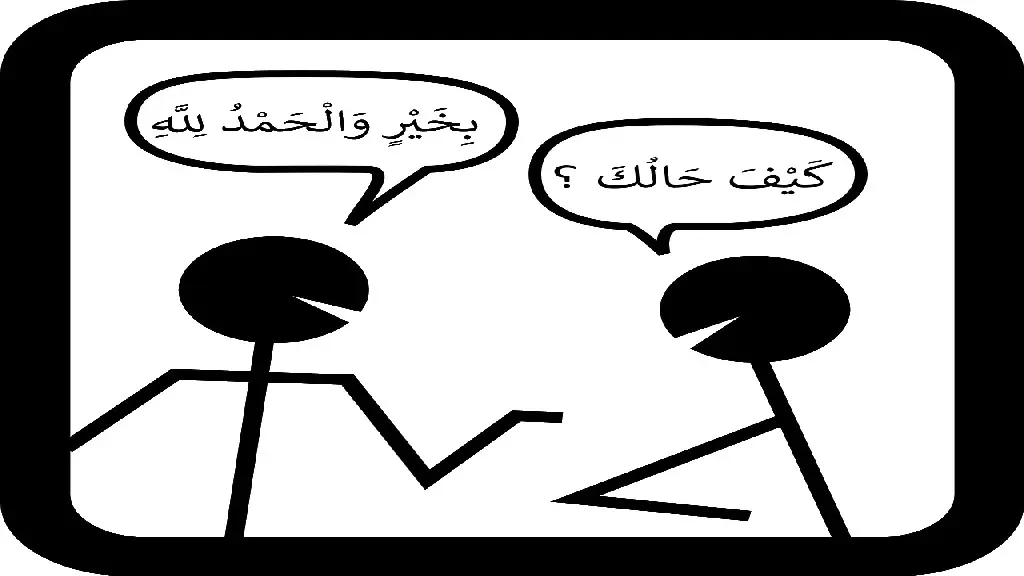
Arabic is one of the most important languages in the world. It is spoken across many countries, used in religious texts, present in media and education, and connected to a long history of culture, knowledge and communication.
For many learners, discovering the global importance of Arabic becomes a strong motivation to study it. Some want to understand the Quran, others want to communicate with Arabic speakers, travel, study Middle Eastern cultures, access classical texts or add a valuable language to their personal or professional life.
But to understand why Arabic has such a major place in the world, it is important to look at its history, its cultural influence, its religious role and the different forms of Arabic used today.
Why Arabic Has an Important Place in the World
Arabic is not only a language of daily communication. It is also a language of literature, religion, education, media, diplomacy and cultural identity. This explains why it continues to attract learners around the world.
The Arabic language connects people across the Middle East, North Africa and many Arabic-speaking communities worldwide. It also connects modern learners to a rich heritage of poetry, scholarship, history and religious texts.
For students who want to learn Arabic online, understanding this wider role can make the learning journey more meaningful. Arabic is not simply a set of words and rules; it is a gateway to a civilization and a living global language.
A Language Spoken by Millions of People
Arabic is spoken by several hundred million people around the world. It is used across many Arab countries and by Arabic-speaking communities in Europe, North America, Africa and Asia.
This makes Arabic useful for travel, family communication, religious learning, academic study, international relations, business and cultural exchange.
However, Arabic is not used in only one form. Learners often hear about Modern Standard Arabic, classical Arabic, Quranic Arabic and dialects. Understanding the difference between these forms helps students choose the right learning path.
A Language Connected to History, Culture and Knowledge
Arabic has played a major role in history. It has been a language of literature, poetry, science, mathematics, philosophy, medicine, theology and law.
During important periods of Islamic civilization, Arabic was used to preserve, develop and transmit knowledge. Many classical works in different fields were written in Arabic, and the language also influenced other languages through culture, trade and scholarship.
Learning Arabic therefore gives access to more than communication. It opens a door to texts, ideas and intellectual traditions that shaped many parts of the world.
The Language of the Quran and Islamic Heritage
For Muslims, Arabic has a unique spiritual importance because it is the language of the Quran. It is also present in prayer, supplications, Islamic vocabulary and many classical religious works.
Many non-Arabic-speaking Muslims begin learning Arabic because they want to recognize Quranic words, better understand recitation and connect more deeply with Islamic texts.
This does not replace Tafsir or Islamic scholarship, but it gives learners linguistic tools. Students interested in this path can study Quranic Arabic and also follow online Quran and Tajweed classes to improve reading and recitation.
Modern Standard Arabic, Quranic Arabic and Dialects: What Should You Know?
One reason Arabic can seem complex is that it exists in several forms. A beginner may wonder which Arabic to learn first.
Modern Standard Arabic is used in writing, formal communication, education, media and many official contexts. It is a strong foundation for learners who want to read, write and understand Arabic across different countries.
Quranic Arabic focuses on the vocabulary, structures and expressions found in the Quran. It is especially useful for students who want to connect Arabic learning with Quran reading and Islamic studies.
Dialects are used in daily conversation and vary from country to country. They are useful for speaking with people in a specific region, but many learners benefit from starting with Modern Standard Arabic before adding a dialect later.
Why Learn Arabic Today?
Arabic remains useful today for many reasons. It helps learners communicate with Arabic speakers, understand cultures, access religious texts, follow media, travel more meaningfully and develop a valuable skill.
For students, Arabic can support academic goals. For professionals, it can be useful in fields such as education, translation, diplomacy, journalism, humanitarian work, international business, tourism and Islamic studies.
For families, Arabic can also be a way to transmit heritage, connect children to a language of faith or culture, and build a stronger relationship with Arabic-speaking communities.
How to Start Learning Arabic Effectively
To start learning Arabic, it is important to follow a clear order. Many beginners feel lost because they try to learn vocabulary, grammar, reading and speaking all at once.
A more effective path begins with the foundations:
- learn the Arabic alphabet;
- recognize letters in their different forms;
- practice Arabic reading step by step;
- correct Arabic pronunciation early;
- learn useful Arabic vocabulary in context;
- study the first rules of Arabic grammar;
- read short sentences;
- progress toward Modern Standard Arabic, Quranic Arabic or another goal.
Beginners can also use free Arabic books for beginners to review the basics and practice regularly.
Learn Arabic with a Teacher
Self-study can help you discover Arabic, but learning alone often creates gaps. A learner may memorize words without pronouncing them correctly, read letters incorrectly or study grammar without understanding how to use it.
A teacher can correct these mistakes, explain difficult points and build a learning path adapted to the student’s level. This is especially important for beginners, adults, children and students who want to read the Quran correctly.
At Al-Dirassa, students can learn Arabic online with qualified teachers, personalized support and a progressive method. Lessons can focus on Arabic for beginners, Modern Standard Arabic, Quranic Arabic, reading, vocabulary, grammar or pronunciation.
Families can also choose Arabic classes for kids, with an approach adapted to the child’s age and pace.
Book your free trial of 30 minutes
Registration form
Conclusion: The Importance of Arabic Becomes Clearer When You Learn It
Arabic is one of the world’s most important languages because it connects millions of speakers, a vast cultural heritage, Islamic texts, historical scholarship and modern communication.
But the true value of Arabic becomes clearer when you begin learning it. Step by step, the alphabet, reading, pronunciation, vocabulary and grammar open access to meanings that translation cannot always fully transmit.
To learn Arabic fully, you need more than motivation. You need a clear method, regular practice and correction. With a teacher, Arabic learning becomes more structured, more accurate and more rewarding.



No Comments
No comments yet.