- Institut Al-Dirassa
- No comments
Silence, also known as 'Sakt' - السَّكْتُ, is a brief pause in Quranic recitation where one does not resume breathing to continue reading. This pause takes two distinct forms: Compulsory Silence: A p…
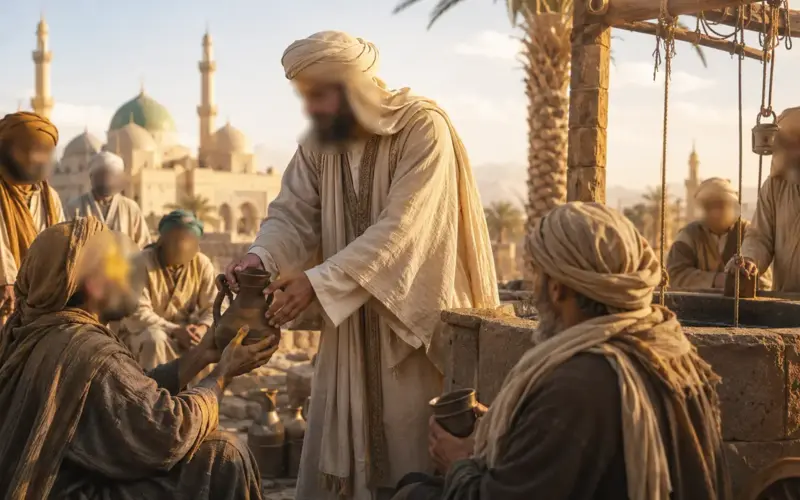
1. Uthman ibn Affan nickname 'Uthman ibn Affan was one of the earliest individuals to embrace Islam, accepting it shortly after the first revelation to the Prophet ﷺ. He ascended to the position of Ca…
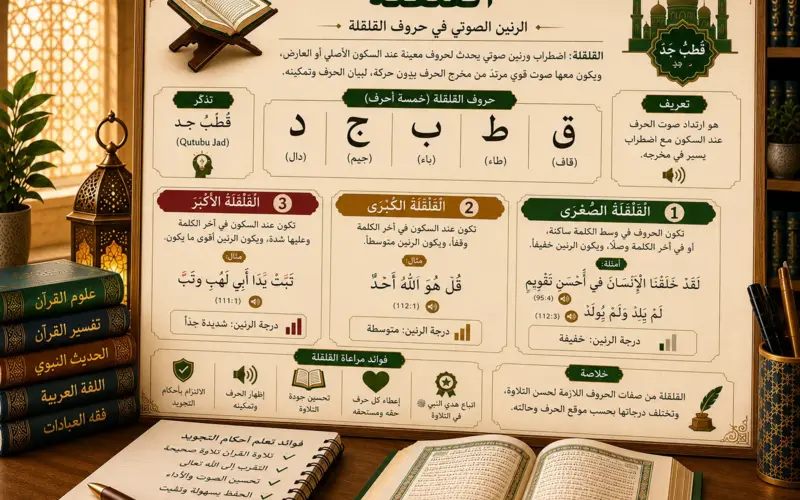
Qalqala: Resonance in Arabic Pronunciation In the Arabic language, "qalqala" is a term that evokes a sense of restlessness, instability, and disturbance. Interestingly, this concept is not only lingui…
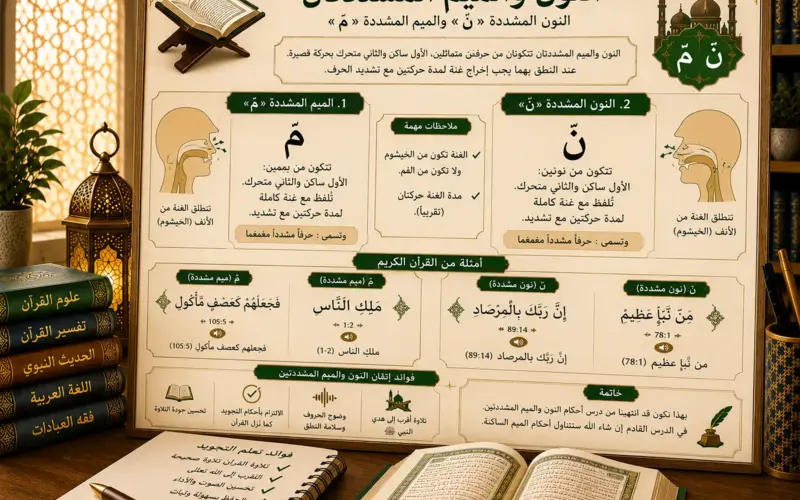
The doubled letters "noon" (النون) and "meem" (المِيم) with a shadda, also known as "النون المشددة" and "المِيم المشددة, " are interesting features in Arabic pronunciation and phonetics. These letters…
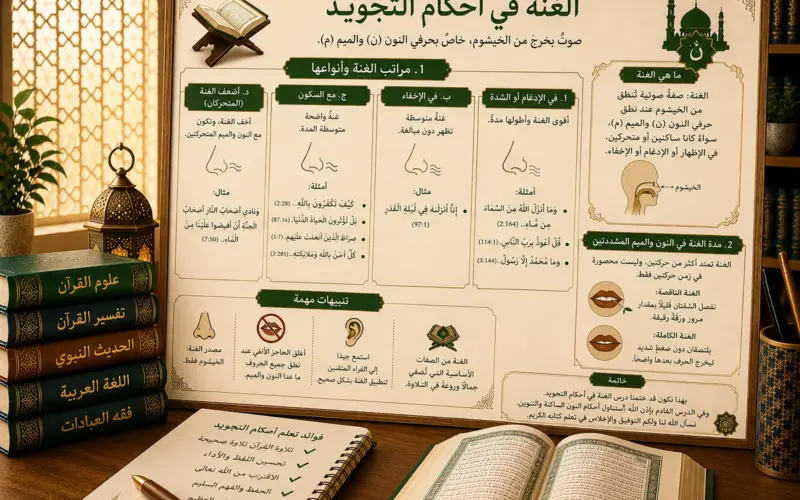
Ghunna, a nasalization feature, is essential for the letters Noon ن and Meem م. This holds true irrespective of their pronunciation state, be it vocalized, with a sukoon, during idhar, idgham, or even…
The science of Quranic recitations encompasses three pivotal areas: Mastery of Tajweed principles. Understanding the varied styles of recitation. Exploring the diverse learning modalities. Understan…
Some testimonials from students who joined Al-Dirassa Institute and are happy to share their experience.