- Institut Al-Dirassa
- No comments
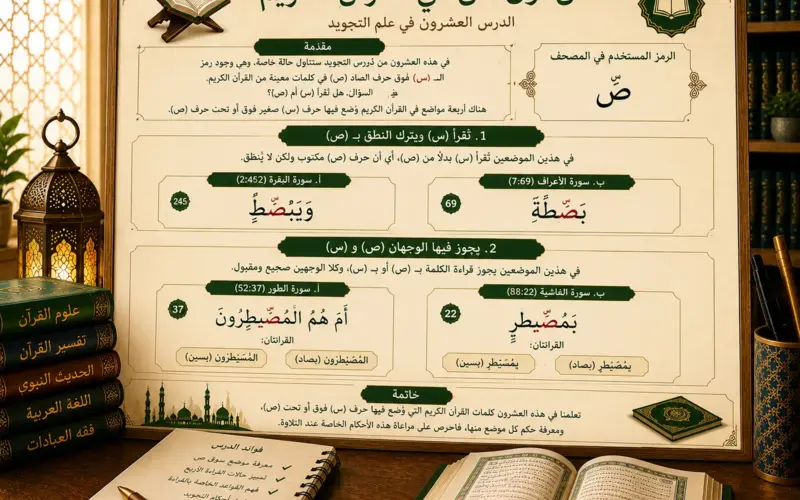
Introduction In this twentieth Tajweed lesson, we will study the specific case of the symbol of the letter س (Sin) placed above the letter ص (Sad). The question is: should we read the letter س (Sin) o…
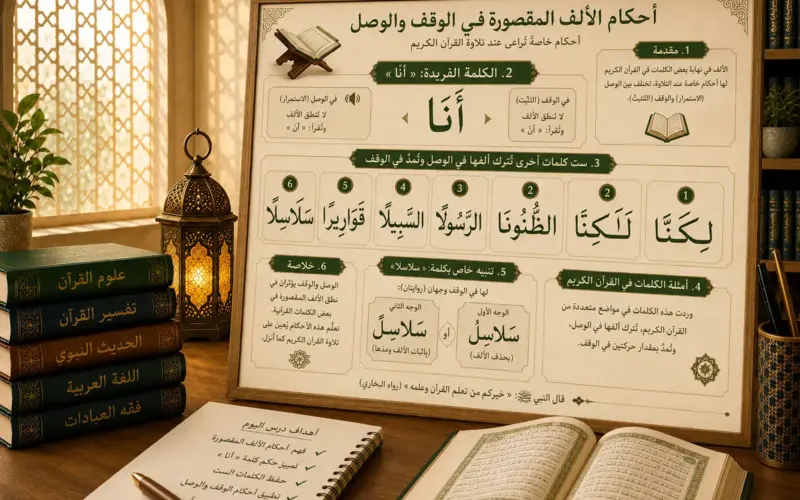
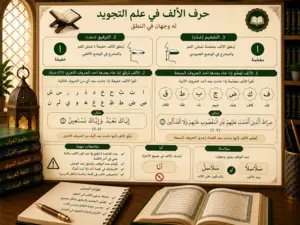
In the intricate tapestry of Tajweed, specific rules govern the pronunciation of letters, enhancing the beauty and precision of Qur'anic recitation. One such rule pertains to the letter 'alif' - ا, wh…
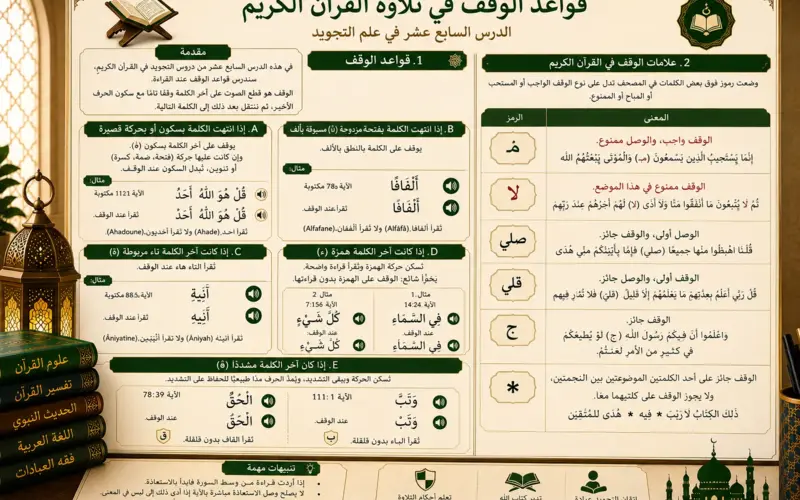
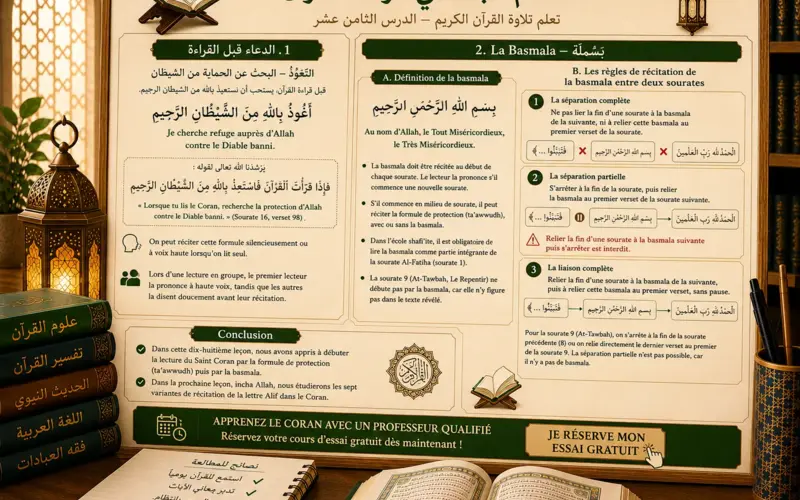
When engaging in the profound act of reading the Holy Quran, it's essential to understand that one cannot simply pause at any moment. Therefore, it is crucial to acquaint oneself with the various form…
1. Essential Quranic Stop Signs - الْوَقْفُ الَّازِم Stop that allows the sentence to be complete grammatically and in terms of meaning. This stop is called "perfect" because the speech is complete an…
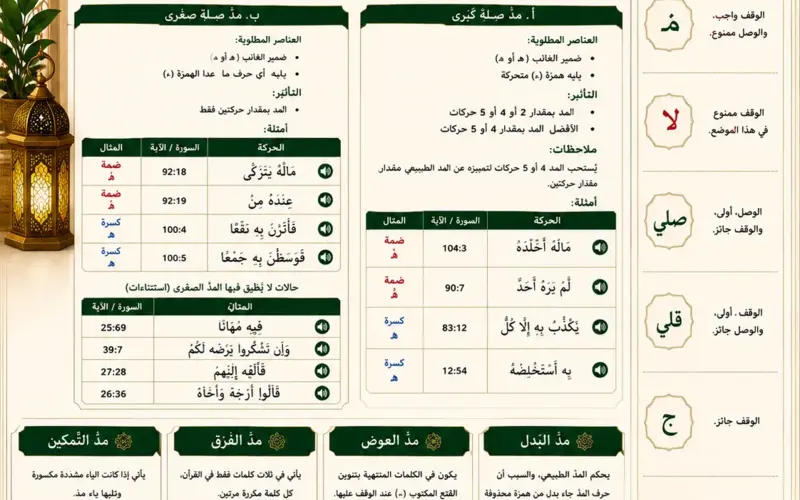
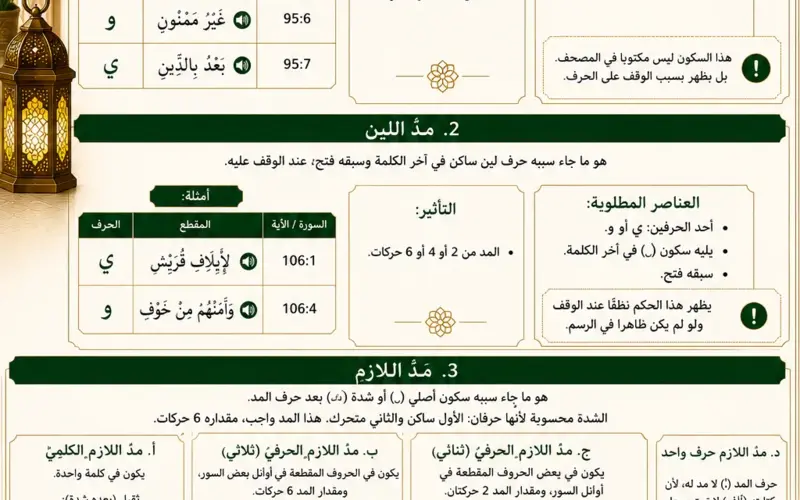
Introduction In the previous lessons on Quranic elongations, we learned that madd letters are recited differently when followed by the Arabic letter Hamza (ء), a sukun, or a shadda. In this new Tajwee…
Introduction In this fifteenth lesson on learning the Tajweed of the Holy Quran, we continue our study of the rules of elongation. Here, we will examine the elongations that are followed by a sukun or…
Some testimonials from students who joined Al-Dirassa Institute and are happy to share their experience.