
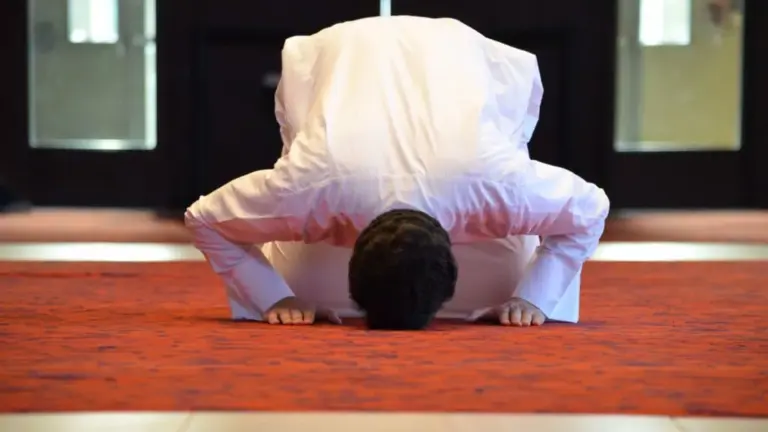
Tarawih prayer is one of the most well-known recommended practices during the month of Ramadan. It is performed after the Isha prayer during the nights of this blessed month and allows the Muslim to draw closer to Allah through prayer, Quran recitation, dhikr and supplication.
Tarawih is not an obligatory prayer, but it has great merit. It is part of the night prayer during Ramadan, also called qiyam Ramadan. The believer who performs it with faith, sincerity and hope for Allah’s reward finds in it an opportunity for purification, focus and spiritual renewal.
In this article, you will learn what Tarawih prayer is, when to pray it, how many rakʿat to perform, how to pray it in the mosque or at home, and how to benefit from this moment to strengthen your connection with the Quran.
What Is Tarawih Prayer?
Tarawih refers to the night prayer performed during the nights of Ramadan after Isha. It is called Tarawih because worshippers traditionally took short rests between sets of prayers.
This prayer allows the Muslim to continue worship after breaking the fast, listen to or recite Quran, increase supplications and spend the nights of Ramadan in the remembrance of Allah.
Tarawih is one of the great spiritual moments of Ramadan. It reminds us that this month is not only a month of physical abstinence, but also a month of prayer, Quran, repentance and return to Allah.
To place Tarawih within the broader meaning of the blessed month, you can read our guide on Ramadan in Islam.
When Should Tarawih Be Prayed During Ramadan?
Tarawih prayer is performed after the obligatory Isha prayer and before Fajr. In mosques, it is usually performed just after Isha to make participation easier for worshippers.
Someone praying at home may also perform it after Isha, or later in the night if he or she wants to benefit from a quieter time. However, one should not delay it so much that it is missed.
The night prayer during Ramadan is a precious opportunity. It is better to choose a realistic time that can be maintained regularly throughout the month.
What Is the Merit of Tarawih Prayer?
The merit of night prayer during Ramadan is immense. Prophet Muhammad ﷺ indicated that whoever prays the nights of Ramadan with faith and hope for Allah’s reward may hope for forgiveness of past sins.
This merit shows Allah’s generosity toward His servants. Ramadan is not only the month of fasting; it is also the month of prayer, Quran, repentance, patience and drawing closer to Allah.
Tarawih helps the believer to:
- strengthen the connection with Allah;
- spend Ramadan nights in worship;
- listen to or recite more Quran;
- develop patience and consistency;
- seek Allah’s forgiveness;
- train the heart in focus;
- share a spiritual atmosphere with the community or family.
Is Tarawih Prayer Obligatory?
Tarawih prayer is not obligatory. It is recommended and highly rewarded. The Muslim who performs it seeks Allah’s reward, but the one who does not pray it does not commit a sin like someone who abandons an obligation.
However, it is unfortunate to deprive oneself of such great good during Ramadan. Even a few rakʿat performed sincerely are better than abandoning it completely out of discouragement.
Regularity and sincerity are more important than seeking a quantity that is difficult to maintain.
How Many Rakʿat for Tarawih: 8 or 20?
Tarawih prayer is performed in sets of two rakʿat. In Muslim practice, several known numbers exist, especially eight rakʿat or twenty rakʿat, generally followed by Witr prayer.
In some mosques, Tarawih is prayed as eight rakʿat with longer recitation. In others, it is prayed as twenty rakʿat with recitation distributed differently.
It is therefore better to avoid disputes on this subject. What matters most is praying with faith, focus, respect and according to one’s physical and spiritual ability.
A beginner may start with a lighter number, then increase gradually. An elderly, ill, tired or heavily responsible person may also adapt without excessive guilt.
How to Perform Tarawih Prayer Correctly
Tarawih is performed like other voluntary night prayers, generally two rakʿat by two rakʿat.
Here is a simple way to perform it:
- intend in the heart to pray Tarawih or the night prayer of Ramadan;
- pray after Isha;
- perform two rakʿat;
- give salam;
- continue with two rakʿat according to your ability;
- end with Witr prayer;
- increase supplications and remembrance of Allah.
The intention does not need to be pronounced aloud. It is located in the heart.
If you need to review the basics of prayer, wudu or acts of worship, you can follow Islamic sciences online with a teacher.
Can Tarawih Be Prayed at Home?
Yes, Tarawih can be prayed at home. Although praying in congregation at the mosque has great value and a special spiritual atmosphere, the Muslim may perform Tarawih at home, alone or with family.
Praying at home may be especially useful for:
- people who cannot go to the mosque;
- women who prefer to pray at home;
- parents with young children;
- beginners who want to progress gradually;
- those who are tired or ill;
- those who want to prolong prayer later in the night.
What matters is not abandoning night prayer completely during Ramadan when one is able to perform part of it.
How to Organize Tarawih at Home
Performing Tarawih at home can become a deep spiritual experience if organized properly.
Choose a Calm Space
Prepare a clean, calm place away from distractions. This space should help concentration and respect in prayer.
Set a Realistic Time
Choose a time you can maintain regularly. For some people, it will be just after Isha. For others, it will be later at night.
Recite According to Your Ability
It is not obligatory to recite long surahs if you do not know them. You may recite what you know from the Quran, even if little, with respect and focus.
Involve the Family
If possible, praying Tarawih as a family can create a beautiful Ramadan atmosphere at home. Children may participate according to their age and ability, without excessive pressure.
Take Short Breaks
Tarawih should not become a cause of exhaustion or irritation. Short breaks can help preserve concentration and serenity.
Tarawih, Quran Recitation and Khushuʿ
Tarawih prayer is closely linked to the Quran. In many mosques, a significant portion of the Quran is recited during Ramadan, sometimes until its recitation is completed during the month.
But the goal is not only to hear many verses. The believer should seek khushuʿ, meaning presence of heart, humility and concentration before Allah.
To improve khushuʿ during Tarawih, it is useful to:
- understand the general meaning of the verses recited;
- listen carefully to the recitation;
- avoid being distracted by the phone;
- remember that you are standing before Allah;
- take your time in the positions of prayer;
- make sincere supplications after the prayer.
To strengthen your recitation and connection with the Book of Allah, you can explore our online Quran and Tajweed classes.
Tips to Benefit from Tarawih During Ramadan
To benefit from Tarawih, it is important to approach this prayer with balance. Ramadan is a month of consistency, not only enthusiasm at the beginning of the month.
Here are some useful tips:
- start with a realistic rhythm;
- avoid overloading yourself in the first nights;
- preserve the obligatory prayers first;
- sleep enough to avoid exhaustion;
- reduce distractions after iftar;
- prepare your heart before prayer;
- make personal supplications;
- listen to or read some meanings of the verses;
- remain consistent until the end of Ramadan.
The goal is to make Tarawih a means of drawing closer to Allah, not merely a social habit or physical effort without presence of heart.
Tarawih for Children and Families
Ramadan is a beautiful opportunity to educate children in prayer, Quran and the spiritual atmosphere of the blessed month. However, children should be accompanied with gentleness and gradual learning.
It is not necessary to impose a long prayer on them. They can begin with a few rakʿat, listen to part of the recitation, learn a short surah or make a simple dua.
The goal is to make them love Ramadan, the mosque, the Quran and prayer without creating excessive pressure.
To support younger learners in faith, prayer and supplications, Al-Dirassa offers an Islam course for children.
Learning Quran, Arabic and Islam During Ramadan
Ramadan is the month of the Quran. Tarawih prayer reminds the believer of the importance of reading, listening to, understanding and reflecting on the words of Allah.
Reading the Quran in Arabic without depending only on transliteration allows one to better follow the recitation, improve pronunciation and strengthen concentration in prayer.
To progress step by step, you can follow a path to learn Arabic online.
Studying Quranic Arabic also helps better understand the verses recited during Tarawih, supplications and religious vocabulary.
To read more content related to Ramadan, supplications, Quran and Muslim life, explore our resources to learn Islam.
Book your free trial of 30 minutes
Registration form
FAQ — Tarawih Prayer
What is Tarawih prayer?
Tarawih prayer is a recommended night prayer performed during the nights of Ramadan after the Isha prayer.
Is Tarawih prayer obligatory?
No, Tarawih is not obligatory. It is a recommended and highly rewarded prayer during Ramadan.
When should Tarawih be prayed?
Tarawih is prayed after Isha and before Fajr. It is often performed just after Isha in mosques.
How many rakʿat should be prayed for Tarawih?
Known practices include eight or twenty rakʿat, usually prayed two by two, then followed by Witr. What matters is praying sincerely and according to one’s ability.
Can Tarawih be prayed at home?
Yes, Tarawih can be prayed at home, alone or with family. This may be especially useful for those who cannot go to the mosque.
Must the whole Quran be completed during Tarawih?
Completing the Quran during Ramadan is a beautiful practice in many mosques, but it is not a condition for the validity of Tarawih. Each person recites according to ability.
Can a woman pray Tarawih at home?
Yes, a woman can pray Tarawih at home. She may also pray in the mosque if appropriate conditions are met. What matters is sincerity and respect in prayer.
How can I improve concentration during Tarawih?
It is useful to understand the meaning of verses, reduce distractions, pray at a sustainable pace, sleep enough and remember that you are standing before Allah.
Conclusion
Tarawih prayer is a precious opportunity to spend Ramadan nights in prayer, Quran, supplication and remembrance of Allah. It is not obligatory, but it is one of the great means of drawing closer to Allah during this blessed month.
Whether you pray it in the mosque or at home, as eight or twenty rakʿat, alone or with family, what matters is performing it with faith, sincerity, concentration and according to your ability.
Ramadan is an opportunity to strengthen your relationship with the Quran, improve your prayer, learn your religion and build lasting spiritual habits beyond the blessed month.





No Comments
No comments yet.
No comments yet.