
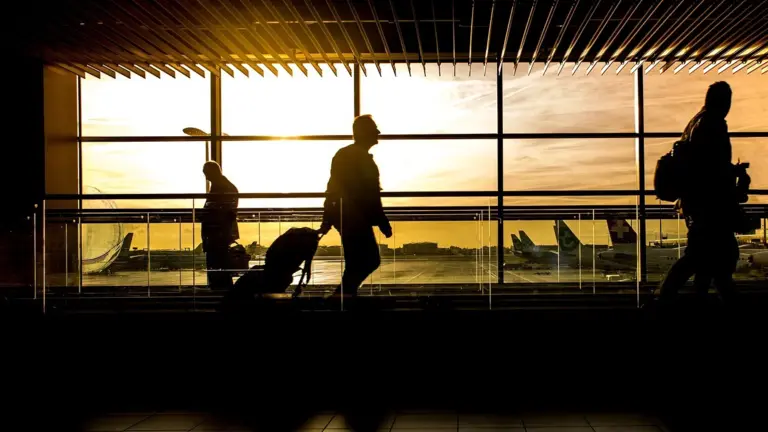
In Islam, every act of daily life can become an opportunity to draw closer to Allah. Travel is one of those important moments when the Muslim remembers his or her dependence on the Lord, asks for His protection and places trust in Him.
The traveler’s dua, also called the supplication for travel, is a dua that the believer may recite when leaving home, boarding a means of transport, beginning a journey or returning to family.
Travel can be a source of good: visiting relatives, work, studies, seeking knowledge, Hajj, Umrah or another lawful need. But it may also involve fatigue, delays, unexpected events and worries. That is why Prophet Muhammad ﷺ taught precious supplications to ask Allah for ease, safety, piety, good deeds and a blessed return.
Why Make Dua Before Traveling?
Making dua before traveling reminds the believer that safety does not depend only on material means. The Muslim prepares the journey, checks the transport, organizes the departure and takes precautions, but knows that true protection comes from Allah.
The traveler’s dua expresses several important realities:
- trust in Allah;
- asking for protection during absence;
- recognition of Allah’s blessings;
- seeking piety during the journey;
- asking for a safe return to family;
- remembering the final return to Allah.
The traveler leaves the usual environment, comfort, habits and sometimes family. Dua helps the believer experience this moment with faith, serenity and tawakkul.
Travel supplications belong to a wider practice of remembering Allah and learning the religion. To progress step by step, you can follow Islamic sciences online with a teacher.
The Supplication Before Leaving the House
Before leaving home, the Muslim can recite a short and well-known supplication. It is suitable whether one is leaving for a short trip or a longer journey.
Arabic Text
بِسْمِ اللَّهِ، تَوَكَّلْتُ عَلَى اللَّهِ، وَلَا حَوْلَ وَلَا قُوَّةَ إِلَّا بِاللَّهِ
Transliteration
Bismillah, tawakkaltu ‘ala Allah, wa la hawla wa la quwwata illa billah.
Translation
In the name of Allah, I place my trust in Allah. There is no power and no strength except with Allah.
Meaning of This Supplication
This dua teaches the believer to leave home with trust, humility and awareness that one does not depend only on personal ability.
The Traveler’s Dua in Arabic, Transliteration and English
The traveler’s dua is a complete supplication. It begins by glorifying Allah, reminds the believer that transportation is a blessing, then asks for piety, ease in the journey, protection of the family and a good return.
It is recommended to recite it at the beginning of the journey, especially when boarding a means of transport or when the journey truly begins.
Arabic Text of the Travel Dua
سُبْحَانَ الَّذِي سَخَّرَ لَنَا هَٰذَا وَمَا كُنَّا لَهُ مُقْرِنِينَ، وَإِنَّا إِلَىٰ رَبِّنَا لَمُنْقَلِبُونَ
اللَّهُمَّ إِنَّا نَسْأَلُكَ فِي سَفَرِنَا هَٰذَا الْبِرَّ وَالتَّقْوَى، وَمِنَ الْعَمَلِ مَا تَرْضَى
اللَّهُمَّ هَوِّنْ عَلَيْنَا سَفَرَنَا هَٰذَا، وَاطْوِ عَنَّا بُعْدَهُ
اللَّهُمَّ أَنْتَ الصَّاحِبُ فِي السَّفَرِ، وَالْخَلِيفَةُ فِي الْأَهْلِ
اللَّهُمَّ إِنِّي أَعُوذُ بِكَ مِنْ وَعْثَاءِ السَّفَرِ، وَكَآبَةِ الْمَنْظَرِ، وَسُوءِ الْمُنْقَلَبِ فِي الْمَالِ وَالْأَهْلِ
Transliteration of the Traveler’s Dua
Subhana alladhi sakhkhara lana hadha wa ma kunna lahu muqrinin, wa inna ila Rabbina lamunqalibun.
Allahumma inna nas’aluka fi safarina hadha al-birra wa at-taqwa, wa mina al-‘amali ma tarda.
Allahumma hawwin ‘alayna safarana hadha, watwi ‘anna bu‘dah.
Allahumma anta as-sahibu fi as-safar, wa al-khalifatu fi al-ahl.
Allahumma inni a‘udhu bika min wa‘tha’i as-safar, wa ka’abati al-manzar, wa su’i al-munqalabi fi al-mali wa al-ahl.
English Translation
Glory be to the One who has placed this at our service, while we could not have controlled it by ourselves. Indeed, to our Lord we shall return.
O Allah, we ask You in this journey for righteousness, piety and deeds that please You.
O Allah, make this journey easy for us and shorten its distance for us.
O Allah, You are the Companion in travel and the Guardian of our family in our absence.
O Allah, I seek refuge in You from the hardships of travel, from distressing sights and from a bad return concerning wealth and family.
Explanation of the Traveler’s Dua
This supplication is very complete. It does not only ask for an easy journey. It teaches the believer to travel with a right intention and with behavior that remains consistent with Islam.
The beginning of the dua reminds us that transportation is a blessing from Allah. Whether it is a car, train, plane, boat or another means, the believer recognizes that this ease comes from Allah.
The request for birr and taqwa shows that travel should not distance the Muslim from piety. Even far from home, the believer remains a servant of Allah and preserves prayer, speech, gaze, conduct and commitments.
The phrase “You are the Companion in travel and the Guardian of our family” is especially meaningful. It reminds the believer that he or she is never alone: Allah knows the situation, protects according to His wisdom and watches over those left behind.
What Should Be Said When Returning from Travel?
When returning from a journey, it is reported that the traveler adds a formula of remembrance, repentance and gratitude.
Arabic Text
آيِبُونَ، تَائِبُونَ، عَابِدُونَ، لِرَبِّنَا حَامِدُونَ
Transliteration
Ayibuna, ta’ibuna, ‘abiduna, li-Rabbina hamidun.
Translation
We return, repentant, worshipping and praising our Lord.
This formula reminds the believer that returning from a journey is also a blessing. The Muslim thanks Allah for protection, ease and the ability to return to loved ones.
Is the Traveler’s Dua Answered?
The traveler is in a particular situation: away from comfort, sometimes tired, dependent on Allah and more aware of human weakness. For this reason, the believer is encouraged to make many duas during the journey.
One may supplicate for oneself, family, parents, children, the sick, the deceased and all believers. One may also ask for safety, ease, protection from unexpected events, barakah in the journey and a peaceful return.
Concessions Granted to the Traveler in Islam
Islam is a religion of mercy, wisdom and ease. Travel can be tiring or difficult, which is why certain concessions are granted to the traveler. These rulings belong to Fiqh and may vary according to schools of law. For a precise case, it is recommended to ask a qualified scholar.
Shortening the Prayers
The traveler may benefit from qasr, meaning the shortening of certain obligatory prayers. Dhuhr, Asr and Isha, normally prayed as four units, are shortened to two units.
This concession reminds us that prayer remains central, even while traveling, but Islam takes into account the realities of travel.
Combining the Prayers
The traveler may also, in certain situations, combine Dhuhr with Asr, and Maghrib with Isha. This can be useful during a long journey, a flight, a professional trip or a situation where it is difficult to pray at the usual time.
Fasting While Traveling
The Quran mentions the possibility of postponing the fast for the sick person or the traveler. The traveler may therefore, depending on the situation, fast or delay the fast and make it up later.
The choice depends on ability, the real difficulty of the journey and known rulings in Islamic jurisprudence. The aim is not to seek hardship, but to practice Islam with sincerity and balance.
When Is Someone Considered a Traveler in Islam?
Scholars have discussed the conditions that allow a person to benefit from the status of traveler. Among the elements often mentioned are the distance of the journey, the intention of travel, the duration of stay and actually leaving one’s city or place of residence.
Some opinions mention an approximate distance of around 77 to 80 kilometers, while other approaches also consider what is commonly regarded as travel. The length of stay may also affect traveler status according to the schools of law.
To avoid mistakes, it is better to learn these rulings with a teacher or consult someone qualified, especially when it concerns prayer, fasting or repeated situations.
These questions are part of the basics of Fiqh and Islamic practice. You can study them through a structured path to learn Islam step by step.
The Muslim’s Conduct While Traveling
Travel is not only a physical movement. It is also a time when the Muslim should preserve prayer, manners, patience and remembrance of Allah.
Good conduct while traveling includes:
- preserving prayer according to one’s ability;
- avoiding arguments and hurtful speech;
- respecting the people traveling with you;
- being patient with delays and difficulties;
- preserving duas and dhikr;
- thanking Allah for ease in the journey;
- asking for a safe and blessed return;
- respecting the rules of the country or place visited;
- keeping a lawful and beneficial intention.
Children can also learn simple supplications related to leaving, transportation and returning. To support them in Islamic learning, Al-Dirassa offers an Islam course for children.
Practical Tips for Traveling in Accordance with Islam
Good preparation helps the Muslim travel with more serenity. Before departure, it is useful to:
- check prayer times at the destination;
- use a reliable app for qibla direction;
- carry what helps with wudu and prayer;
- identify places where prayer may be possible;
- plan the itinerary with some margin;
- anticipate the question of fasting if traveling during Ramadan;
- memorize at least the short dua for leaving home;
- read the translation of the duas to understand what is being asked from Allah.
These material means do not replace trust in Allah. They are part of it: the Muslim takes the means, then entrusts the matter to the Lord.
Learning Daily Supplications in Arabic
Learning daily supplications allows the Muslim to live with more awareness, protection and closeness to Allah. The traveler’s dua is one of these useful supplications that can be memorized gradually.
Transliteration can help at the beginning, especially for those who do not yet read Arabic. But it remains limited because some Arabic sounds do not exist in English. To recite more accurately, it is useful to follow a structured path to learn Arabic online.
Understanding supplications is not limited to reading their translation. Studying Quranic Arabic helps recognize frequent words in the Quran, duas and religious texts.
If you want to read supplications directly in Arabic and improve your recitation, our online Quran and Tajweed classes can help you progress with a teacher.
Book your free trial of 30 minutes
Registration form
Learn Islam to Practice Better While Traveling
The rulings of the traveler touch several areas of Islamic practice: prayer, fasting, purification, concessions, Fiqh, manners and supplications. Learning them helps avoid confusion and practice with more confidence.
Al-Dirassa offers online courses to learn the basics of Islam, progress in Arabic, improve Quran recitation and understand daily supplications with a teacher.
To read more content related to supplications, spirituality and Muslim life, you can also explore our resources to learn Islam.
FAQ — Traveler’s Dua in Islam
What is the traveler’s dua?
The traveler’s dua begins with: “Subhana alladhi sakhkhara lana hadha wa ma kunna lahu muqrinin…” It asks Allah for piety, ease in the journey, protection during absence and a good return to family.
When should the travel dua be recited?
It may be recited when leaving home, boarding a means of transport, at the beginning of the journey, during the trip and when returning.
What dua should be said before leaving home?
One may say: “Bismillah, tawakkaltu ‘ala Allah, wa la hawla wa la quwwata illa billah,” meaning: “In the name of Allah, I place my trust in Allah. There is no power and no strength except with Allah.”
What should be said when returning from travel?
Upon return, one may say: “Ayibuna, ta’ibuna, ‘abiduna, li-Rabbina hamidun,” meaning: “We return, repentant, worshipping and praising our Lord.”
Can prayers be shortened while traveling?
Yes, the traveler may benefit from qasr for Dhuhr, Asr and Isha, which are shortened to two units. The precise conditions depend on juristic opinions.
Can prayers be combined while traveling?
Yes, the traveler may in certain situations combine Dhuhr with Asr, and Maghrib with Isha. It is recommended to learn the detailed rules according to a reliable school of law.
Does the traveler have to fast during Ramadan?
The traveler may fast if able, or postpone the fast and make it up later if the journey makes fasting difficult. This concession is mentioned in the Quran.
Can the traveler’s dua be read in English?
Reading the English translation helps understand the meaning. However, it is better to gradually learn the Arabic formula in order to recite the supplication as it was transmitted.
Is transliteration enough to learn the travel dua?
Transliteration can help at the beginning, but it does not fully replace reading Arabic. Some Arabic sounds are difficult to represent with the Latin alphabet.
Conclusion
The traveler’s dua is an important supplication that reminds the Muslim of dependence upon Allah. It allows the believer to ask for protection, ease, piety, accepted deeds and a peaceful return to family.
Travel is also a time when Islam shows its mercy through certain concessions related to prayer and fasting. These concessions should not be seen as negligence, but as divine wisdom adapted to the realities of travel.
By reciting the supplications of departure, travel and return, preserving prayer and taking the useful means, the believer transforms the journey into a moment of remembrance, trust and closeness to Allah.





No Comments
No comments yet.
No comments yet.