Learning how to pray two rakats in Islam is an essential step for anyone beginning to learn Muslim prayer. Many obligatory and voluntary prayers include two rakats, such as the Fajr prayer and several optional prayers.
Prayer, called ุงูุตูุงุฉ salah, is one of the most important pillars of Islam. Through prayer, a Muslim turns to Allah, worships Him, asks for His guidance and strengthens faith every day.
In this guide, you will learn how to perform two units of prayer step by step: preparation, intention, takbir, the recitation of Al-Fatiha, bowing, prostration, tashahhud and the final salam.
What Is a Rakah in Salah?
A ุฑูุนุฉ rakah is one unit of prayer. It includes several actions: standing, recitation, bowing, rising from bowing, two prostrations and sitting between the two prostrations.
A prayer of two rakats means that this unit is performed twice, followed by the tashahhud and the final salam.
Before You Start: Purification, Intention and Qibla
Before starting the prayer, a Muslim should prepare properly. This preparation concerns the body, clothes, place of prayer and intention of the heart.
Perform Wudu Before Prayer
Prayer must be performed in a state of purification. A Muslim therefore performs the minor ablution, called wudu, before praying. In some cases, major ritual washing, called ghusl, may be required.
The clothes and the place of prayer should also be clean. This purification helps the believer stand before Allah with respect and concentration.
Face the Qibla
Prayer is performed facing the qibla, the direction of the Kaaba in Makkah. If you do not know the exact direction, you can use a reliable app, a compass or ask someone who knows the direction.
Make the Intention in the Heart
The intention, called ุงูููุฉ niyyah, is made in the heart. It does not need to be pronounced out loud. You simply need to know which prayer you are about to perform and do it for Allah.
First Rakah: The Main Steps
The first rakah begins with the opening takbir, then continues with recitation, bowing and prostration.
The Opening Takbir
Raise your hands to the shoulders or ears, then say:
ุงูููู ุฃูููุจูุฑ
Allahu Akbar: Allah is the Greatest.
This takbir marks the beginning of the prayer. From this moment, the believer focuses on worship and avoids words or actions that are not part of the prayer.
Standing and Reciting Al-Fatiha
While standing, the Muslim recites Surah Al-Fatiha, which is recited in every rakah of the prayer.
ุจูุณูู ู ุงูููู ุงูุฑููุญูู ูฐูู ุงูุฑููุญููู ู
ุงููุญูู ูุฏู ููููููู ุฑูุจูู ุงููุนูุงููู ูููู
ุงูุฑููุญูู ูฐูู ุงูุฑููุญููู ู
ู ูุงูููู ููููู ู ุงูุฏููููู
ุฅููููุงูู ููุนูุจูุฏู ููุฅููููุงูู ููุณูุชูุนูููู
ุงููุฏูููุง ุงูุตููุฑูุงุทู ุงููู ูุณูุชููููู ู
ุตูุฑูุงุทู ุงูููุฐูููู ุฃูููุนูู ูุชู ุนูููููููู ู ุบูููุฑู ุงููู ูุบูุถููุจู ุนูููููููู ู ููููุง ุงูุถููุงูููููู
After Al-Fatiha, it is possible to recite another surah or a few verses from the Quran, especially in the first two rakats.
Bowing: Ruku
After the recitation, say Allahu Akbar and bow. This position is called ุงูุฑููุน ruku. The back is bent and the hands are placed on the knees.
In ruku, one commonly says:
ุณูุจูุญูุงูู ุฑูุจูููู ุงููุนูุธููู
Subhana Rabbiya al-โAzim: Glory be to my Lord, the Magnificent.
Then rise from bowing and say:
ุณูู ูุนู ุงูููู ููู ููู ุญูู ูุฏูู
Samiโa Allahu liman hamidah: Allah hears the one who praises Him.
Then say:
ุฑูุจููููุง ูููููู ุงููุญูู ูุฏ
Rabbana wa laka al-hamd: Our Lord, to You belongs all praise.
Prostration: Sujood
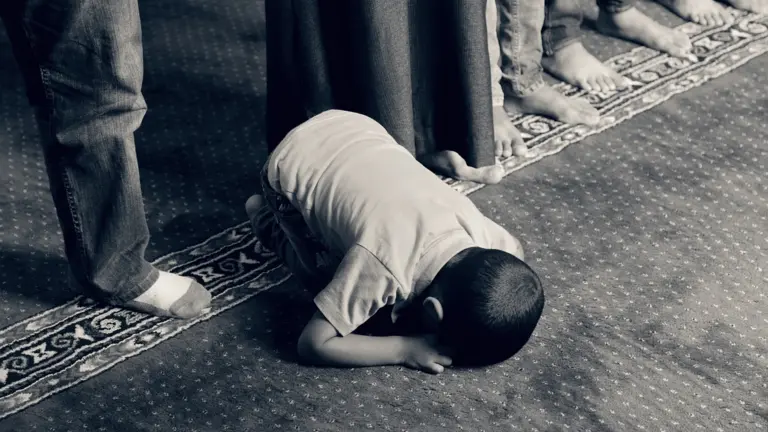
Say Allahu Akbar, then go down into prostration. This position is called ุงูุณุฌูุฏ sujood. The forehead, nose, two hands, two knees and feet touch the ground.
In prostration, one commonly says:
ุณูุจูุญูุงูู ุฑูุจูููู ุงูุฃูุนูููู
Subhana Rabbiya al-Aโla: Glory be to my Lord, the Most High.
Sitting Between the Two Prostrations
After the first prostration, say Allahu Akbar and sit briefly. You may say:
ุฑูุจูู ุงุบูููุฑู ููู
Rabbi ighfir li: My Lord, forgive me.
Then say Allahu Akbar and perform a second prostration in the same way. The first rakah is now complete.
Second Rakah: Repeating the Steps of the First Unit
After the second prostration of the first rakah, stand up to perform the second rakah. It is performed in a similar way:
- stand up;
- recite Al-Fatiha;
- recite another surah if possible;
- perform ruku;
- rise from ruku;
- perform two prostrations;
- sit for the tashahhud.
The second rakah completes the two units of prayer.
The Tashahhud and Final Salam
After the second prostration of the second rakah, sit to recite the ุงูุชุดูุฏ tashahhud. It is a formula of testimony and greetings within the prayer.
One well-known wording of the tashahhud is:
ุงูุชููุญููููุงุชู ููููููู ููุงูุตููููููุงุชู ููุงูุทูููููุจูุงุชูุ ุงูุณููููุงู ู ุนููููููู ุฃููููููุง ุงููููุจูููู ููุฑูุญูู ูุฉู ุงูููู ููุจูุฑูููุงุชูููุ ุงูุณููููุงู ู ุนูููููููุง ููุนูููู ุนูุจูุงุฏู ุงูููู ุงูุตููุงููุญููููุ ุฃูุดูููุฏู ุฃููู ููุง ุฅูููฐูู ุฅููููุง ุงูููู ููุฃูุดูููุฏู ุฃูููู ู ูุญูู ููุฏูุง ุนูุจูุฏููู ููุฑูุณูููููู
Then end the prayer with the salam by turning the head to the right, then to the left, while saying:
ุงูุณููููุงู ู ุนูููููููู ู ููุฑูุญูู ูุฉู ุงููู
As-salamu โalaykum wa rahmatullah: peace and the mercy of Allah be upon you.
Common Mistakes to Avoid When Learning Salah
When beginning, it is normal to make mistakes. The goal is to learn gradually and correct the prayer with patience. Common mistakes include:
- forgetting the intention in the heart;
- praying without purification;
- reciting too quickly without concentration;
- not pausing properly between positions;
- neglecting ruku or sujood;
- not learning Al-Fatiha step by step;
- abandoning prayer out of fear of making mistakes.
A beginner should not feel discouraged. It is better to start, learn correctly and improve with regular practice.
How to Learn Prayer Step by Step
Learning prayer requires a clear method. You need to understand the movements, memorize the main formulas, learn Al-Fatiha and practice regularly.
To organize your religious learning, you can read our guide to learn Islam step by step. It presents the essential foundations: Islamic belief, purification, prayer, the Quran, the Sunnah and Muslim manners.
If you would like to be guided, Al-Dirassa also offers online Islamic courses to learn prayer, purification and the basics of Islam with a teacher.
You can also complete your progress with online Quran and Tajweed classes, especially to improve your recitation, and with resources to learn Arabic online in order to better understand the words of prayer.
Book your free trial of 30 minutes
Registration form
Conclusion
Learning two rakats in Islam helps you understand the basic structure of salah: intention, takbir, recitation, ruku, sujood, tashahhud and salam. This foundation then helps you learn the other obligatory and voluntary prayers.
Prayer is not learned only by reading. It requires practice, correction, consistency and, when possible, the help of a teacher or a knowledgeable person. Move forward step by step, with sincerity and trust in Allah.
No Comments
No comments yet.