
Introduction
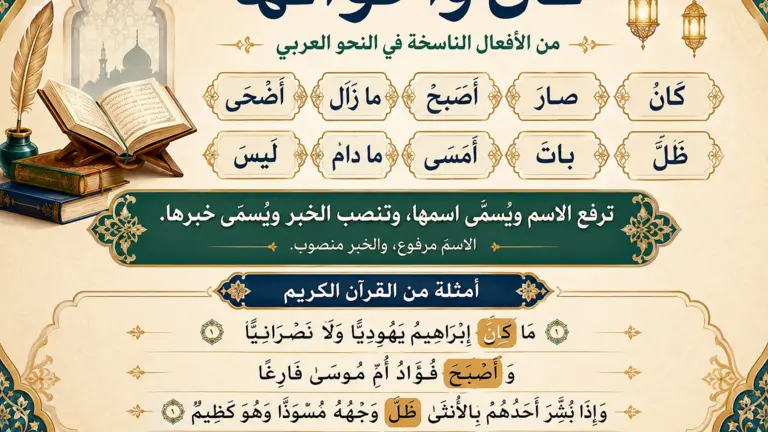
The group of particles known as "Kaana and its Sisters" - كَانَ وَ أَخَوَاتُهَا:
1. **كَانَ (kaana)** - "to was"
2. **صَارَ (ṣāra)** - "to become"
3. **أَصْبَحَ (aṣbaḥa)** - "to become, " "to enter/do in the morning"
4. **مَا زَالَ (mā zāla)** - "increasingly, " "continuously"
5. **أَضْحَى (aḍḥā)** - "to enter the dawn"
6. **لَيْسَ (laysa)** - "not"
7. **بَاتَ (bāta)** - "to become, " "to pass the night"
8. **أَمْسَ (amsa)** - "to become, " "to enter, " "to do in the evening"
9. **مَا دَامَ (mā dāma)** - "forever, " "continuously"
10. **ظَلَّ (ẓalla)** - "remain, " "to be, " "continue"
These particles, including كَانَ (kaana), and its related terms, play a crucial role in the Arabic language and are frequently used in the Holy Quran to indicate various aspects of time, states, and actions. They contribute to the richness and depth of meaning in the Quranic text.
1. The rule of Kaana and its sisters
These verbs typically assign a dammah (ُ) to their nouns and a fatha (َ) to their predicates. This grammatical pattern helps convey the structure and meaning of sentences in Arabic.
2. Illustrative Usage of Kaana and its Sister Verbs in the Holy Quran
مَا كَانَ إِبْرَاهِيمُ يَهُودِيًّا وَلَا نَصْرَانِيًّا
Abraham was neither a Jew nor a Christian (3:67)
وَأَصْبَحَ فُؤَادُ أُمِّ مُوسَىٰ فَارِغًا
And the heart of Moses' mother became empty [of all else]. (28:10)
وَإِذَا بُشِّرَ أَحَدُهُم بِالْأُنثَىٰ ظَلَّ وَجْهُهُ مُسْوَدًّا وَهُوَ كَظِيمٌ
And when one of them is informed of [the birth of] a female, his face becomes dark, and he suppresses grief. (16:58)
أَلَيْسَ اللَّـهُ بِأَحْكَمِ الْحَاكِمِينَ
Is not Allah the most just of judges? (95:8)
Conclusion
This lesson on Arabic nuances concludes here. Insha’Allah, our subsequent session will delve into the accusative case in Arabic.
Al-dirassa Institute invites you on a linguistic journey with our expert teachers to master the Arabic language. Should you wish to further your studies, we welcome your inquiries.
Book your free trial of 30 minutes
Registration form




No Comments
No comments yet.