
Arabic verbs are essential for understanding Arabic grammar, reading sentences correctly and building your own expressions. In Arabic, a verb is called الفِعْلُ. It usually expresses an action connected to a tense, a person, a gender and sometimes a number.
To learn Arabic properly, you need to recognize verbs, distinguish them from nouns, understand their main forms and identify the signs of conjugation. An Arabic verb can express a past action, a present action, a future action or a command.
In this complete lesson, we will study the signs of Arabic verbs, the past or perfect verb, the present or imperfect verb, the future with سـ and سَوْفَ, the imperative, verbs containing hamza, and the conjugation of the perfect verb with important pronouns.
This lesson is useful for beginners, but also for students who want to improve their Arabic conjugation, Arabic reading, literary Arabic, Modern Standard Arabic or Quranic Arabic.
What is a verb in Arabic?
The Arabic verb, called الفِعْلُ, is a word that expresses an action or an event connected to a tense.
Examples:
- كَتَبَ: he wrote;
- يَكْتُبُ: he writes;
- سَيَكْتُبُ: he will write;
- اُكْتُبْ: write.
These forms show that the same verb can change according to tense and context.
How to distinguish a verb from a noun in Arabic
To understand an Arabic sentence correctly, you need to distinguish verbs from nouns. A noun accepts certain grammatical signs that a verb does not accept.
An Arabic verb generally does not take:
- tanwīn: ـٌ، ـٍ، ـً;
- the definite article ال;
- the genitive after a preposition;
- the suffix ة, common in many feminine nouns.
For example, a noun such as كِتَابٌ can take tanwīn. However, a verb such as كَتَبَ does not take tanwīn. You can say الكِتَابُ, “the book”, but you do not place ال before a verb such as كَتَبَ.
The three main forms of the Arabic verb
In Arabic grammar, verbs are usually divided into three main forms:
- the past or perfect verb: الفِعْلُ المَاضِي;
- the present or imperfect verb: الفِعْلُ المُضَارِعُ;
- the imperative: فِعْلُ الأَمْرِ.
These three forms allow you to express a completed action, an ongoing or habitual action, or a command addressed to someone.
The past verb in Arabic: الفِعْلُ المَاضِي
The past verb, also called the perfect verb, usually expresses a completed action. Depending on the context, it often corresponds to the simple past or the present perfect in English.
اِلْتَحَقَ أَخِي بِالْجَامِعَةِ
My brother joined the university.
Other examples:
- كَتَبَ: he wrote;
- دَرَسَ: he studied;
- جَلَسَ: he sat down;
- ذَهَبَ: he went;
- خَرَجَ: he went out.
The basic form of an Arabic verb is often given in the third person masculine singular. This is why dictionaries and grammar books often present verbs in forms such as فَعَلَ, كَتَبَ, ذَهَبَ or خَرَجَ.
The present or imperfect verb in Arabic: الفِعْلُ المُضَارِعُ
The Arabic present verb, also called the imperfect verb, expresses an ongoing action, a habit, a general action or sometimes a future action depending on the context.
تَعْمَلُ أُمِّي مُوَظَّفَةً فِي الشَّرِكَةِ
My mother works as an employee in a company.
In this example, the verb تَعْمَلُ expresses a present or habitual action.
The letters of the present verb
The Arabic present verb usually begins with one of the following four letters:
- أَ: for “I”;
- نَ: for “we”;
- يَ: often for “he” or “they”;
- تَ: for “you” or “she”, depending on the context.
These letters are called حُرُوفُ المُضَارَعَةِ. They are sometimes summarized by the traditional formula أَنَيْتُ.
| Arabic form | Translation | Note |
|---|---|---|
| أَكْتُبُ | I write | The prefix أَ indicates the first person. |
| نَكْتُبُ | We write | The prefix نَ indicates “we”. |
| يَكْتُبُ | He writes | The prefix يَ often indicates “he”. |
| تَكْتُبُ | You write / she writes | The meaning depends on the context. |
Regular conjugation in the imperfect
The imperfect is built with prefixes and sometimes suffixes. The basic pattern is often shown with the verb فَعَلَ, which becomes يَفْعَلُ in the imperfect.
| Person | Singular | Dual | Plural |
|---|---|---|---|
| 3rd masculine | يَفْعَلُ | يَفْعَلَانِ | يَفْعَلُونَ |
| 3rd feminine | تَفْعَلُ | تَفْعَلَانِ | يَفْعَلْنَ |
| 2nd masculine | تَفْعَلُ | تَفْعَلَانِ | تَفْعَلُونَ |
| 2nd feminine | تَفْعَلِينَ | تَفْعَلَانِ | تَفْعَلْنَ |
| 1st person | أَفْعَلُ | — | نَفْعَلُ |
Quranic examples of the imperfect verb
وَيَفْعَلُ اللّٰهُ مَا يَشَاءُ
And Allah does what He wills. 14:27
الَّذِينَ يُوفُونَ بِعَهْدِ اللّٰهِ وَلَا يَنقُضُونَ الْمِيثَاقَ
Those who fulfill the covenant of Allah and do not break the pact. 13:20
The future in Arabic: المُسْتَقْبَل
The future in Arabic is used to express an action that will take place later. It can be indicated by context, by a time adverb or by markers such as سـ and سَوْفَ.
Forming the future with سـ
The future can be formed by adding the prefix سـ before the present verb.
يَذْهَبُ مُحَمَّدٌ إِلَى العَمَلِ
Muhammad goes to work.
سَيَذْهَبُ مُحَمَّدٌ إِلَى العَمَلِ
Muhammad will go to work.
Forming the future with سَوْفَ
The word سَوْفَ also indicates a future action. It is placed before the present verb.
سَوْفَ أَحُجُّ فِي العَامِ القَادِمِ
I will perform Hajj next year.
سَيَقُولُ السُّفَهَاءُ مِنَ النَّاسِ
The foolish among the people will say. 2:142
كَلَّا سَوْفَ تَعْلَمُونَ
No! You will soon know. 102:3
The imperative in Arabic: فِعْلُ الأَمْرِ
The imperative in Arabic is used to give an order, an instruction or a direct request. It is generally addressed to the second person.
| Arabic | Translation |
|---|---|
| اُكْتُبْ | Write |
| اُدْرُسْ | Study |
| اِجْلِسْ | Sit down |
| اِشْرَبْ | Drink |
Direct and indirect command
The imperative can be divided into two types:
- direct command: addressed to the second person;
- indirect command: addressed to the third or first person.
Examples of direct command:
- اِضْرِبْ: strike;
- اُنْظُرْ: look;
- اِشْرَبْ: drink.
Examples of indirect command:
- لِيَضْرِبْ: let him strike;
- لِأَنْصُرْ: let me help;
- لِأَشْرَبْ: let me drink.
How to form the direct imperative
The direct imperative is generally formed from the second person of the imperfect verb. The simplified method is:
- start from the second-person imperfect form;
- remove the prefix تَ;
- add hamzat al-wasl when needed;
- adjust the ending according to singular, dual or plural.
| Present | Imperative | Translation |
|---|---|---|
| تَفْعَلُ | اِفْعَلْ | Do |
| تَفْعَلَانِ | اِفْعَلَا | Do, both of you |
| تَفْعَلُونَ | اِفْعَلُوا | Do, plural masculine |
| تَفْعَلِينَ | اِفْعَلِي | Do, feminine singular |
| تَفْعَلْنَ | اِفْعَلْنَ | Do, feminine plural |
Examples of the imperative in the Quran
وَأَنِ اعْبُدُونِي ۚ هَـٰذَا صِرَاطٌ مُّسْتَقِيمٌ
And worship Me. This is a straight path. 36:61
ارْكُضْ بِرِجْلِكَ ۖ هَـٰذَا مُغْتَسَلٌ بَارِدٌ وَشَرَابٌ
Strike with your foot: this is a cool bath and a drink. 38:42
Comparison table: past, present, future and imperative
| Concept | Arabic form | Example | Translation |
|---|---|---|---|
| Past | الفِعْلُ المَاضِي | كَتَبَ | He wrote |
| Present | الفِعْلُ المُضَارِعُ | يَكْتُبُ | He writes |
| Future | سـ + present | سَيَكْتُبُ | He will write |
| Imperative | فِعْلُ الأَمْرِ | اُكْتُبْ | Write |
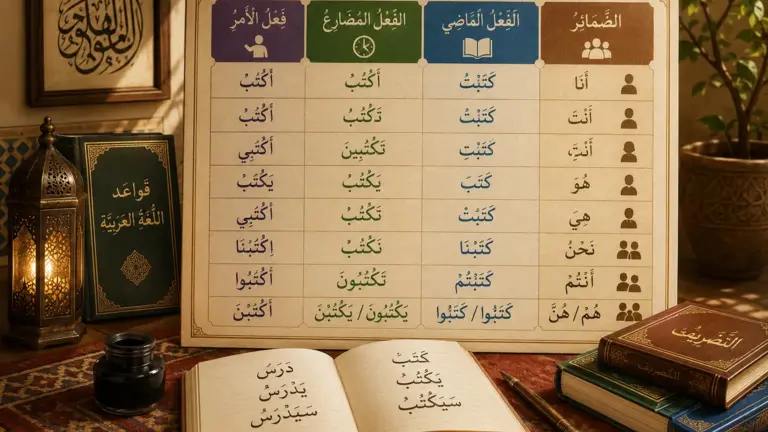
Conjugation of the verb كَتَبَ
The verb كَتَبَ means “he wrote”. It is often used as a model in Arabic conjugation because its letters are simple and regular.
| Tense | Arabic form | Translation |
|---|---|---|
| Past | كَتَبَ | He wrote |
| Present | يَكْتُبُ | He writes |
| Future | سَيَكْتُبُ | He will write |
| Imperative | اُكْتُبْ | Write |
Conjugation of كَتَبَ in the past
| Pronoun | Arabic form | Translation |
|---|---|---|
| I | كَتَبْتُ | I wrote |
| You masculine | كَتَبْتَ | You wrote |
| You feminine | كَتَبْتِ | You wrote |
| He | كَتَبَ | He wrote |
| She | كَتَبَتْ | She wrote |
| We | كَتَبْنَا | We wrote |
| They masculine | كَتَبُوا | They wrote |
| They feminine | كَتَبْنَ | They wrote |
Conjugating the perfect verb with ذَهَبَ
The verb ذَهَبَ means “he went” or “he left”. It helps us understand the endings of the Arabic perfect verb.
| Arabic pronoun | Person | Verb form | Translation | Ending |
|---|---|---|---|---|
| هُوَ | he | ذَهَبَ | he went | basic form |
| هِيَ | she | ذَهَبَتْ | she went | ـَتْ |
| هُمْ | they masculine | ذَهَبُوا | they went | ـُوا |
| هُنَّ | they feminine | ذَهَبْنَ | they went | ـْنَ |
| أَنْتَ | you masculine | ذَهَبْتَ | you went | ـتَ |
| أَنْتِ | you feminine | ذَهَبْتِ | you went | ـتِ |
| أَنْتُمْ | you masculine plural | ذَهَبْتُمْ | you went | ـتُمْ |
| أَنْتُنَّ | you feminine plural | ذَهَبْتُنَّ | you went | ـتُنَّ |
The absent person: هُوَ، هِيَ، هُمْ، هُنَّ
The absent person refers to someone we speak about. In English, this corresponds to “he”, “she” or “they”.
- هُوَ ذَهَبَ: he went;
- هِيَ ذَهَبَتْ: she went;
- هُمْ ذَهَبُوا: they went, masculine or mixed group;
- هُنَّ ذَهَبْنَ: they went, feminine group.
The endings ـَتْ, ـُوا and ـْنَ indicate the gender and number of the subject.
The masculine addressee: أَنْتَ and أَنْتُمْ
The addressee is the person you are speaking to. With أَنْتَ, you address one man or boy. With أَنْتُمْ, you address several men or a mixed group.
- أَنْتَ ذَهَبْتَ: you went, masculine singular;
- أَنْتُمْ ذَهَبْتُمْ: you went, masculine plural or mixed group.
The ending ـتَ indicates the masculine singular, while ـتُمْ indicates the masculine plural or mixed group.
The feminine addressee: أَنْتِ and أَنْتُنَّ
The pronouns أَنْتِ and أَنْتُنَّ are used when addressing one or several female persons.
- أَنْتِ ذَهَبْتِ: you went, feminine singular;
- أَنْتُنَّ ذَهَبْتُنَّ: you went, feminine plural.
The ending ـتِ indicates that you are speaking to one female person. The ending ـتُنَّ indicates that you are speaking to several female persons.
Comparing similar forms
| Arabic form | Pronoun | Meaning | Remember |
|---|---|---|---|
| ذَهَبْتَ | أَنْتَ | you went | one man or boy |
| ذَهَبْتِ | أَنْتِ | you went | one woman or girl |
| ذَهَبْتُمْ | أَنْتُمْ | you went | masculine or mixed group |
| ذَهَبْتُنَّ | أَنْتُنَّ | you went | feminine group |
| ذَهَبُوا | هُمْ | they went | absent masculine group |
| ذَهَبْنَ | هُنَّ | they went | absent feminine group |
Other useful verbs to conjugate in the perfect
| Verb | Meaning | هُمْ | هُنَّ | أَنْتَ | أَنْتِ |
|---|---|---|---|---|---|
| ذَهَبَ | to go | ذَهَبُوا | ذَهَبْنَ | ذَهَبْتَ | ذَهَبْتِ |
| خَرَجَ | to go out | خَرَجُوا | خَرَجْنَ | خَرَجْتَ | خَرَجْتِ |
| جَلَسَ | to sit | جَلَسُوا | جَلَسْنَ | جَلَسْتَ | جَلَسْتِ |
| كَتَبَ | to write | كَتَبُوا | كَتَبْنَ | كَتَبْتَ | كَتَبْتِ |
Conjugation of كَتَبَ in the imperative
| Addressee | Arabic form | Translation |
|---|---|---|
| You masculine | اُكْتُبْ | Write |
| You feminine | اُكْتُبِي | Write |
| You two | اُكْتُبَا | Write, both of you |
| You masculine plural | اُكْتُبُوا | Write |
| You feminine plural | اُكْتُبْنَ | Write |
Verbs containing hamza
Some Arabic verbs contain a hamza أ in their root. The hamza can appear at the beginning, in the middle or at the end of the verb. These verbs are important because their spelling and pronunciation sometimes require special attention.
| Hamza position | Past | Present | Meaning |
|---|---|---|---|
| First root letter | أَكَلَ | يَأْكُلُ | to eat |
| Second root letter | سَأَلَ | يَسْأَلُ | to ask |
| Third root letter | قَرَأَ | يَقْرَأُ | to read |
The verb أَكَلَ in the present
| Arabic form | Translation |
|---|---|
| آكُلُ | I eat |
| تَأْكُلُ | You eat / she eats |
| يَأْكُلُ | He eats |
| نَأْكُلُ | We eat |
The verb سَأَلَ in the present
| Arabic form | Translation |
|---|---|
| أَسْأَلُ | I ask |
| تَسْأَلُ | You ask / she asks |
| يَسْأَلُ | He asks |
| نَسْأَلُ | We ask |
وَيَسْأَلُونَكَ عَنِ الرُّوحِ
And they ask you about the soul. 17:85
The imperative of أَكَلَ
| Addressee | Arabic form | Translation |
|---|---|---|
| You masculine | كُلْ | Eat |
| You feminine | كُلِي | Eat |
| You two | كُلَا | Eat, both of you |
| You masculine plural | كُلُوا | Eat |
| You feminine plural | كُلْنَ | Eat |
فَكُلِي وَاشْرَبِي وَقَرِّي عَيْنًا
So eat, drink and rejoice. 19:26
Arabic verb roots
Many Arabic verbs are built from a root. This root can contain three, four, five or six letters. The number of letters can influence the present and imperative forms.
| Number of letters | Past | Present | Imperative | Meaning |
|---|---|---|---|---|
| Three letters | جَلَسَ | يَجْلِسُ | اِجْلِسْ | to sit |
| Four letters | أَصْلَحَ | يُصْلِحُ | أَصْلِحْ | to reform |
| Five letters | اِقْتَرَبَ | يَقْتَرِبُ | اِقْتَرِبْ | to approach |
| Six letters | اِسْتَخْرَجَ | يَسْتَخْرِجُ | اِسْتَخْرِجْ | to extract |
How to quickly identify the tense of an Arabic verb
| Sign | Likely tense | Example |
|---|---|---|
| Basic form often ending with fatḥah | Past | كَتَبَ |
| Prefix أ، ن، ي، ت | Present | يَكْتُبُ |
| سـ + present | Future | سَيَكْتُبُ |
| سَوْفَ + present | Future | سَوْفَ يَكْتُبُ |
| Command form addressed to “you” | Imperative | اُكْتُبْ |
Common mistakes made by beginners
- Confusing the past and the present because of literal translation.
- Not recognizing the present prefixes: أ، ن، ي، ت.
- Forgetting past endings such as ـتُ, ـتَ, ـتِ and ـنَا.
- Confusing أَنْتَ and أَنْتِ.
- Using ذَهَبْتَ for a woman instead of ذَهَبْتِ.
- Using ذَهَبُوا for a feminine group instead of ذَهَبْنَ.
- Confusing the imperative with the present.
- Adding سـ to the wrong verb form.
- Studying tables without practicing in complete sentences.
Learn Arabic verbs with a structured method
Arabic conjugation may seem difficult at first because the verb changes according to person, gender, number and tense. However, with a clear method, it becomes much easier.
To make steady progress, it is useful to study step by step:
- the Arabic alphabet;
- Arabic reading and pronunciation;
- Arabic personal pronouns;
- the past verb;
- the present verb;
- future formation;
- the imperative;
- basic Arabic vocabulary;
- the first rules of Arabic grammar.
If you want to learn Arabic online with a structured method, our online Arabic courses help you progress with an Arabic teacher who corrects your mistakes and guides you step by step.
To strengthen Arabic grammar, reading, pronunciation and vocabulary, you can also follow a literary Arabic or Modern Standard Arabic program. Students who want to understand Quranic texts more deeply can study Quranic Arabic.
Beginners can also use our free Arabic alphabet course and our free Arabic learning resources to support their studies.
For families, Al-Dirassa also offers Arabic courses for children, adapted to each child’s age, pace and level.
Book your free trial of 30 minutes
Registration form
FAQ — Arabic verbs and conjugation
What are the main Arabic verb tenses?
The main concepts are the past الماضي, the present المضارع, the future المستقبل and the imperative فعل الأمر.
How do you recognize the past verb in Arabic?
The past verb expresses a completed action. Its basic form is often similar to كَتَبَ, ذَهَبَ or خَرَجَ.
How do you recognize the present verb in Arabic?
The present verb often begins with one of the letters أ، ن، ي، ت, as in أَكْتُبُ, نَكْتُبُ, يَكْتُبُ and تَكْتُبُ.
How do you form the future in Arabic?
The future is often formed with سـ or سَوْفَ before the present verb, as in سَيَذْهَبُ or سَوْفَ أَكْتُبُ.
What is the difference between ذَهَبْتَ and ذَهَبْتِ?
ذَهَبْتَ is used when addressing a man or boy. ذَهَبْتِ is used when addressing a woman or girl.
What is the difference between ذَهَبُوا and ذَهَبْنَ?
ذَهَبُوا means “they went” for a masculine or mixed group. ذَهَبْنَ means “they went” for a feminine group.
What is a hamzated verb?
A hamzated verb is a verb that contains a hamza in its root, such as أَكَلَ, سَأَلَ or قَرَأَ.
Conclusion
Arabic verbs are at the heart of Arabic grammar. They allow you to express a past, present, future or commanded action. To master them properly, you need to understand the difference between the past, the imperfect, the future and the imperative.
It is also important to learn the present prefixes, past endings, future formation with سـ and سَوْفَ, and the direct and indirect imperative forms.
With a clear method, regular examples, audio practice and the support of a teacher, students can progress confidently in Arabic conjugation and better understand sentences in literary Arabic, Modern Standard Arabic and Quranic Arabic.





No Comments
No comments yet.
No comments yet.