
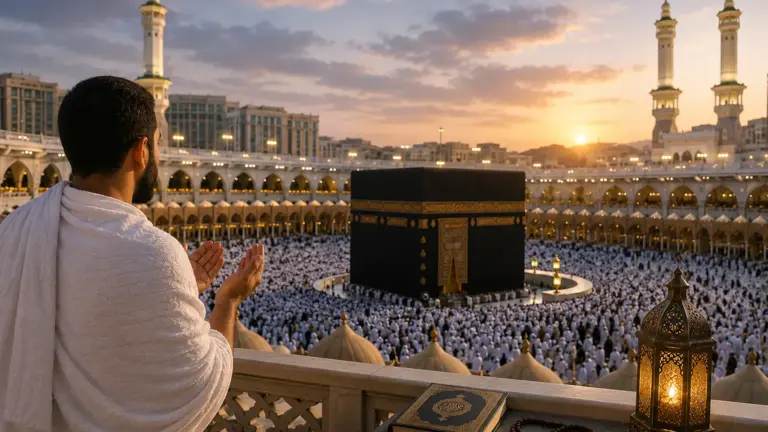
Umrah is a pilgrimage performed in Makkah. It is often called the lesser pilgrimage because it is shorter than Hajj and does not include all the rites of the major pilgrimage. Unlike Hajj, Umrah can be performed at different times of the year, depending on access and travel conditions.
For a beginner, it is important to understand Umrah step by step before travelling. This pilgrimage is not only a physical journey; it is an act of worship that requires intention, respect, knowledge and preparation.
This guide presents the main rituals of Umrah in a simple order: ihram, tawaf, sa’i, then leaving the state of ihram by shaving or shortening the hair.
What is Umrah in Islam?
The word عمرة Umrah refers to a visit performed in a sacred place with the intention of worshipping Allah. In Islamic practice, Umrah consists of entering the state of ihram, performing tawaf around the Kaaba, walking between Safa and Marwa, then leaving ihram through halq or taqsir.
The rituals of Umrah follow a clear order: ihram, tawaf, sa’i and completion of the pilgrimage. This structure helps the pilgrim perform the worship with more calmness and avoid confusion during the journey.
To better understand the foundations of Islamic practice, it can be useful to follow a structured path to learn Islam step by step.
What is the difference between Umrah and Hajj?
Hajj and Umrah are both pilgrimages to Makkah, but they are not the same. Hajj is one of the five pillars of Islam. It is obligatory once in a lifetime for the Muslim who has the physical, financial and practical ability to perform it.
Umrah is a distinct act of worship. It is shorter than Hajj and can be performed at different times of the year. Its legal status is discussed in the books of Fiqh, but it remains an important act of worship that many Muslims perform to draw closer to Allah.
Hajj includes additional rites such as standing at Arafat, staying in Mina and Muzdalifah, and other rites linked to the specific days of Hajj. Umrah mainly includes ihram, tawaf, sa’i and shaving or shortening the hair.
The steps of Umrah in order
The rituals of Umrah are simple in structure, but they should be learned carefully. The pilgrim needs to know the order of the steps, the basic rules of ihram and the general meaning of each rite.
1. Ihram and intention
Ihram is the sacred state a Muslim enters before performing Umrah. The pilgrim makes the intention for Umrah before crossing the miqat, which is the boundary after which the pilgrim must be in the state of ihram.
For men, the ihram clothing consists of two unstitched pieces of cloth. Women wear modest clothing according to Islamic guidelines, without having a specific uniform like men.
Ihram is not limited to clothing. It also requires more careful behavior: guarding one’s tongue, avoiding arguments, respecting other pilgrims and remembering that one has entered an act of worship.
2. Tawaf around the Kaaba
Tawaf consists of walking seven times around the Kaaba in the Sacred Mosque of Makkah. The pilgrim walks with humility, remembrance of Allah and supplication.
The Kaaba is not worshipped: Muslims worship Allah alone. It is the Sacred House toward which Muslims pray and around which certain rites have been prescribed.
3. Sa’i between Safa and Marwa
After tawaf, the pilgrim performs sa’i between Safa and Marwa. Sa’i consists of walking seven times between these two places, beginning at Safa and ending at Marwa.
This rite recalls the patience, effort and trust in Allah shown by Hajar when she searched for water for her son Isma’il. It reminds the believer that effort and reliance upon Allah go together.
4. Halq or taqsir
At the end of Umrah, the pilgrim leaves the state of ihram through halq or taqsir. Halq means shaving the head, while taqsir means shortening the hair.
Men may shave or shorten their hair. Women shorten a small portion of their hair according to what they have learned. This step marks the completion of Umrah and the return to actions that were normally permitted before ihram.
Simple table of the Umrah rituals
| Step | Main action | Purpose |
|---|---|---|
| Ihram | Make the intention before the miqat | Enter the sacred state for Umrah |
| Tawaf | Walk seven times around the Kaaba | Worship Allah in the Sacred Mosque |
| Sa’i | Walk between Safa and Marwa | Remember the effort of Hajar and trust in Allah |
| Halq or taqsir | Shave or shorten the hair | Leave the state of ihram |
How to prepare for Umrah
Preparation for Umrah should be both practical and spiritual. A pilgrim should not travel without knowing the basic rituals and rules.
Before travelling, it is useful to learn:
- the meaning of ihram and the miqat;
- the order of the Umrah rituals;
- how to perform tawaf and sa’i;
- what is prohibited during ihram;
- useful supplications and recommended behavior in the Sacred Mosque;
- the difference between cultural habits and authentic religious teachings.
It is also important to check official travel and entry conditions through reliable sources, as administrative rules can change. This article explains the general religious rites of Umrah, but travel procedures should always be verified before departure.
Common mistakes to avoid during Umrah
- Travelling without knowing the order of the rituals.
- Confusing the rules of Umrah with the rules of Hajj.
- Thinking that ihram only concerns clothing.
- Arguing or losing patience in the crowd.
- Following cultural habits without checking their religious basis.
- Neglecting prayer, dhikr and supplication during the journey.
Learning the basics of Islam before Umrah
A person preparing for Umrah benefits from learning the basics of Islam with a clear method. Purification, prayer, intention, supplications, Quran recitation and the rules of worship are all connected to the pilgrim’s journey.
To deepen your understanding, you can read our Islamic articles, which cover different topics related to worship, Islamic practice and spiritual education.
If you want to review the foundations progressively, our Islamic studies online allow students to study the basics of Islam, Islamic belief, purification, prayer, Fiqh and major acts of worship with a teacher.
Since Umrah includes supplications, Quran recitation and acts of worship in the Sacred Mosque, you can also progress through our online Quran and Tajweed classes or study Quranic Arabic to better understand the words being recited.
For families, Al-Dirassa also offers an Islam course for children, designed to teach the foundations of the religion in a gradual and age-appropriate way.
Book your free trial of 30 minutes
Registration form
FAQ about Umrah
Is Umrah obligatory?
Scholars discuss the legal status of Umrah in the books of Fiqh. It is strongly recommended according to many scholars, while some schools consider it obligatory under certain conditions. A beginner should study this issue with a qualified teacher or a reliable source.
Can Umrah be performed at any time?
Umrah can generally be performed at different times of the year, unlike Hajj, which has specific dates. However, access, permits and travel procedures may depend on current regulations.
What are the main rituals of Umrah?
The main rituals are entering the state of ihram, performing tawaf around the Kaaba, performing sa’i between Safa and Marwa, then completing Umrah by shaving or shortening the hair.
How long does Umrah take?
The rites of Umrah can often be completed in a few hours, depending on crowd levels, health, mobility and organization. However, spiritual preparation should begin before the journey.
What should be learned before travelling for Umrah?
It is useful to learn the rules of purification, prayer, ihram, tawaf, sa’i, supplications and the proper behavior to observe in the Sacred Mosque.
Conclusion
Umrah is an important act of worship that brings the Muslim to Makkah to perform tawaf, walk between Safa and Marwa and renew the connection with Allah. It is shorter than Hajj, but it still requires sincerity, knowledge and preparation.
This article helps explain the essential steps of Umrah, but a complete understanding of Islam requires method, consistency, reliable sources and guidance from a qualified teacher. Serious preparation allows the pilgrim to approach this worship with more clarity, respect and serenity.


No Comments
No comments yet.
No comments yet.