- Institut Al-Dirassa
- No comments
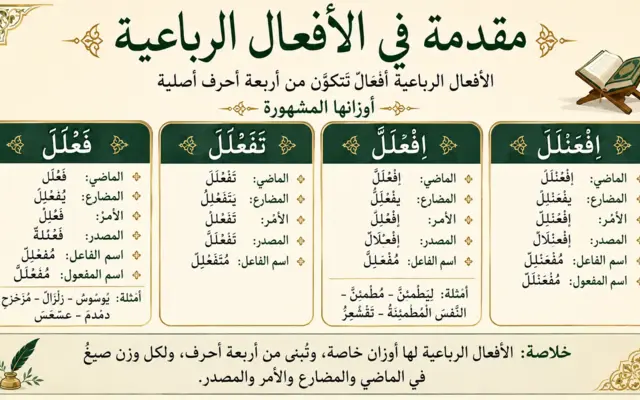
Introduction The verb that contains extra letters beyond its original triliteral root is called الْفِعْلُ الْمَزِيْدُ الثُلاثِي. These verbs originate from basic triliteral roots, enriching the Arabic…
Introduction In Arabic, the particle 'إِلَّا' signifies an exception. The noun that succeeds 'إِلَّا' is commonly in the accusative case, known as الْمَنْصُوب. Example: لَا إِلَهَ إِلَّا اللَّهُ Votre…
Introduction لَا إِلَهَ إِلَّا اللَّهُ Votre navigateur ne supporte pas l’audio. “There is no god except God” (37:35) ذَلِكَ الْكِتَابُ لَا رَيْبَ فِيهِ Votre navigateur ne supporte pas l’audio. This …
Introduction Nouns Denoting Place and Time in Arabic: A Deeper Look In Arabic grammar, nouns that express the place or time of an action rooted in a verb are a crucial component. These nouns are tradi…
Introduction The noun of the instrument, known in Arabic as اِسْمُ الآلَةِ, specifically indicates the tool or means by which an action is executed. This noun often serves as an indicator of functiona…
Introduction The particles known as "Inna and its sisters" - إِنَّ وَ أَخَوَاتُهَا - hold a significant position in Arabic syntax, imbuing nominal sentences with emphasis and nuance. إِنَّ (certainl…
Some testimonials from students who joined Al-Dirassa Institute and are happy to share their experience.