
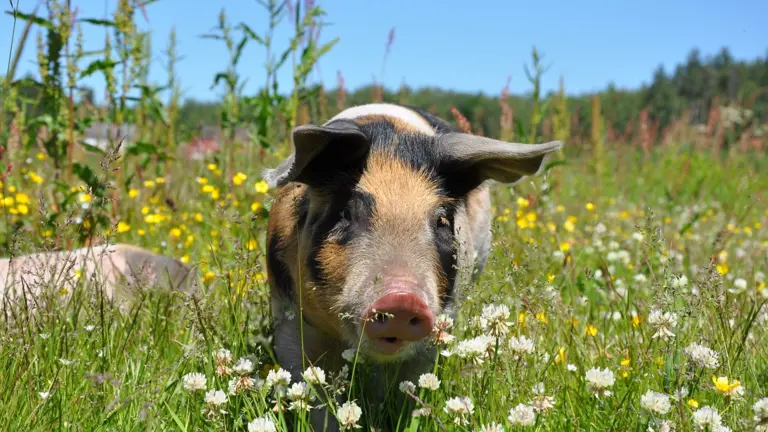
Pork is forbidden in Islam because Allah clearly mentioned it among forbidden foods in the Quran. This prohibition is part of Muslim dietary rules that distinguish what is halal, permissible, from what is haram, forbidden.
For the Muslim, the first reason for this prohibition is obedience to Allah. Even if certain wisdoms may be mentioned, the rule does not depend only on health, cultural or social explanations. It is based first on revelation.
In this article, we will explain why pork is forbidden in Islam, which Quranic verses mention this prohibition, how to deal with derived products such as gelatin or additives, and when necessity may be taken into account.
Is Pork Forbidden in Islam?
Yes, pork is forbidden in Islam. This prohibition is clear and well known in Muslim dietary rules. It concerns the consumption of pork meat and food products derived from it.
The Muslim does not avoid pork merely out of cultural habit. He or she does so out of faith, respect for revelation and the desire to consume what Allah has made lawful.
Islam teaches that what we consume matters. Food influences the body, habits, personal discipline and religious awareness. Eating halal is therefore part of a balanced Muslim life.
To place this subject within the broader framework of dietary rules, read our guide on forbidden foods in Islam.
Is Pork Mentioned in the Quran?
Yes, pork is explicitly mentioned in the Quran among forbidden foods. These verses form the main basis of the Islamic ruling.
Surah Al-Baqarah and the Prohibition of Pork
In Surah Al-Baqarah, Allah mentions the prohibition of dead animals, blood, pork and what has been dedicated to other than Allah.
The verse also mentions the case of compulsion: when a person is driven by necessity, without seeking the forbidden or exceeding limits, Allah is Forgiving and Merciful.
Reference: Surah Al-Baqarah, 2:173.
Surah Al-Ma’idah and Dietary Rules
In Surah Al-Ma’idah, pork is again mentioned among forbidden foods. This reminder shows that the prohibition is clear in Islamic dietary rules.
Reference: Surah Al-Ma’idah, 5:3.
Surah Al-An’am and the Idea of Impurity
In Surah Al-An’am, pork is also mentioned among forbidden foods, with the idea of impurity.
Reference: Surah Al-An’am, 6:145.
These verses do not present the prohibition as a mere cultural habit. They connect it to religious obedience and the distinction between lawful and unlawful.
Why Is Pork Forbidden in Islam?
The first reason is that this prohibition comes from Allah. The believer accepts what Allah has made lawful and stays away from what He has forbidden, even when not knowing all the wisdoms behind every rule.
Obedience to Allah
Islam teaches that the believer does not choose only according to tastes, habits or social norms. The believer seeks to live according to Allah’s guidance.
Avoiding pork therefore becomes an act of obedience and conscious submission. This obedience does not mean absence of reflection. It means recognizing that Allah knows best what suits His servants.
The Purity of Muslim Food
Islamic dietary rules guide the Muslim toward lawful and pure food. What one eats influences daily life, habits, religious awareness and personal discipline.
Halal food reminds the believer to seek blessing in what is consumed and avoid what Allah has forbidden.
The Spiritual Discipline of the Believer
Staying away from pork teaches the Muslim to control desires and respect the limits set by Allah. This discipline concerns food, but it also trains the heart to distinguish between personal desire and religious obedience.
Do Health Reasons Explain the Prohibition of Pork?
Some people mention health or practical reasons to explain the prohibition of pork. It is true that any food can involve risks when produced, preserved or cooked poorly.
However, in Islam, the main reason for the prohibition of pork is not a medical demonstration. The first reason is Allah’s command in the Quran.
Practical wisdoms may be mentioned, but they should not replace the religious foundation. Even if someone claims that pork is raised in good conditions or controlled hygienically, this does not change the Islamic ruling.
Does the Prohibition Concern Only Pork Meat?
The prohibition does not concern only a visible piece of meat. It may also concern products derived from pork when used in food or products intended for consumption.
Items that may raise questions include:
- some gelatins;
- some animal fats;
- some flavorings;
- some additives;
- some processed products;
- some sweets or desserts;
- some preparations containing animal derivatives.
This is why many Muslims check compositions, halal labels and ingredient sources when serious doubt exists.
What About Ingredients and Additives from Pork?
Modern products may contain complex ingredients. Some additives, fats or gelatins may have an animal origin, sometimes porcine.
When a product contains gelatin, fat or an additive of animal origin, it is recommended to check its origin through the manufacturer, a reliable organization or a serious halal certification.
However, excessive obsession should be avoided. The Muslim makes reasonable efforts, seeks available information and avoids what is clearly forbidden.
Balance is important: one should neither neglect halal rules nor turn every uncertain situation into excessive hardship.
Can Pork Be Eaten in Necessity?
The Quran mentions an exception in case of compulsion or extreme necessity. If a person is in a situation where life is threatened and nothing else is available to eat, he or she may consume only what is necessary, without desiring the forbidden or exceeding the limit.
This exception does not make pork permissible under normal conditions. Rather, it shows the mercy of Islam in situations of real danger.
What If Someone Ate Pork by Mistake?
A person may consume pork or a product containing pork without knowing. In this case, if it was done by mistake, ignorance or forgetfulness, the person should stop as soon as realizing and ask Allah for forgiveness.
Islam distinguishes between deliberate transgression and an unintentional mistake. The Muslim should then take reasonable means to avoid repetition.
How to Avoid Pork in Daily Life
Living with halal food requires awareness, but also balance. Here are some practical tips:
- check ingredients when there is serious doubt;
- choose clearly halal products;
- avoid products containing pork or its food derivatives;
- ask about gelatin and additives of animal origin;
- ask questions respectfully in restaurants or while traveling;
- avoid products whose origin is clearly problematic;
- keep a balanced attitude, without negligence or obsession.
Common Misconceptions About Pork in Islam
“Pork is forbidden only for health reasons”
No. Even if practical wisdoms may exist, the first reason is religious: Allah has forbidden pork in the Quran.
“If pork is well cooked, it becomes halal”
No. Cooking does not turn a forbidden food into halal food. The rule does not depend only on the presence or absence of health risks.
“The prohibition of pork is only cultural”
No. Pork is explicitly mentioned in the Quran among forbidden foods. It is a religious rule, not merely a custom.
“All additives are necessarily haram”
No. Not all additives come from pork. Some are plant-based, synthetic or from other sources. Their origin should be checked when there is serious doubt.
Why Learn Halal and Haram Rules?
The question of pork shows the importance of learning the basics of Islam with method. Halal and haram rules are not only lists of prohibitions. They train the believer in obedience, awareness of Allah and the search for what is pure.
To structure your learning, you can follow Islamic sciences online courses adapted to adults, beginners and families.
Learning Arabic also helps better understand religious terms, verses and supplications. You can progress step by step with our programs to learn Arabic online.
Book your free trial of 30 minutes
Registration form
FAQ — Pork Forbidden in Islam
Why is pork forbidden in Islam?
Pork is forbidden in Islam because Allah clearly mentioned it among forbidden foods in the Quran. The first reason is obedience to Allah.
Is pork mentioned in the Quran?
Yes. Pork is mentioned among forbidden foods, especially in Surah Al-Baqarah, Al-Ma’idah and Al-An’am.
Is pork haram?
Yes, consuming pork is haram in Islam. This prohibition concerns pork meat and food products derived from it.
Is pork gelatin forbidden?
Gelatin from pork is problematic in Muslim food rules. When a product contains gelatin, it is recommended to check its origin or choose reliable halal certification.
What should I do if I ate pork without knowing?
If it was done by mistake or ignorance, stop as soon as you realize, ask Allah for forgiveness and take reasonable means to avoid repeating it.
Can pork be eaten in necessity?
In extreme necessity, when life is threatened and no other food is available, a limited exception may exist. It does not apply to ordinary situations.
Conclusion
Pork is forbidden in Islam because Allah clearly mentioned it among forbidden foods in the Quran. The first reason is obedience to revelation, even if spiritual, educational or practical wisdoms may be understood.
The Muslim seeks halal food, avoids what is clearly forbidden and applies this rule with seriousness, balance and trust in Allah.
Learning halal and haram rules helps Muslims live their faith with more clarity, without negligence or excess.





No Comments
No comments yet.
No comments yet.