
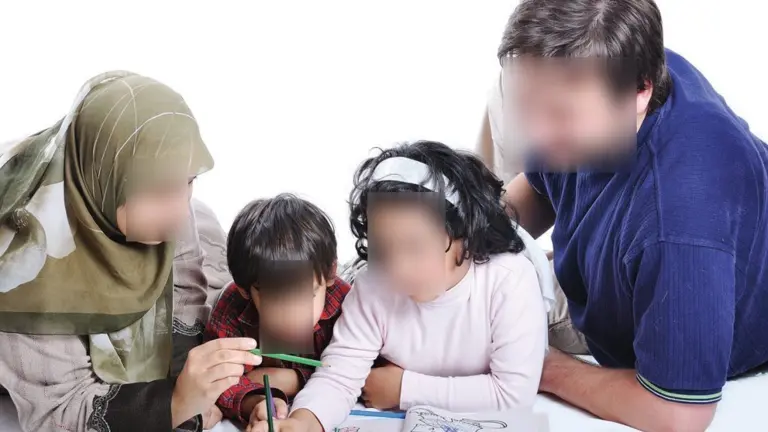
Parents’ duties in Islam hold a very important place in family and spiritual life. A child is a responsibility entrusted by Allah. Parents are not only responsible for feeding, clothing and protecting their children; they must also guide them in their religious, moral, emotional and social development.
In Islam, parental responsibility can become an act of worship when it is fulfilled sincerely and with the intention of pleasing Allah. Educating a child, transmitting faith, teaching good manners, showing love, offering protection and guiding with wisdom are actions that can bring parents closer to Allah.
In this article, we will explore the main duties of parents toward their children in Islam: giving a good name, ensuring religious education, teaching good character, offering love and protection, being an example and making dua for one’s children.
To review the foundations of belief, worship and Muslim family life, visit our page to learn Islam.
Key points about parents’ duties in Islam
Parents have a comprehensive responsibility toward their children. This responsibility concerns the body, heart, faith, behavior and environment in which the child grows.
Important duties of parents in Islam include:
- giving the child a good name;
- offering love, tenderness and affection;
- ensuring physical and emotional well-being;
- teaching the foundations of Islam;
- teaching prayer, Quran and good manners;
- being a good example in faith and behavior;
- protecting the child from harmful influences;
- speaking with wisdom and listening carefully;
- making dua for the child’s guidance, protection and success.
These duties should be fulfilled with balance. Islamic education is not based only on commands, but also on love, mercy, example and patience.
Why parental responsibility matters in Islam
In Islam, parents are responsible for the education and guidance of their children. This responsibility is family-related, moral and spiritual.
The Quran reminds believers to protect their families and command them to pray. Islamic teachings also show that each person is responsible for what has been entrusted to them. A child is therefore not only a family member, but also an amanah, a trust, that parents must care for seriously.
This responsibility does not mean that parents control everything. Guidance belongs to Allah. But parents must take the means: teach, advise, protect, support, correct with wisdom and show a good example.
Giving a good name to the child
One of the first duties of parents is to give the child a good name. A name accompanies the child throughout life and contributes to identity. It is therefore recommended to choose a noble and clear name with a good meaning, compatible with Islamic values.
A good name may remind one of faith, virtue, dignity or a spiritual heritage. Parents should avoid names that carry a bad, humiliating, ambiguous or religiously problematic meaning.
Ensuring religious and moral education
Religious education is one of the essential duties of parents. A child should gradually learn who Allah is, what Islam is, why Muslims pray, what good behavior means and how to distinguish right from wrong.
This education must be adapted to the child’s age. A young child does not learn in the same way as a teenager. Parents should therefore proceed with gentleness, repetition, pedagogy and patience.
Moral education is also essential. Parents should teach honesty, respect, modesty, patience, gratitude, justice, mercy and responsibility.
Teaching prayer, Quran and the foundations of Islam
Parents should encourage their children to learn the foundations of religious practice: prayer, ablution, simple supplications, short surahs, respect for parents, good behavior and love of Allah.
Learning prayer should be gradual. The goal is not to create excessive pressure, but to help the child love prayer, understand its importance and integrate it into life.
The Quran also has a central place. Even if the child starts with short surahs, this learning nourishes the heart and builds a connection with the words of Allah.
To support younger learners, Al-Dirassa offers Islamic courses for children, adapted to their age and level.
Giving love, mercy and affection
Love and affection are fundamental needs of the child. In Islam, mercy is part of good character. Parents should show their children that they are loved, heard, respected and valued.
Education should not be reduced to correction or discipline. A child needs tenderness, encouragement, positive words and a strong emotional bond with parents.
The Prophet Muhammad ﷺ was a model of mercy in his behavior with children and his family. Muslim parents should therefore combine firmness, gentleness and compassion.
Ensuring physical and emotional well-being
Parents have the duty to take care of the child’s physical well-being: food, clothing, hygiene, health, safety and a suitable living environment.
They must also care for emotional balance. A child needs a home where they feel safe, where they can speak, ask questions, express emotions and receive kind attention.
Protecting a child does not only mean protecting from physical danger. It also includes protection from humiliation, violence, neglect, harmful friendships and influences that may damage faith or behavior.
Teaching good manners and good character
Good character has a central place in Islam. Parents should teach children good manners in speech, relationships, the home, school, mosque and society.
This includes:
- telling the truth;
- respecting parents and elders;
- being gentle with younger children;
- keeping promises;
- avoiding insults and mockery;
- asking forgiveness after mistakes;
- helping others;
- being grateful to Allah and to people.
Good manners are not taught only through speeches. They are learned mainly through daily example.
Being an example for children
Children observe much more than they listen. Parents may speak about prayer, patience, honesty and respect, but their daily behavior has a stronger impact than their words.
Being an example means trying to live the values one wishes to transmit: praying regularly, speaking respectfully, acknowledging mistakes, asking forgiveness, avoiding injustice and showing a sincere relationship with Allah.
Parents are not perfect. But when children see sincere efforts, they learn that Islam is lived with sincerity, progress and humility.
Protecting children from harmful influences
Parents should protect their children from influences that may harm their faith, behavior, modesty or emotional balance. This includes friendships, digital content, consumption habits, language, social models and dangerous environments.
This protection should be intelligent and gradual. It is not only about forbidding, but also explaining, offering alternatives, building trust and helping the child develop discernment.
A child who understands why something is harmful is better prepared than a child who obeys only out of fear.
Speaking with children with wisdom
Dialogue is essential in Islamic education. Parents should encourage their children to ask questions, express doubts and speak about what they experience.
A child who never feels heard may seek answers elsewhere. Parents should therefore create a climate of trust, where the child can speak without being immediately humiliated or rejected.
Dialogue does not mean accepting everything. It means listening, understanding, advising, correcting and supporting with wisdom.
Making dua for children
Parents’ supplications for their children have an important place in Muslim family life. Parents may ask Allah to guide their children, protect them, grant them strong faith, good character, beneficial knowledge and success in what is good for them.
Making dua for children reminds parents that guidance belongs to Allah. Parents educate, advise and support, but they also ask Allah for help, because hearts are in His hands.
This section should remain brief in this article so as not to confuse two SEO intentions. To go deeper, read our dedicated article on dua for children in Islam.
Avoiding excess in education
Islamic education requires balance. Some parents may become excessively strict, while others completely neglect religious transmission.
The correct path combines love, structure, patience and consistency. The child needs clear guidance, but also an atmosphere of mercy and trust.
Faith should not be presented only through fear or prohibitions. It should also be transmitted as a relationship with Allah, a source of peace, meaning, gratitude and responsibility.
Learning Islam as a family with method
Parents’ duties toward their children show the importance of structured Islamic learning. To transmit correctly, parents themselves should continue learning.
To deepen the foundations of faith, prayer, purification and Muslim life, you can follow Islamic studies online courses.
To help children read the Quran and memorize surahs, discover our program to learn Quran and Tajweed online.
Learning Quranic Arabic can also help children and parents better understand verses, supplications and religious vocabulary.
To go further on educating younger learners, read our article on Islamic education for children.
Book your free trial of 30 minutes
Registration form
FAQ — Parents’ duties in Islam
What are parents’ duties toward their children in Islam?
Parents must care for their children, love them, protect them, teach them the foundations of Islam, transmit good manners, be a good example and make dua for them.
Why is religious education important for children?
It helps the child know Allah, understand prayer, distinguish right from wrong and build a balanced Muslim identity.
Should parents teach Quran to their children?
Parents should encourage children to discover the Quran, learn surahs suitable for their level and respect the words of Allah. This can be done gradually, with gentleness and consistency.
How can parents be a good example?
Parents should try to live the values they want to transmit: prayer, sincerity, respect, patience, justice, modesty and good character.
Does Islamic parenting require strictness?
Islamic education requires structure, but also mercy. Excessive harshness may push a child away, while a total absence of limits may weaken the child.
What dua can parents make for their children?
Parents can ask Allah to guide their children, protect them, grant them strong faith, beneficial knowledge and good character. For more details, read the article dedicated to duas for children.
Conclusion: a responsibility based on love and faith
Parents’ duties toward their children in Islam cover several dimensions: faith, education, love, protection, behavior, dialogue and example. Parents are not only responsible for the material well-being of the child, but also for spiritual and moral guidance.
This responsibility should be lived with sincerity, patience and trust in Allah. Parents take the means, teach, support, correct and make dua for their children.
By combining love, knowledge, good character and spirituality, parents help form balanced children who grow with a healthy relationship with Allah, their family and society.


No Comments
No comments yet.
No comments yet.