
Introduction
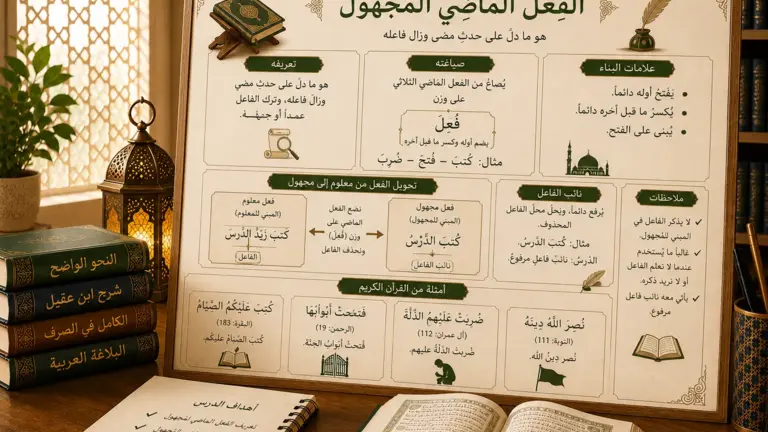
The active voice verb, known as اَلْفِعْلُ الْمَعْرُوْفُ, is where the subject, or the doer of the action, is explicitly mentioned. We have extensively covered these types of verbs in previous chapters, particularly those following the patterns of فَعَلَ - فَعِلَ - فَعُلَ. However, Arabic also features the concept of an unknown or passive verb.
Example:
أَن سَخِطَ اللَّـهُ عَلَيْهِمْ وَفِي الْعَذَابِ هُمْ خَالِدُونَ
That Allah has become angry with them, and in the punishment, they will abide eternally. (5:80)
حَتَّىٰ إِذَا بَلَغَ مَغْرِبَ الشَّمْسِ
Until, when he reached the setting of the sun (18:86)
In Arabic, we refer to the passive voice of a verb as الفِعْلُ المَجْهُولُ (the unknown verb). In this form, the subject or the doer of the action is not explicitly specified. Typically, we derive passive verbs from transitive verbs - الفِعْلُ الْمُتَعَدِّي, and they consist of two components: the passive verb itself and the object acting as the subject, as there is no explicit doer (فَاعِل) present. Therefore, the object will take the harakah of the subject, which is usually a dammah. In Arabic, this object is referred to as نَائِبُ الفَاعِل (the deputy of the doer).
For example:
وَوُضِعَ الْكِتَابُ
And the record [of deeds] will be placed [open] (18:49)
الْكِتَابُ = نَائِبُ الفَاعِل وُضِعَ= المَجْهُوْلُ
In Arabic, the formation of a passive verb involves changing the harakah (vowel marking) of the active participle, which follows the pattern فَعَلَ - فَعِلَ - فَعُلَ, to فُعِلَ. This change is consistent across all verbs. Specifically, it involves replacing the original vowel markings with a dammah (ٌ) on the first radical and a kasrah (ٍ) on the second radical.
1. The passive verb of consonants - الصَّحِيحُ
A. Table of رُفِعَ
3rd person masculine
Singular
رُفِعَ
He was raised
Dual
رُفِعَا
They two were raised.
Plural
رُفِعُوا
They all were raised.
3rd person feminine
Singular
رُفِعَتْ
She was raised
Dual
رُفِعَتَا
They two were raised.
Plural
رُفِعْنَ
They all were raised.
2nd person masculine
Singular
رُفِعْتَ
You were raised
Dual
رُفِعْتُمَا
You two were raised.
Plural
رُفِعْتُمْ
You all were raised.
2nd person feminine
Singular
رُفِعْتِ
You were raised
Dual
رُفِعْتُمَا
You two were raised.
Plural
رُفِعْتُنَّ
You all were raised.
First-person (masculine/feminine)
Singular
رُفِعْتُ
I was raised
Dual
-
Plural
رُفِعْنَا
We were raised.
B. Table of نُصِرَ and سُمِعَ:
3rd person masculine
Singular
نُصِرَ
He was helped
Dual
نُصِرَا
They two were helped.
Plural
نُصِرُوا
They all were helped.
3rd person feminine
Singular
نُصِرَتْ
She was helped
Dual
نُصِرَتَا
They two were helped.
Plural
نُصِرَنَ
They all were helped.
2nd person masculine
Singular
نُصِرَتَ
You were helped
Dual
نُصِرَتُمَا
You two were helped.
Plural
نُصِرَتُمْ
You all were helped.
2nd person feminine
Singular
نُصِرَتِ
You were helped
Dual
نُصِرَتُمَا
You two were helped.
Plural
نُصِرَتُنَّ
You all were helped.
First-person (masculine/feminine)
Singular
نُصِرَتُ
I was helped
Dual
-
Plural
نُصِرَنَا
We were helped
C. Examples from the Holy Quran Illustrating Passive Verbs
وَجُمِعَ الشَّمْسُ وَالْقَمَرُ
And the sun and the moon are joined (75:9)
إِنَّ الَّذِينَ يُحَادُّونَ اللَّـهَ وَرَسُولَهُ كُبِتُوا كَمَا كُبِتَ الَّذِينَ مِن قَبْلِهِمْ
Indeed, those who oppose Allah and His Messenger are abased as those before them were abased. (58:5)
وَفُتِحَتِ السَّمَاءُ فَكَانَتْ أَبْوَابًا
And the heaven is opened and will become gateways. (78:19)
2. Passive Hamzated verb
Introduction
The Passive Hamzated verb is when hamza أ comes as the first, second, or third radical, as in أَكَلَ - سَأَلَ or قَرَأَ. The passive voice is formed on the same pattern as that of فُعِلَ. In this case, the first radical bears a dammah -ُ and the second radical bears a kasrah -ِ. The following tables illustrate their conjugation.
A. Table of the passive hamzated verb أُمِرَ:
3rd person masculine
Singular
أُمِرَ
He was commanded
Dual
أُمِرَا
They were two commanded
Plural
أُمِرُوْا
They all were commanded
3rd person feminine
Singular
أُمِرَتْ
She was commanded
Dual
أُمِرَتَا
They were two commanded
Plural
أُمِرْنَ
They all were commanded
2nd person masculine
Singular
أُمِرْتَ
You were commanded
Dual
أُمِرْتُمَا
You were two commanded
Plural
أُمِرْتُمْ
You all were commanded
2nd person feminine
Singular
أُمِرْتِ
You were commanded
Dual
أُمِرْتُمَا
You were two commanded
Plural
أُمِرْتُنَّ
You all were commanded
First-person (masculine/feminine)
Singular
أُمِرْتُ
I was commanded
Dual
-
Plural
أُمِرْنَا
We all were commanded
B. Table of the passive hamzated verb سُئِلَ:
3rd person masculine
Singular
سُئِلَ
He was asked
Dual
سُئِلَا
They two were asked
Plural
سُئِلُوْا
They all were asked
3rd person feminine
Singular
سُئِلَتْ
She was asked
Dual
سُئِلَتَا
They two were asked
Plural
سُئِلْنَ
They all were asked
2nd person masculine
Singular
سُئِلْتَ
You were asked
Dual
سُئِلْتُمَا
You two were asked
Plural
سُئِلْنَ
You all were asked
2nd person feminine
Singular
سُئِلْتِ
You were asked
Dual
سُئِلْتُمَا
You two were asked
Plural
سُئِلْتُنَّ
You all were asked
First-person (masculine/feminine)
Singular
سُئِلْتُ
I was asked
Dual
-
Plural
سُئِلْنَا
We all were asked
C. Table of the passive hamzated verb هُزِأَ:
3rd person masculine
Singular
هُزِأَ
He was ridiculed
Dual
هُزِأَا
They two were ridiculed
Plural
هُزِأُوْا
They all were ridiculed
3rd person feminine
Singular
هُزِأَ تْ
She was ridiculed
Dual
هُزِأَ تَا
They two were ridiculed
Plural
هُزِأَ نَ
They all were ridiculed
2nd person masculine
Singular
هُزِأَ تَ
You were ridiculed
Dual
هُزِأَ تَا
You two were ridiculed
Plural
هُزِأَ تُمْ
You all were ridiculed
2nd person feminine
Singular
هُزِأَ تِ
You were ridiculed
Dual
هُزِأَ تَا
You two were ridiculed
Plural
هُزِأَ تُنَّ
You all were ridiculed
First-person(masculine/feminine)
Singular
هُزِأَ تُ
I was ridiculed
Dual
-
Plural
هُزِأَ نَا
We all were ridiculed
3. Passive weak Assimilated verb - المِثَالى
Introduction
When و is used as the first radical in place of ف in the active voice, the pattern remains the same as فُعِلَ, and there are no changes in the conjugation.
A. Table of the passive weak verb وُعِدَ
3rd person masculine
Singular
وُعِدَ
He was promised
Dual
وُعِدَا
They two were promised.
Plural
وُعِدُوْا
They all were promised.
3rd person feminine
Singular
وُعِدَتْ
She was promised
Dual
وُعِدَتَا
They two were promised.
Plural
وُعِدْنَ
They all were promised.
2nd person masculine
Singular
وُعِدْتَ
You were promised
Dual
وُعِدْتُمَا
You two were promised.
Plural
وُعِدْتُمْ
You all were promised.
2nd person feminine
Singular
وُعِدْتِ
You were promised
Dual
وُعِدْتُمَا
You two were promised.
Plural
وُعِدْتُنَّ
You all were promised.
First-person (masculine/feminine)
Singular
وُعِدْتُ
I was promised
Dual
وُعِدْتُمَا
You two were promised.
Plural
وُعِدْنَا
We were promised
Verbs that have the first radical "ى" are typically intransitive verbs, which are referred to as اَلْفِعْلُ اللَّازِمُ. Consequently, the passive voice of these verbs cannot be formed. For instance, يَئِسَ is an example of such a verb.
B. Passive weak Hollow verbs - الأَجْوَفُ
When و comes as the second radical in place of ع, as in قَالَ, the passive form should theoretically be قُوِلَ according to the rule. However, for the sake of easier pronunciation, it is typically read as قِيْلَ.
Table of the passive hollow verb قِيْلَ
3rd person masculine
Singular
قِيْلَ
He was told
Dual
قِيْلَا
They two were told
Plural
قِيْلُوْا
They were all told
3rd person feminine
Singular
قِيْلَتْ
She was told
Dual
قِيْلَتَا
They two were told
Plural
قُلْنَ
They were all told
2nd person masculine
Singular
قُلتَ
You were told
Dual
قُلتُمَا
Theyboth were told
Plural
قُلتُمْ
You were all told
2nd person feminine
Singular
قُلتِ
You were told
Dual
قُلتُمَا
Theyboth were told
Plural
قُلتُنَّ
You were all told
First-person (masculine/feminine)
Singular
قُلتُ
I was told
Dual
-
Plural
قُلنَا
We were all told
As we can observe from the table above, the passive voice of the third person feminine plural is قُلْنَ. This pattern continues in a similar manner as seen in the past tense conjugation.
Table of the passive hollow verb خِيْفَ
3rd person masculine
Singular
خِيْفَ
He was feared
Dual
خِيْفَا
They two were feared.
Plural
خِيْفُوْا
They all were feared
3rd person feminine
Singular
خِيْفَتْ
She was feared
Dual
خِيْفَتَا
They two were feared.
Plural
خِفْنَ
They all were feared
2nd person masculine
Singular
خِفْتَ
You were feared
Dual
خِفْتُمَا
You both were feared.
Plural
خِفْتُمْ
You all feared
2nd person feminine
Singul ar
خِفْتِ
You were feared
Dual
خِفْتُمَا
You both were feared.
Plural
خِفْتُنَّ
You all feared
First-person (masculine/feminine)
Singular
خِفْتُ
I was feared
Dual
-
Plural
خِفْنَا
We were feared
In the case of خَافَ, which is an exception to the pattern of قَالَ, the third person feminine plural will take the form خِفْنَ. Then, the table continues following the same pattern as in the past tense conjugation.
Similarly, when ى comes as the second radical in place of ع, as in بَاعَ, the passive voice should technically be يَبُيِعَ according to the general rule. However, for ease of pronunciation, it is written as بِيْعَ.
Table of the passive hollow verb باع
3rd person masculine
Singular
بِيْعَ
He was sold
Dual
بِيْعَا
They two were sold
Plural
بِيْعُوْا
They all were sold
3rd person feminine
Singular
بِيْعَتْ
She was sold
Dual
بِيْعَتَا
They two were sold
Plural
بِعْنَ
They all were sold
2nd person masculine
Singular
بِعْتَ
You were sold
Dual
بِعْتُمَا
You two were sold
Plural
بِعْتُمْ
You all were sold
2nd person feminine
Singular
بِعْتِ
You were sold
Dual
بِعْتُمَا
You two were sold
Plural
بِعْتُنَّ
You all were sold
First-person (masculine/feminine)
Singular
بِعْتُ
I was sold
Dual
-
Plural
بِعْنَا
We all were sold
As observed from the pattern above, the passive form of the third person feminine plural is بِعْنَ, and the conjugation follows the same pattern as in the past tense.
Passive weak defective verbs - النَّاقِصُ
Table of the passive defective verb دُعِيَ
3rd person masculine
Singular
دُعِىَ
He was called
Dual
دُعِيَا
They two were called
Plural
دُعُوْا
They all were called
3rd person feminine
Singular
دُعِيَتْ
She was called
Dual
دُعِيَتَا
They two were called
Plural
دُعِيْنَ
They all were called
2nd person masculine
Singular
دُعِيْتَ
You were called
Dual
دُعِيْتُمَا
You two were called
Plural
دُعِيْتُمْ
You all were called
2nd person feminine
Singular
دُعِيْتِ
You were called
Dual
دُعِيْتُمَا
You two were called
Plural
دُعِيْتُنَّ
You all were called
First-person (masculine/feminine)
Singular
دُعِيْتُ
I was called
Dual
-
Plural
دُعِيْنَا
We all were called
When ى takes the place of ل as in رَمَى and لَقَى, the passive verb pattern follows رَمِيَ and لَقِيَ respectively, in accordance with the standard pattern of فُعِلَ.
4. Passive voice of the double lettered verb
Introduction
Double-lettered verbs, also known as doubly weak verbs, like وَقَى, take the form وُقِيَ in the passive voice according to the فُعِلَ pattern, and they follow the standard conjugation pattern.
Double lettered verbs - الْمُضَاعَفُ
Double-lettered verbs such as عَضَّ become عُضَّ in the passive voice and adhere to the standard conjugation pattern.
Table of the double lettered verb عُضَّ
3rd person masculine
Singular
عُضَّ
He was bitten
Dual
عُضَّا
They two were bitten.
Plural
عُضُّوْا
They all were bitten.
3rd person feminine
Singular
عُضَّتْ
She was bitten
Dual
عُضَّتَا
They two were bitten.
Plural
عُضِضْنَ
They all were bitten.
2nd person masculine
Singular
عُضِضْتُ
You were bitten
Dual
عُضِضْتُمَا
You two were bitten.
Plural
عُضِضْتُمْ
You all were bitten.
2nd person feminine
Singular
عُضِضْتِ
You were bitten
Dual
عُضِضْتُمَا
You two were bitten.
Plural
عُضِضْتُنَّ
You all were bitten.
First-person (masculine/feminine)
Singular
عُضِضْتُ
I was bitten
Dual
-
Plural
عُضِضْنَا
We all were bitten.
Examples of Double-Lettered Verbs in the Holy Quran:
وَإِذَا قِيلَ لَهُمْ لَا تُفْسِدُوا فِي الْأَرْضِ قَالُوا إِنَّمَا نَحْنُ مُصْلِحُونَ
And when it is said to them, "Do not cause corruption on the earth," they say, "We are but reformers." (2:11)
وَقِيلَ يَا أَرْضُ ابْلَعِي مَاءَكِ وَيَا سَمَاءُ أَقْلِعِي وَغِيضَ الْمَاءُ وَقُضِيَ الْأَمْرُ وَاسْتَوَتْ عَلَى الْجُودِيِّ
And it was said, "O earth, swallow your water, and O sky, withhold [your rain]." And the water subsided, and the matter was accomplished, and the ship came to rest on the [mountain of] Judiyy. (11:44)
وَأَشْرَقَتِ الْأَرْضُ بِنُورِ رَبِّهَا وَوُضِعَ الْكِتَابُ وَجِيءَ بِالنَّبِيِّينَ وَالشُّهَدَاءِ وَقُضِيَ بَيْنَهُم بِالْحَقِّ وَهُمْ لَا يُظْلَمُونَ
And the earth will shine with the light of its Lord, and the record [of deeds] will be placed, and the prophets and the witnesses will be brought, and it will be judged between them in truth, and they will not be wronged. (39:69)
وَوُضِعَ الْكِتَابُ فَتَرَى الْمُجْرِمِينَ مُشْفِقِينَ مِمَّا فِيهِ
And the record [of deeds] will be placed [open], and you will see the criminals fearful of that within it (18:49)
قُلْ إِنِّي نُهِيتُ أَنْ أَعْبُدَ الَّذِينَ تَدْعُونَ
Say, "Indeed, I have been forbidden to worship those you invoke besides Allah." (6:56)
Conclusion
This lesson on Arabic nuances concludes here. Insha’Allah, our subsequent session will delve into the double emphasis in Arabic.
Al-dirassa Institute invites you on a linguistic journey with our expert teachers to master the Arabic language. Should you wish to further your studies, we welcome your inquiries.
Book your free trial of 30 minutes
Registration form





No Comments
No comments yet.
No comments yet.