
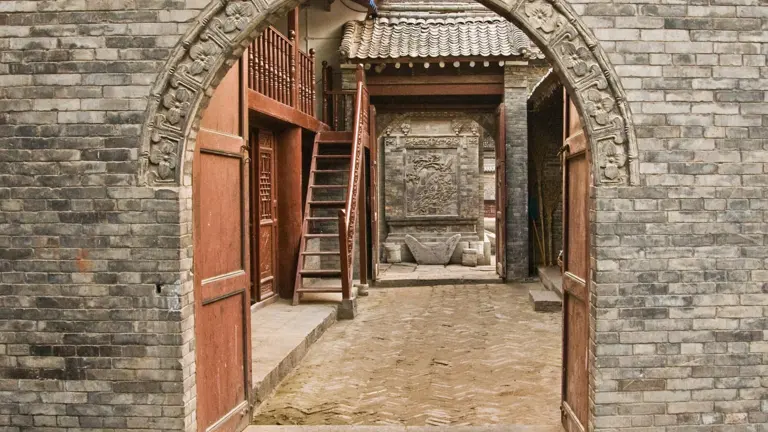
The Great Mosque of Xi’an is one of the most remarkable monuments of Islamic heritage in China. Located in a city known for its ancient history and its role in exchanges between East and West, it reflects the long presence of Islam in the Chinese world.
Unlike many mosques in the Middle East or North Africa, the Great Mosque of Xi’an follows a deeply Chinese architectural style. Its courtyards, pavilions, roofs and decorations show a unique encounter between Chinese culture and Islamic spirituality.
In this article, we will explore the history of the Great Mosque of Xi’an, its architecture, its religious role and what it teaches us about the diversity of Muslim civilization.
Why Is the Great Mosque of Xi’an Important?
The Great Mosque of Xi’an is important because it shows that the history of Islam is not limited to the Arab world. For centuries, Muslim communities have lived in China, prayed, transmitted their faith and developed an Islamic culture connected to their local environment.
This monument reminds us that Muslim civilization is diverse. It has been expressed through many languages, architectural styles and cultural contexts while preserving shared foundations: prayer, the Quran, the qiblah, community life and the worship of Allah.
For readers who want to learn Islam, the mosque of Xi’an shows that the Muslim faith has crossed regions and centuries while preserving its spiritual core.
The History of Islam in Xi’an
Xi’an was for a long time an important city in Chinese history. As an ancient imperial capital and a starting point for major trade routes, it welcomed merchants, travelers and communities from many regions.
The Muslim presence in Xi’an is linked to these early exchanges. Muslims settled in the region, built places of prayer and transmitted their religious practice from one generation to the next.
The Great Mosque of Xi’an is often associated with an early origin during the Tang dynasty. It later developed through restorations and expansions under later dynasties, especially during the Ming and Qing periods.
A Mosque with Unique Chinese Architecture
One of the most striking features of the Great Mosque of Xi’an is its architecture. From the outside, it looks more like a traditional Chinese complex than a classical mosque with a dome and minaret.
This particular style does not weaken its Islamic identity. On the contrary, it shows how a mosque can belong to a local culture while preserving its religious function.
Peaceful inner courtyards
The mosque is organized around several inner courtyards. These spaces create a calm atmosphere, away from the movement and noise of the city. Visitors move gradually from one courtyard to another, as if following a quiet path of reflection.
The courtyards, trees, pavilions and covered passages give the mosque a peaceful character. This arrangement reminds us that a mosque is a place of prayer, silence, respect and return to Allah.
Arabic calligraphy and Chinese aesthetics
The Great Mosque of Xi’an combines Chinese and Islamic elements. It includes traditional Chinese architectural forms, but also Arabic inscriptions, prayer-related features and references to the Quran.
Arabic calligraphy has an important place in Islamic art. It reminds us of the connection between the Arabic language, Quranic revelation and the transmission of religious knowledge.
A mosque without a classical dome or minaret
Unlike many well-known mosques in the Muslim world, the Great Mosque of Xi’an does not have a large dome or a classical minaret. This shows that the identity of a mosque does not depend only on its external shape.
What defines a mosque first is its function: a place dedicated to prayer, the worship of Allah, the gathering of believers and the spiritual life of the community.
The Mosque as a Place of Prayer and Community
The Great Mosque of Xi’an remains connected to prayer and to the life of local Muslims. Like every mosque, it reminds us of the importance of daily prayer, the qiblah, the Quran and the Muslim community.
In Islam, the mosque is not only a building. It is a place where believers gather, learn, remember Allah and strengthen their spiritual bonds.
Historically, mosques were also places of teaching. Students learned Quran recitation, the basics of Islamic belief, purification, prayer, Fiqh and the essential rules of religious practice.
What the Mosque of Xi’an Teaches About Muslim Civilization
The Great Mosque of Xi’an teaches us that Muslim civilization has always been able to take root in varied cultural environments. Islam spread across different regions without necessarily erasing local forms of art, language and architecture.
This monument also shows that Muslim unity does not mean cultural uniformity. Mosques can take different forms from one country to another while keeping their essential role: enabling prayer, transmitting knowledge and strengthening the believer’s connection with Allah.
This diversity is important for understanding Islamic history. It helps us see Islam as a global religion carried by many peoples, cultures and languages.
Understanding Islam Through Its Global Heritage
Studying monuments such as the Great Mosque of Xi’an helps us better understand the history of Islam and the richness of Muslim heritage. However, discovering a monument is not enough to learn Islam in depth.
Sound Islamic learning requires a clear progression: understanding the foundations of faith, learning purification, prayer, Quran, Sunnah, Hadith and the essential rules of religious practice.
To go further, you can explore our Islamic articles and culture resources or follow a structured path to learn Islam.
If you want to study Islamic belief, prayer, Fiqh, Quran and religious sciences with method, our Islamic sciences online program can guide you step by step. You can also discover our online Quran and Tajweed classes.
Book your free trial of 30 minutes
Registration form
Conclusion
The Great Mosque of Xi’an is a unique monument of Chinese Islamic heritage. Its architecture, inner courtyards, Arabic inscriptions and religious role show the meeting between Chinese culture and Islam.
It reminds us that Muslim civilization is global, diverse and deeply connected to the transmission of faith. Mosques may take different forms according to their regions, but they keep the same essential function: gathering believers around prayer, the Quran and the worship of Allah.
An article can open a first door to this history, but complete Islamic learning requires method, regularity, reliable sources and guidance from a qualified teacher.



No Comments
No comments yet.
No comments yet.