
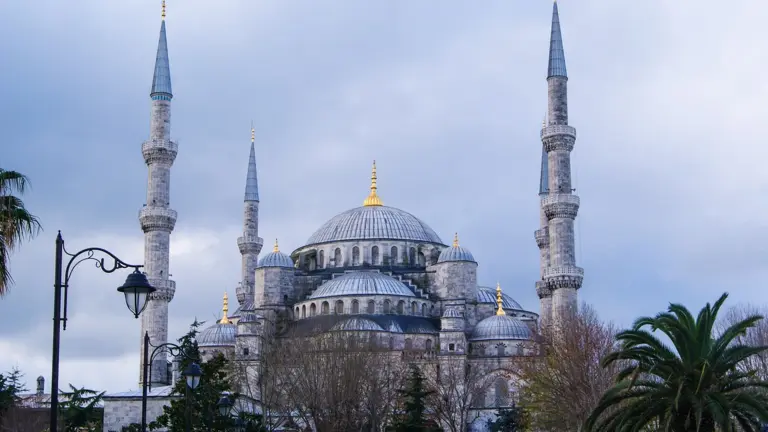
Sultan Ahmet Mosque, located in the historic heart of Istanbul, is one of the most famous monuments in the Muslim world. Known in the West as the Blue Mosque, it is admired for its Ottoman architecture, majestic domes, slender minarets and interior decorated with blue Iznik tiles.
But Sultan Ahmet Mosque is not only a tourist landmark. It is first and foremost a place of prayer, reflection and spirituality. Its history reminds us of the central role of the mosque in Islamic civilization: a place of worship, transmission, community and beauty.
In this article, we will explore the history of Sultan Ahmet Mosque, its architecture, its religious role and what it teaches us about Islamic culture and the importance of knowledge in Islam.
Why Is Sultan Ahmet Mosque So Famous?
Sultan Ahmet Mosque is famous for several reasons. It stands in the historic Sultanahmet district of Istanbul, facing Hagia Sophia. Its silhouette dominates the city with its large domes and six minarets.
It is called the Blue Mosque because of the many blue Iznik tiles that decorate its interior. These tiles give the mosque a peaceful and harmonious atmosphere, especially when natural light enters through its many windows.
The mosque is also a symbol of the artistic and spiritual strength of the Ottoman Empire. It shows how Islamic architecture can unite beauty, order, prayer and religious meaning.
The Construction of the Blue Mosque in Istanbul
Sultan Ahmet Mosque was built in the early 17th century during the reign of Sultan Ahmet I. The project was entrusted to the architect Sedefkâr Mehmed Ağa, who belonged to the great Ottoman architectural tradition.
The construction took place in an important historical context. The sultan wanted to build an imperial mosque that would leave a lasting mark on Istanbul and stand among the city’s greatest monuments.
The mosque was designed as a religious and social complex. It included a prayer space, but also areas connected to teaching, hospitality and community life.
A Masterpiece of Ottoman Architecture
Sultan Ahmet Mosque is considered one of the masterpieces of classical Ottoman architecture. Its plan, proportions, decoration and location show a search for balance between grandeur and spirituality.
Domes and minarets
The mosque is known for its layered domes, which rise gradually toward the large central dome. This composition gives a sense of elevation and harmony.
Its six minarets attracted attention from the time of its construction. At that period, this number was exceptional and contributed to the mosque’s fame. The minarets frame the building and strengthen its presence in Istanbul’s skyline.
The blue Iznik tiles
The interior of the mosque is decorated with thousands of ceramic tiles produced in Iznik, a city famous for its craftsmanship. Floral, geometric and vegetal motifs give the space great visual refinement.
These decorations are not only aesthetic. In Islamic art, shapes, repetitions and balanced patterns can invite reflection, order and contemplation. They help create an atmosphere of calm and reverence.
Light and interior harmony
Sultan Ahmet Mosque has many windows that allow natural light to enter. This light highlights the tiles, calligraphy and interior volumes.
The inner space was designed for congregational prayer. The layout of the prayer hall, the direction of the mihrab and the openness of the interior remind us that the mosque’s first function is the worship of Allah.
A Mosque at the Heart of Spiritual Life
Sultan Ahmet Mosque remains an active place of prayer. It welcomes worshippers for the daily prayers, the Friday prayer and important moments of religious life.
For visitors, it is important to remember that a mosque is not only a historical monument. It is a sacred place where Muslims pray, recite the Quran, remember Allah and gather as a community.
This spiritual dimension gives the Blue Mosque a special importance. Its architectural beauty becomes more meaningful when it is connected to its religious function.
The Mosque as a Place of Prayer and Transmission
In Islamic civilization, the mosque has often been a place of learning. Students studied the Quran, recitation, Arabic language, Hadith, Fiqh and the foundations of religious practice.
Although Sultan Ahmet Mosque is mainly known for its architecture, it reminds us of this wider function of the mosque: forming hearts, transmitting knowledge and strengthening the bond between believers.
Learning Islam is not limited to reading a few pieces of information. It requires method, reliable sources, regularity and, when possible, guidance from a qualified teacher.
What the Blue Mosque Teaches About Islamic Civilization
Sultan Ahmet Mosque shows that Islamic civilization gave great importance to beauty, knowledge and worship. Its architecture expresses a vision in which art is not separated from spirituality.
It also reminds us that Islamic history is rich and diverse. Each region of the Muslim world developed its own architectural forms while preserving shared elements: prayer, the qiblah, the mihrab, calligraphy, respect for the Quran and the search for harmony.
To go further, you can explore our Islamic articles and culture resources, or follow a structured path to learn Islam and understand its foundations more clearly.
If you want to study Islamic belief, prayer, Fiqh, Quran and daily religious practice with method, our Islamic sciences online program can guide you step by step. You can also discover our online Quran and Tajweed classes.
Book your free trial of 30 minutes
Registration form
Conclusion
Sultan Ahmet Mosque, or the Blue Mosque of Istanbul, is a masterpiece of Ottoman architecture and an important symbol of Islamic heritage. Its domes, minarets, blue tiles and spiritual atmosphere make it a unique place.
Its history reminds us that the mosque is at the heart of Muslim life: it unites prayer, community, transmission and beauty. It also shows that discovering Islamic architecture can become an entry point to a deeper understanding of Islam.
An article can offer a first introduction, but learning Islam properly requires method, regularity, reliable sources and guidance. By progressing step by step, students can better understand faith, religious practice and the richness of Muslim civilization.



No Comments
No comments yet.
No comments yet.